Set up one stop centre for TVET program graduates: Nurul Izzah

Nurul Izzah Anwar

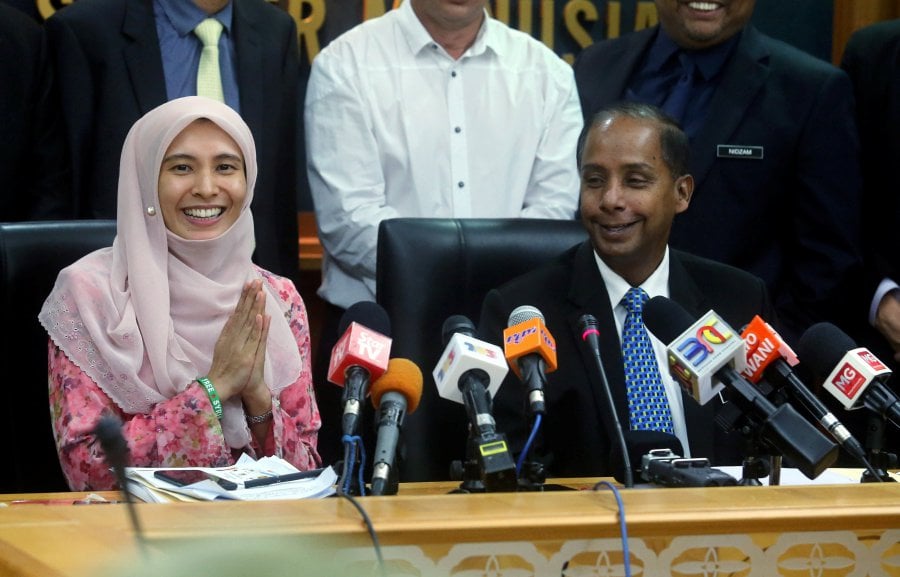
KOTA KINABALU: Chairman of the Technical and Vocational Education Training Empowerment Committee (JKPTVET) Nurul Izzah Anwar has suggested that a one-stop centre for TVET graduates be set up.

She said that the centre would become a place for TVET graduates to seek various information on fulfilling the needs of industry players in the market.

“With the setting up of the one-stop centre, TVET graduates would know where they can get the needs of the industry within one channel which would eventually offer them a high income.

“We can make plans but the implementation stage would determine the level of success of the TVET,” she told reporters after becoming a moderator at the town hall session at the Dewan Rafflesia Politeknik Kota Kinabalu, here today.

The session was being held for the first time and the Sabah zone was chosen as the pioneer for the JKPTVET program with the theme “TVET empowerment for nation building”.

Also present was the Director-General of the Polytechnic and Community College Department of the Education Ministry, Prof Datuk Dr Mohd Ismail Abd Aziz.

Commenting further, Nurul Izzah said it was also hoped that the Sabah Economic Development and Investment Authority (Sedia) would steer the centre particularly for TVET graduates in the state.

Meanwhile, Nurul Izzah said in order to achieve the objective of empowering the TVET, it was the role of everyone including the media to report on the success of TVET graduates to change public perception on the program. – Bernama


VOCATIONAL EDUCATION BROUGHT MUCH SUCCESS TO GERMANY… SO WHY ISN’T IT WORKING FOR MALAYSIA?

vocational education

Vocational Education

Vocational Education in Germany

The German vocational education and training system, also known as the dual training system, is highly recognized worldwide due to its combination of theory and training embedded in a real-life work environment. The dual system is firmly established in the German education system.

vocational education in Germany

Vocational Education in Malaysia

The crux of the problem with the Malaysian TVET system is that it is school-based. Vocational school teachers themselves often lack industrial experience. Malaysia’s TVET system also has other challenges, including multiple certification and quality assurance systems, limited access to vocational education for students with special needs and minority groups, lack of skilful vocational teachers, limited pathway for tertiary vocational education and minimal involvement by the industry. In addition, there is no single oversight body to coordinate the TVET system in Malaysia.

Ramlee B. Mustapha
Low pay. Dirty work. No prestige. Uneducated. Not interesting. Useless. These are some of the perceived characteristics associated with vocational students in Malaysia. For many of us, we have been told that our life depends on our academic grades. Coz if we fail, we’re doomed, right?

Our ears bleed from hearing our elders emphasise way too much on the academic science stream as the ultimate path to success! We’re also raised to think that vocational education is an option for school dropouts, non-academically inclined students and slow learners. Well… Thanks to this stigma (situation has improved), the system receives a generally low enrolment of students.

Now, there are calls for collaboration in transforming the system and making it a first choice. With the establishment of a committee to prep Malaysia for the 4th Industrial Revolution, committee head Nurul Izzah is studying reform reports and having discussions with the relevant ministries.

Put your hands together for… TVET reforms!! Image from NST.

Among the initiatives, the Ministry of Education wants to work more closely with the UK to provide English language training to STEM and vocational teachers. But actually…

What in the world is the problemo with our vocational education?

Many problems. Before we get to them, first… it’s formally known as TVET, and this is how UNESCO defines it:

“Technical and vocational education and training (TVET) is understood as comprising education, training and skills development relating to a wide range of occupational fields, production, services and livelihoods.” – UNESCO’s definition of TVET.

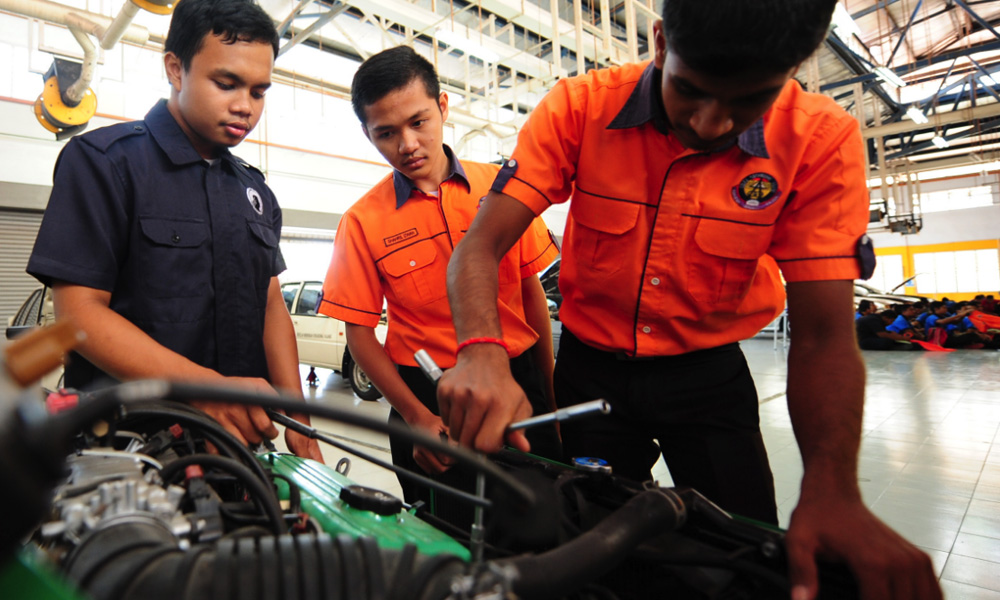
TVET is usually referred to as education for “blue collar” jobs, which involves more handy work (like technicians, plumbers, hairstylists, chefs, farmers etc) than a “white collar” job.

Ooohh, that’s why they’re called “white collar” and “blue collar”.
Image from The Conversation.

Here’s how it works. If a 15-year-old student wants to pursue something hands-on after PT3, s/he can go to a vocational college to get a SKM (instead of SPM) in the first 3 levels and then proceed to a diploma or advanced diploma in either a vocational college, community college, polytechnic or a university (can choose public or private). SPM leavers can also walk the same path – just opt for a vocational tertiary institution. If you want to find out more, click on this link.

 
It generally uses different forms of learning (formal, non-formal and informal) to facilitate a well-rounded transition into the job market. When it comes to education, we all get excited seeing the word “well-rounded”, right? But then, why does our current TVET system seem so unpopular here?

For starters, TVET Journal and Professor Dr Ramlee Mustapha of Universiti Pendidikan Sultan Idris (UPSI) said that some characteristics of TVET schools could be improved. Like getting better infrastructure and equipmentTeaching approaches need to be more interactive and digital, especially for millennial students.

The education system and labour laws must also be more flexible and responsive to our country’s economic goals. And since the whole point of vocational education is to prepare students for employment, it’s super important that schools buddy up with potential employers. Imagine a 20-year-old graduate with sound mechanical skills going STRAIGHT into companies like Proton or Western Digital, without having to search and apply from scratch.

On top of this, Nurul Izzah said that tertiary education and TVET systems are so out of sync. Despite a government funding of about RM4.5billion on TVET, it is not running at full capacity, according to the Human Resource (HR) Ministry. This is where the collaboration and coordination between the TVET Committee and relevant ministries become significant.

Still not convinced? Then…

Let us tell you why our TVET needs a makeover

TVET needs to be integrated into mainstream education since [an article by the New Strait Times (NST) said that] TVET provides highly skilled human resources which will boost our country’s economy and enable it to become a “high-income nation”. A journal article by Margarita Pavlova (definitely a human being, not a drink or dessert) also said that TVET is “a tool for productivity enhancement and poverty reduction” in the Asia-Pacific.

But for Malaysia to truly prosper in the long term, the elephant on the couch- sorry, in the room needs to be addressed: youth unemployment and employability. Yes, we’re emphasising on jobless freshies. Malaysian Industrial Development Finance (MIDF) said that youth unemployment rate remains frustratingly high at roughly 204,000 due to the demand and supply mismatch of skills.

A senior researcher at Malaysian Institute of Economic Research (MIER) explained how young adults end up jobless. They are more likely to be job hunting either because they’re fresh grads or changing jobs. But, job vacancies don’t match-match with the skill sets freshies have but instead ask for more experienced candidates. Moreover, Azeem Abu Bakar of the Organisation for National Empowerment (ONE) pointed out the need for grads to adapt to the tech evolution of the job market by learning new types of skills.


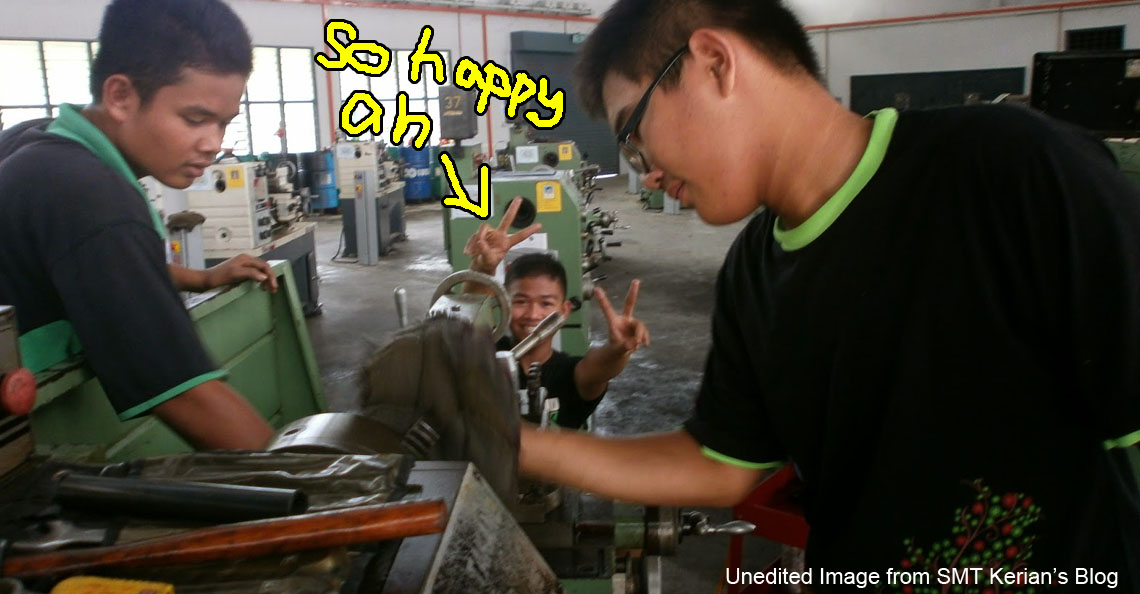
Great tractor skills but isn’t he too young for this? Image from Giphy.

We came across some success stories of TVET graduates who proved the naysayers wrong (if you want, you can read them in detail here and here). If there is one thing these grads can agree on, it’s that TVET has prepped them up for the real world.

“TVET helped me advance in my career and created healthy competitionbetween me and my male colleagues. The training is also important to produce skilled workers that the country lacks.” – said Nur Izzati Athirah, who is pursuing underwater welding, a male-dominated profession.

Hold up! Don’t get too excited. It has some disadvantages too (in other countries as far as data brings us). American Leaf Group’s Classroom claimed that TVET grads face lower lifetime earnings (despite a high earning potential) and specific fields of study (which limits flexibility in learning further on the job and adjusting to newer tech). Career Ride also said that TVET programmes are not widely recognised and have higher costs for lab-related stuff.

But it’s not clear if the same applies to the career prospects of TVET graduates here. Malaysian Trades Union Congress (MTUC) president Datuk Abdul Halim Mansor said that there was NO DATA on the number of employed Malaysian TVET graduates as of 2017 and their salary scale. No wonder it was so hard to find data supporting these claims of disadvantages for Malaysian TVET grads. 

Actually right… other countries depend on TVET kids for success lor

Former Deputy Education Minister Datuk Chong Sin Woon said that the percentage of Malaysian students in TVET are pathetically lower than that of some countries. According to him, we only have 8% of our secondary students in TVET. Germany? 60%! Let’s see how it works.

Germany practices a dual vocational education system (Malaysia also has adopted it) which emerged from the Vocational Training Act to ensure that every industry had enough talent for a modern Germany. Why dual? Simply because it has two components: apprenticeship and theory classes.

So, the students get the best of both worlds! They have technical know-how AND hands-on experience. If that’s not great enough, the theoretical classes don’t neglect some academic subjects like German, English and social studies, which cuts out the previously mentioned disadvantage of specificity.

Because of its pros, its graduates are highly employable. No wonder the Germans find it socially acceptable to pursue TVET.

“In Germany, people studying TVET would go on to become PhD holders, but it is not the same here,” said HR Minister Kulasegaran.

Of course, despite a few technical issues, its success couldn’t be possible without a well-coordinated TVET system. And because it’s so good, the German TVET system is evident in some places including Malaysia (via the German-Malaysian Institute) and Slovakia.

As for an Asian example…

Singapore pulak has been implementing TVET since its merdeka in 1965. Our fun-sized neighbour houses vocational universities like Nanyang Polytechnic (NYP), Singapore Polytechnic International (SPI) and Institute of Technical Education (ITE).

ITE’s former CEO Dr Law Song Seng‘s case study on Singapore’s TVET policies brings us through the literary museum of Singapore’s 5-decade history with TVET, consisting of three phases:
  • labour-intensive economy (1960s-1970s): Expanded the education system to meet the needs of industrialisation.
  • capital-intensive economy (1980s-1990s): Involved economic restructuring when the Singaporean govt decided to set a minimum of 10 years of general education for everyone, so TVET became a post-secondary education option.
  • knowledge-intensive economy (2000s): Built a globalised, knowledge-driven economy by working on making itself an education hub.
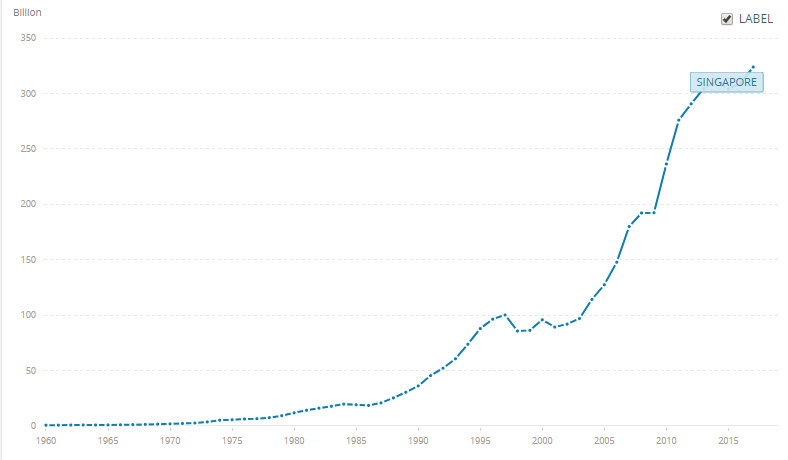
Look at how Singapore's GDP has grown over the past 5 decades! Screenshot from The World Bank.

Look at how Singapore’s GDP has grown over the past 5 decades! Screenshot from The World Bank.

Right now, WorldSkills and SkillsFuture are major initiatives in promoting TVET in Singapore. WorldSkills is the “global hub for skills excellence” while SkillsFuture is a national movement to encourage Singaporeans to continuously develop their skills. If TVET grads want to gain career opportunities related to their field of study, they can participate in the SkillsFuture Earn and Learn Programme, a work-learn programme.

So, how about we jump on the bandwagon?

If you still insist on bashing TVET kawkaw, then these two things (as claimed by Datuk Chong Sin Woon) might probably convert your mindset to favour TVET: starting salary and employment prospects. It turns out that TVET freshies earn between RM2,000 and RM5,000 monthly, which isn’t so different from what uni freshies earn. TVET grads are also in high demand by employers and not limited to certain industries.

By the way, the salary range mentioned is probably applicable to minority industry (or maybe even none, common, RM5K for freshies??

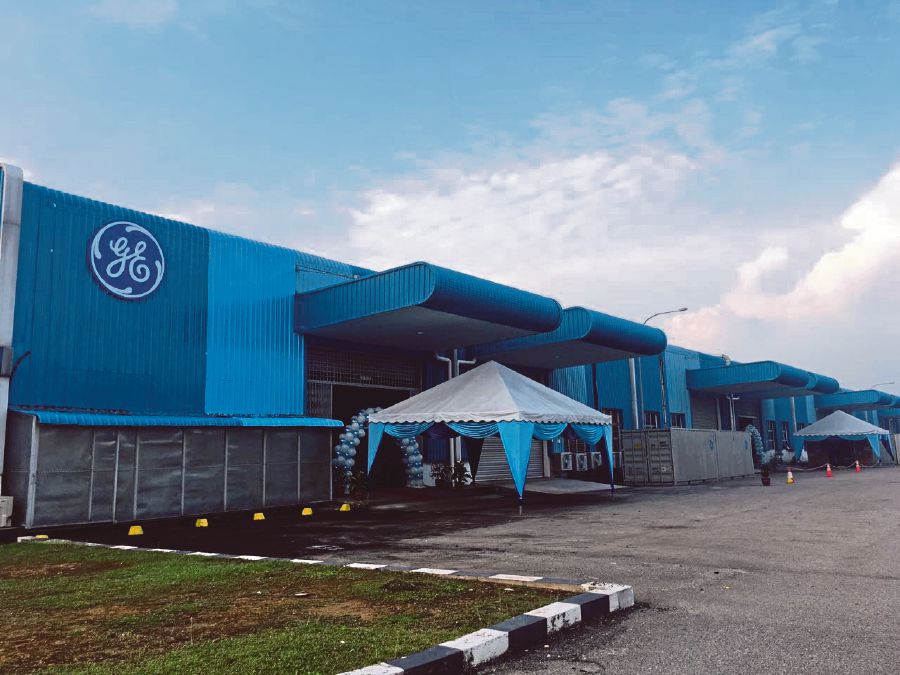
“They are highly sought after by industries – 90% of the cohort in our TVET(technical and vocational education and training) who graduated last year are already employed. Vocational and technical graduates don’t just end up opening beauty salons or bakeries, many of them work for multinational companies like Boeing.” – said Chong.

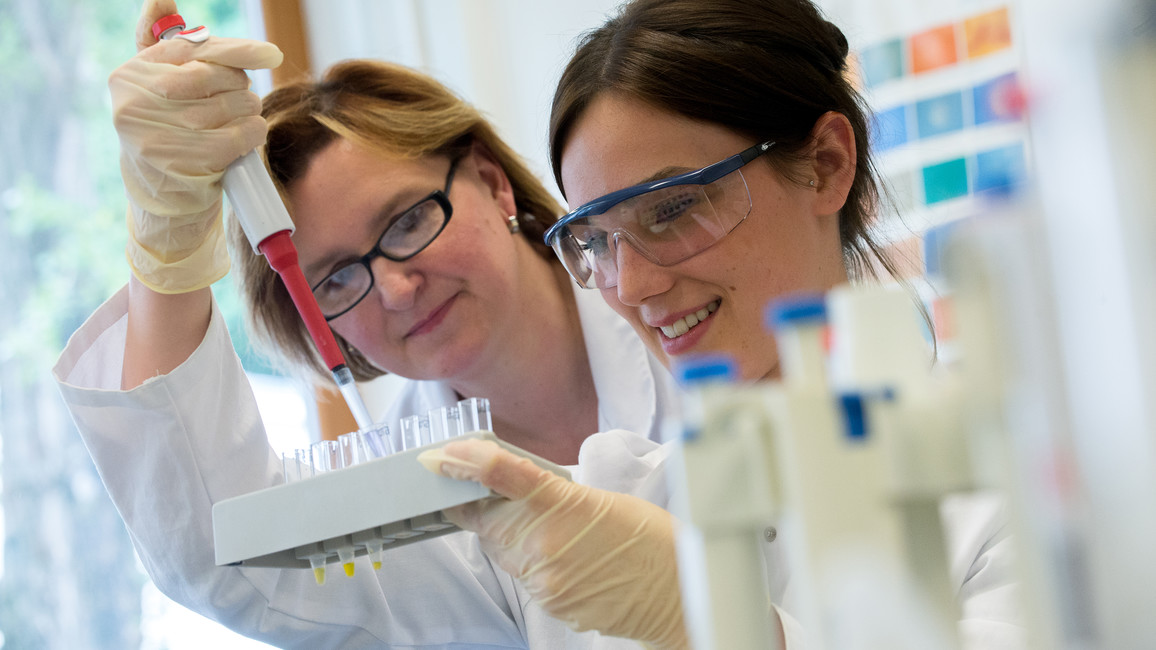
               Or maybe General Electric? Image from the New Strait Times.

Chill, guys. We’re not badmouthing mainstream education but we wanna tell y’all that TVET is not as bad as you’d think. There’s hope for TVET here if proper reforms are made to fix its current issues. We’re not alone in this as other places like Bangladesh, countries in the Pacific region, as well as countries in Latin America and The Caribbean, are also trying to reform their TVET systems. 

TVET can actually make Malaysia great again like our advanced counterparts since it makes employees more employable with skills that match job requirements and familiarity with the working environment, hence boosting the country’s productivity and curbing youth unemployment.

With that in mind, maybe it’s time to stop making fun of that one relative who is pursuing a vocational course, eh?

Source: https://cilisos.my/

TVET pilihan pertama dalam masa 5 tahun

DR Maszlee Malik ketika berucap di majlis makan malam dan Forum Pakar TVET Asia 2018 di Putrajaya. – Foto Mohd Fadli Hamzah

PUTRAJAYA: Kementerian Pendidikan komited untuk menjadikan Pendidikan Teknikal dan Latihan Vokasional (TVET) sebagai pilihan pertama pelajar untuk menyambung pengajian dalam tempoh lima tahun akan datang.

Menteri Pendidikan, Dr Maszlee Malik, berkata bagi mencapai sasaran itu, beliau mahu semua pihak berkepentingan dalam bidang pendidikan dan industri untuk bekerjasama memperkasa TVET.

“Ini adalah janji saya untuk tempoh lima tahun, marilah kita bersama meningkatkan TVET, terutama melalui perkongsian amalan terbaik dan kerjasama,” katanya.

Maszlee berkata demikian ketika berucap merasmikan Majlis Penutup Forum Pakar TVET Asia (ATEF) 2018 dengan tema ‘Pelaksanaan Menyeluruh TVET Untuk Revolusi Industri 4.0’ anjuran Universiti Tun Hussein Onn Malaysia (UTHM) di sini, malam ini. Yang turut hadir, Naib Canselor UTHM, Prof Dr Wahid Razzaly.

Maszlee berkata, kerjasama antara pihak swasta dan institusi pendidikan akan membantu melonjakkan kualiti graduan TVET, sekali gus memperkasa generasi masa depan.

“Kita tidak boleh lagi memilih dan bergantung kepada hanya beberapa sektor untuk memacu pertumbuhan ekonomi negara.

“Matlamat kita adalah untuk memastikan graduan TVET bangga dengan kepakaran serta kemahiran mereka yang sentiasa mendapat tempat dalam pasaran dan bukan lagi bidang kelas kedua,” katanya.

Selain itu, Maszlee juga mahu forum berkenaan menjadi pentas untuk membincangkan usaha memperkasa tadbir urus TVET, meningkatkan kualiti dan penyampaian program TVET, mempromosi kecekapan kos dan menambah dana serta menambah baik jenama TVET bagi menarik minat lebih ramai pelajar.

Seramai 73 pakar dan pengamal TVET dari negara Asia menyertai forum berkenaan yang berlangsung selama dua hari bermula hari ini.

Sumber: https://www.bharian.com.my

NIOSH rolls out new initiative for TVET students

NIOSH chairman, Tan Sri Lee Lam Thye, said the programme can help TVET students save time as they can obtain safety and health competency certificates while they are still studying.

KUALA LUMPUR: The National Institute of Occupational Safety and Health (NIOSH) has introduced a new initiative for workers undergoing Technical and Vocational Education and Training (TVET).

The initiative, known as Safety Health Officers for Higher Learning Institutes or SHO for IPT, enables TVET students to obtain professional competency certificates while studying at their respective institutes.

NIOSH chairman, Tan Sri Lee Lam Thye, said the programme can help TVET students save time as they can obtain safety and health competency certificates while they are still studying.

The SHO for IPT programme will be handled completely by NIOSh at the respective institutes in order to minimise cost and preserve the course’s standards.

“NIOSH is also organising exam preparation workshops and four comprehensive examination papers for the programme,” he said in a statement.

The new initiative can also boost the number of workers skilled in occupational safety and health (OSH) at the workplace.

The programme also stands to benefit employers as their staff would be certified and well versed in OSH.

This forms part of NIOSH’s efforts to empower the students of the future as well as to reduce the rate of accidents at the workplace.

Institutes interested in conducting the programmes can contact NIOSH for more details.

Source: https://www.nst.com.my

Lebih 80 peratus pengasuh berdaftar tiada kelayakan KAP


Lebih 80 peratus pengasuh berdaftar tiada kelayakan KAP
TIMBALAN Perdana Menteri, Datuk Seri Dr Wan Azizah Wan Ismail menyampaikan ucapan pada Majlis Perasmian Hari Taska 2018 di Putrajaya, hari ini. – Foto BERNAMA
PUTRAJAYA: Seramai 13,700 pengasuh berdaftar di taska seluruh negara tiada kelayakan KAP – Kursus Asuhan Permata.


Timbalan Perdana Menteri, Datuk Seri Dr Wan Azizah Wan Ismail berkata, jumlah itu merangkumi 80.19 peratus daripada sejumlah 16,873 pengasuh yang direkodkan.

“Berdasarkan rekod Jabatan Kebajikan Masyarakat (JKM), data terkumpul sehingga Jun 2018, jumlah pengasuh bagi kanak-kanak berusia 0 hingga 4 tahun di Taska adalah seramai 16,873 orang.

Beliau yang juga Menteri Wanita dan Pembangunan Keluarga menambah, industri pengasuhan pada ketika ini menghadapi masalah kekurangan pengasuh berdaftar.

Pada masa sama, kekurangan pengasuh yang berkelayakan memberi implikasi kepada jumlah taska yang berdaftar.

Katanya lagi, sekiranya 50 peratus daripada 2.3 juta kanak-kanak berusia 0 hingga 4 tahun di negara ini memerlukan taska, maka Malaysia perlu menyediakan kira-kira 38,333 taska.

Bagaimanapun, angka itu jauh berbeza dengan sejumlah 4,302 taska berdaftar ketika ini.

“Bilangan ini menunjukkan kekurangan yang amat jelas dari aspek keperluan dan ketersediaan taska di negara kita. Kekurangan bilangan pengasuh berkelayakan dan bilangan taska berdaftar akan memberi implikasi terhadap jaminan kualiti dan keselamatan anak-anak kita,” tambahnya lagi.

Sumber: http://www.astroawani.com

Komen: Selain Kursus Asuhan Permata Kanak-kanak, kelayakan lain seperti Sijil Kemahiran Malaysia (SKM) bidang Pengasuhan dan Pendidikan Awal Kanak-Kanak (T982-001-3:2017) – SKM Tahap 3 juga digalakkan untuk dimiliki oleh pengasuh/pengusaha. Cadangan untuk kelayakan diploma dalam pengurusan pendidikan awal kanak-kanak telahpun dicadangkan pada tahun 2016, namun ditolak dengan rancaknya oleh ibu bapa atas faktor kebimbangan peningkatan kos/yuran yang perlu dibayar. Namun, Jabatan Kemajuan Masyarakat (Kemas) hanya mengutamakan graduan lulusan diploma dan lulusan dalam bidang penjagaan kanak-kanak dalam proses pengambilan tenaga pengajar baharu untuk Tabika dan Taska Kemas mulai 2017.

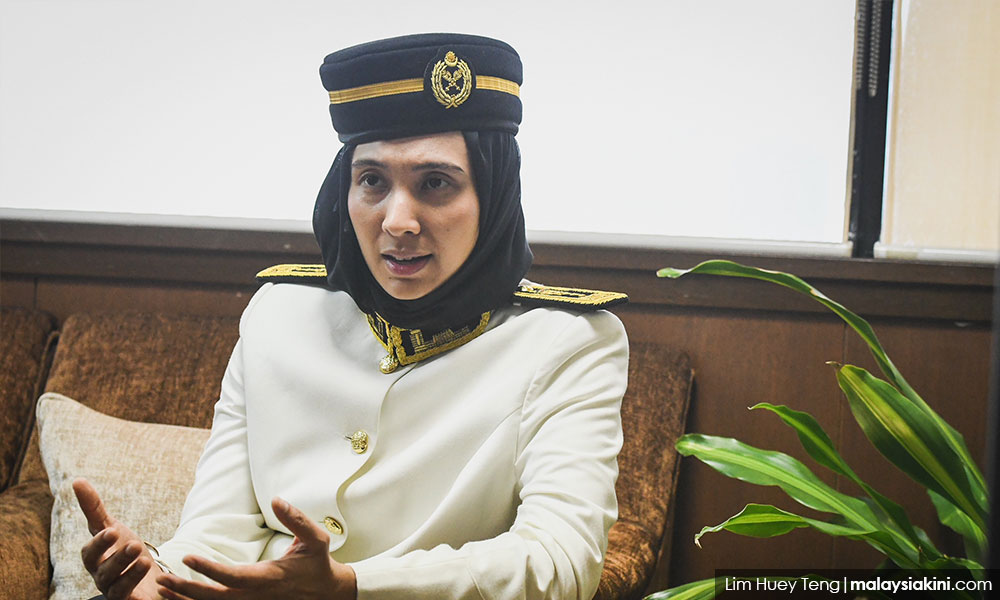
Nurul Izzah mahu status rahsia dokumen TVET digugurkan

WAWANCARA | Akta Rahsia Rasmi (OSA) telah digunakan untuk menyembunyikan fakta yang boleh menjejaskan reputasi pentadbiran BN, seperti yang dapat dilihat pada laporan audit 1MDB sebelum ini.

Satu lagi dokumen yang diletakkan bawah akta itu adalah berhubung program pendidikan teknik, vokasional dan latihan (TVET) – usaha kerajaan dulu yang bertujuan melahirkan pekerja berkemahiran di kalangan mereka yang tidak cenderung kepada akademik.

Akhir bulan lalu, anggota parlimen Permatang Pauh Nurul Izzah Anwar dilantik sebagai pengerusi Jawatankuasa Pemerkasaan TVET.

Beliau kini mempunyai akses terhadap dokumen rahsia – yang turut ditunjukkan kepada Malaysiakini – berhubung pencapaian pusat TVET berdasarkan wawancara dengan orang awam dan institusi swasta.

“Apa yang mengejutkan dan kontroversi adalah mereka membuat senarai kedudukan institusi TVET berdasarkan produktiviti mereka.

“Tiada siapa yang mahu dikenali sebagai paling tidak produktif, lemah kerana tidak menghasilkan graduan yang baik, tetapi kita ada data itu.

“Baik untuk rakyat Malaysia tahu perkara ini. Apakah anda tidak mahu tahu institusi Mara mana yang berjalan dengan baik, yang menghasilkan pekerja industri yang cemerlang? Hak kita untuk tahu dan kita tak boleh sembunyikannya,” katanya ketika wawancara bersama Malaysiakini minggu lalu.

Dokumen itu masih berstatus rahsia tetapi Nurul Izzah berkata akan berusaha agar ia dibuka.

Beliau menegaskan ia bukan untuk mengecam kumpulan tertentu yang tidak menunjukkan pencapaian yang baik, tetapi sebagai langkah ke depan.

“Kita perlu tahu kedudukan sekarang baru kita dapat melangkah ke depan untuk mungkin menyusun semula matlamat mereka atau mengadakan kerjasama yang lebih baik dengan industri, atau mungkin menswastakan mereka.

“Ada banyak pilihan yang saya akan kemukakan berdasarkan kajian kemapanan,” katanya.

Terdapat sekurang-kurangnya 1,300 institusi TVET di seluruh negara. Program itu bawah skop pelbagai kementerian antaranya Sumber Manusia, Pendidikan, Belia dan Sukan, Pembangunan Luar Bandar dan Wilayah, Kerja Raya serta Pertanian dan Industri Asas Tani.

Berikut adalah wawancara lanjut Malaysiakini dengan Nurul Izzah berhubung isu ini.

Malaysiakini: Salah satu isu terbesar TVET adalah persepsi ia untuk mereka yang tidak bagus dalam pelajaran. Bagaimana anda mahu baiki persepsi itu?

Nurul Izzah: Pertamanya untuk mengubah persepsi ia perlu bermula dengan diri anda sendiri, bermula dengan apa yang pemimpin boleh lakukan. Jadi pada tiga minggu pertama ketika kita mengumpul maklum balas, saya cuba yang terbaik untuk melawat dan berhubung dengan pusat TVET yang cemerlang, dan ada banyak pusat yang sedemikian.

Ketika saya di Mersing, jelas mereka memang cemerlang. Mereka mengeluarkan pakar keselamatan siber. Apa yang bagus adalah permintaan terhadap mereka memang tinggi kerana memenuhi standard industri. Apabila ia berlaku, akan ada kewujudan bersama yang baik antara graduan yang dikeluarkan pusat itu dengan keperluan industri.

Jadi bagi saya, apa yang penting adalah untuk menonjolkan wira tak didendang ini. Kisah kejayaan anak tempatan perlu diangkat dan itulah perancangan saya.

Pada masa sama, jika anda ingin ubah persepsi, mahu gaji yang lebih baik, anda perlu buat beberapa langkah dan keputusan sukar. Ini bermakna, untuk sesetengah pusat yang tidak berjalan dengan baik, peranan mereka perlu dilihat semula, perubahan sistemik dan struktural perlu dilakukan.

Jika anda lihat laporan sebelum ini oleh PricewaterhouseCoopers, Boston Consulting, dan juga PEMANDU, mereka berterus-terang terhadap beberapa keputusan yang telah menghalang kemajuan TVET dan ia membawa kepada masalah dan keadaannya pada masa ini.

Saya mahu sintesiskan semua laporan ini termasuk dengan yang dikeluarkan Kementerian Sumber Manusia, serta daripada perbincangan kita sendiri, dalam satu laman web yang mengumpul semua dapatan ini.

Saya gembira apabila kabinet (berpandangan) laporan saya akan dibawa ke tahap itu, tetapi untuk langkah seterusnya kita juga perlu ingatkan semua kementerian tentang apa yang perlu dilakukan.

Malaysiakini: Adakah anda merancang untuk mengubah pemikiran ibu bapa – gred yang bagus adalah segalanya?

Nurul Izzah: Gred yang bagus penting. Sebagai ibu saya tak mahu jadi hipokrit dan berkata saya tak kisah jika anak saya tidak cemerlang dalam pelajaran.

Tetapi setiap anak adalah istimewa dan anda perlu berikan peluang kedua. Setiap mereka ada kelebihan tersendiri. Mereka mungkin tidak dapat menyerap sebahagian pelajaran secara automatik, tetapi tidak bermakna walau dengan usaha mereka tetap tidak akan berjaya.

Tetapi yang penting bagaimana sebuah kementerian dapat menaikkan TVET jika institusi anda sendiri tidak mengeluarkan sijil yang diterima industri dan pihak akreditasi lain? Jadi perkara ini perlu dilihat.

Saya seorang graduan tetapi tidak akan dapat faham. Misalnya ketika saya menggunakan penerbangan MAS, dalam pesawat baru Airbus, tandas tiba-tiba tidak berfungsi. Dan pramugari sibuk mencari juruteknik untuk membaikinya.

Kenapa? Kerana jurutera seperti saya tidak akan dapat membaiki apa yang perlu dibaiki. Jadi bagi saya, ia satu peringatan kecil bahawa anda mengeluarkan pekerja yang berguna, efektif untuk industri dan negara.

Tetapi jika anda biarkan masalah seperti kemahiran yang tidak sesuai atau gaji yang rendah berterusan, tidak ramai yang akan berminat. Dalam fikiran ibu bapa, “Saya banyak mengeluarkan belanja untuk ijazah TVET ini tetapi anak saya tiada pekerjaan yang baik, sijil pun tidak diiktiraf”.

Ini adalah masalah yang perlu dibaiki dulu sebelum kita dapat menjadikan TVET lebih baik atau di tahap sama dengan pemegang ijazah.

Malaysiakini: Apakah yang anda mungkin akan bentangkan dalam laporan kepada kabinet?

Nurul Izzah: Saya perlu siapkannya dalam masa setahun. Untuk tiga bulan pertama, kita akhirnya berjaya mendapatkan dokumen OSA. Ia benar-benar membantu kami untuk memberikan respons yang lebih mendalam. Saya sudah gariskan banyak program dan acara.

Sekian lama saya tertumpu kepada pemegang ijazah dang graduan, kemudian saya lihat dalam sistem tidak formal, ada setengah juta anak muda yang tidak berada bawah sistem pendidikan formal. Jadi bagaimana?

Anda dapat lihat ramai di kalangan mereka yang benar-benar bergantung kepada TVET. Ia mengejutkan dan menyedarkan saya bahawa inilah jalannya. Malah di United Kingdom dan Jerman, kerjaya ini adalah sesuatu yang dibanggakan. Anda memberi kepakaran kepada juruteknik.

Kita perlu mula berusaha agar sistem, ijazah dan imbuhannya menepati jangkaan.

Sumber: Malaysiakini.com

Aide: HR Ministry may work with foreign vocational schools

The Human Resources Ministry may collaborate with foreign institutes of higher learning on Technical, Vocational Education and Training (TVET), Cheong Chee Khin, political secretary to the human resources minister, said today. — Picture by Farhan Najib

IPOH, July 26 — The Human Resources Ministry is considering collaborating with foreign institutes of higher learning on Technical, Vocational Education and Training (TVET), said an aide to the minister.

Cheong Chee Khin, political secretary to Human Resources Minister M. Kulasegaran, said this would help attract more people to opt for vocational training

“TVET education has been given less attention in Malaysia than mainstream academic education. Countries like Germany and Singapore start TVET as early as lower secondary school so eventually they can converge into tertiary education,” he said.

He was speaking to reporters here today at the Industrial Training Institute (ILP) during which he called for more people to sign up for the institute’s courses.

“There will be daily interviews from now until July 31 to get qualified students to sign up for the courses,” he said.

Ipoh ILP director Jamil Yahya, who was also present, said the courses are open to those between 18 and 35 years of age.

“If you are recently retrenched, take the opportunity to re-skill yourself,” he said.

To qualify for consideration, Jamil said applicants need only to have passed Bahasa Melayu, Mathematics, History and one additional SPM-level subject.

“On top of that, we will pay a RM100 monthly allowance to successful applicants,” he said, adding that food and lodging are provided for successful students.

“Other than the RM750 for the uniform, students need not pay a single cent to study,” he said, adding that students who are unable to pay for the uniform upon registration are allowed to pay by instalments.

He said there are two intakes annually: January and July.

“There are eight courses to choose from,” he said, adding that all the institute’s graduates are gainfully employed.

“We provide training that is compatible for the industry,” he said.

For details, visit www.ilpipoh.gov.my

Source: MalayMail.com

Funding for technical, vocational training to be reviewed

Nurul Izzah speaks during a press conference at Institut Jantung Negara, Kuala Lumpur July 25, 2018. — Picture by Shafwan Zaidon

KUALA LUMPUR, July 25 —Newly-appointed Technical and Vocational Education and Training (TVET) chairman Nurul Izzah Anwar said she will look into reviewing the allocations for the programme following misappropriation of funds from the Skills Development Fund Corporation (PTPK).

She said she would look into TVET inclusively and bring forward problems that have arisen from the administration of the previous government.

“My mandate is to holistically look (into TVET), and I will definitely bring forward several problems with the PTPK fund,” she said.

“This includes allocations from the fund that have been halted or severely cut due to the ongoing investigations into the misappropriation by the political secretary of the former Human Resource minister.”

In September 2017, the Malaysian Anti-Corruption Commission detained the 61-year-old political secretary for allegedly misappropriating RM40 million channeled through PTPK.

The Permatang Pauh MP added that such misappropriation had to be stopped so that TVET institutions would be able to run well for the sake of those who truly needed it.

“We are now responsible for what the past government left behind, including the misappropriation,” she said.

“Whether we like it or not, we have to restore the function of the TVET institutions so that the children of tomorrow, especially those from the lower income groups will succeed.”

“TVET has strong potential to be on par with other TVET programmes in the world, like that in Germany.”

Nurul Izzah was speaking at the Programme MyHeart initiative spearheaded by Yayasan MyPrihatin and the Institut Jantung Negara Foundation today.

The programme is in its third year and a memorandum of understanding was signed between the two foundations to raise RM50,000 by March 2019 for children under 17-years-old who need financial assistance.

Source: MalayMail.com

From TVET in Industry 4.0 to reshaping of our perception of education

LETTER | It was a timely decision for Education Minister Dr Maszlee Malik to appoint Permatang Pauh MP Nurul Izzah Anwar as the chairperson for a newly formed Technical and Vocational Education and Training (TVET) Empowerment Committee.

So far, TVET in Malaysia has been given much less attention than mainstream academic education system. It has been run under seven ministries – the Education, Higher Education, Human Resources, Public Works, Agriculture and Agro-based Industries, Rural and Regional Development, and Youth and Sports Ministries.

There have been so many ministries involved in TVET, with an allocation of RM 4.9 billion in 2018 for the TVET Master Plan, but merely seven percent of school leavers eventually join TVET programmes.

There is an undersupply in 10 out of 12 key economic areas, while only 70 percent of vacancies in TVET are being filled up.

It is acknowledged that there has been a severe lack of coordination between the respective ministries and departments whose functions are overlapping, and some are redundant.

Streamlining TVET

There is a study underway by the Human Resources and Economic Affairs Ministries to combine all TVET into a single agency and a single ministry. TVET should be an integrated part of the education system where education is to nurture productive and competitive workforce.

This is certainly a wise and timely move to elevate the country’s economy effectively towards industrial revolution 4.0 through an effective education system. The combination of automated assembly line, the internet of things and artificial intelligence, requires highly-skilled workers highly proficient in ICT. It will also lessen our dependency on labour, especially migrant workers, while elevating our workers’ competitiveness and earning powers.

Even though there has been a positive decrease of up to 75 percent in the dropout rate from the year 2000 to 2013, youth (15 to 24) unemployment rate remains high compared to other age groups. Even if they are employed, whether they possess adequate skills affects their level of income and self-esteem.

According to Education Ministry statistics, the number of students who dropped out before completing their primary education was 3,920 students in 2013, or one percent of the total primary school student population. The number of those who do not continue to finish their secondary school is 14,396 or three percent of the student population.

In other words, we have about 20,000 non-skilled youth entering the job market, who are at worst unemployed or at best get to work as non-skilled workers at the lowest wage spectrum.

According to a Statistics Department survey in 2015, when the national unemployment figure was at 3.1 percent, the unemployment rate among youths was about 10.7 percent (15. percent for the age group 15-19; 9.3 percent for the age group 20-24) ,which is three times the national average, or make 60.8 percent of the total unemployed workforce.

This is due to their lack of education attainment, work experience and vocational skills.

Better opportunities

In 2015, of the 405,000 youths with tertiary education, 24 percent were unemployed six months after their graduation, as compared to the fact that only 9.8 percent out of 2.162 million youths without tertiary education were unemployed. 54 percent of graduates who were employed earned less than RM 2,000 a month.

On the other hand, the starting salary of vocational and technical graduates at between RM 2,000 and RM 5,000 a month is even slightly higher than university graduates. 90 percent of TVET graduates (technical and vocational education and training) are employed within a year after their graduation, and their unemployment rate is lower than the university graduates’.

Two questions have been raised as to whether what university graduates learn are mostly irresponsive to demands of the job market, and hence leads to a higher unemployment rate among them, and whether workers without tertiary education do not have quality jobs and wages to lift up their standards of living.

Besides the importance of academic and civic requirements, our education has to be more demand-driven and socially oriented. A high degree of social partnership between public and private sectors has to be sought if tertiary education is made relevant to the socioeconomic development.

Despite these facts, only eight percent of our secondary students are in TVET, which is low compared to advanced countries like Germany and Switzerland, where almost 60 percent of their students are in TVET. In Singapore, as much as 75 percent of secondary students end up in TVET, and only a minor fraction (25 percent) end up in universities.

More importantly, Singapore has geared its country for Industry 4.0 for decades. Accordingly, as a vital strategy to always stay ahead of its neighbours in order to maintain its economic relevance and competitiveness in the world economy, Singapore has long undergone a meticulous pathway charted for Industry 4.0.

According to International Federation of Robotics Report 2017, Singapore is currently ranked number 2 in the world in terms of robotic density –that is, 488 industrial robotic arms per 10,000 workers according to the International Federation of Robotics.

Like Germany, Singaporeans could start TVET as early as lower secondary school, and TVET students could eventually converge into tertiary education in an education system that advocates learning process as a life-long matter. TVET has even been a debatable issue in Singapore to be started as early as the upper primary school level.

TVET qualifications are made as equivalent as academic qualifications in South Korea. Its marketability depends heavily on the demands of the job market, especially since South Korea has been the world number 1 since 2010 for the highest industrial robotic density-that is, 631 robotic arms per 10,000 workers, reflecting its leading role in industry 4.0.

According to Bank Negara’s Economic Development Report 2017, Malaysia has an industrial robotic density of only 34 per 10,000 workers that is even lower than the Asian average of 63 per 10,000 workers, and our industrial robot density is only five percent that of South Korea’s.

Race to the bottom

There are significantly adverse trends in the country’s economic development which is heading for a more regressive labour-intensive and migrant-worker-dependence direction at the expense of the local workers’ competitiveness, productivity and earning capacity.

Firstly, in the last 15 years, the high skilled jobs’ ratio has decreased from 45 percent to 37 percent while low skilled jobs’ ratio has increased from 8 percent to 16 percent. Secondly, the most alarming trend is that 81.5 percent out of the new jobs created have gone to the foreigners, while university graduates unemployment rate has gone up yearly. There has apparently been a mismatch between the education system and the job market.

To solve the adversity in our future economic development, we need a paradigm shift from the conventional labour-intensive and migrant worker-dependent economy to a newly high-skilled and digital-proficient local workforce. The answer to it is the dire need for a highly ICT-digital-proficiency oriented TVET system.

Even though only 9.43 percent of South Korean secondary students take up vocational courses, its tertiary education enrolment rate is as high as 93.18 percent, of which 22.82 percent students engaged in vocational education at the tertiary level. Moreover, 90 percent of South Koran youth commanded a minimal level of digital literacy.

In Germany, apprenticeships in TVET, starting as early as upper secondary school at age 15, expose the apprentices to real industrial working situations. Being protected by a youth employment legislations, apprentices spend 70 percent working in real industries with paid wages and 30 percent in formal classroom education. Almost all German TVET apprentices would be re-hired by their original industries after completion of their apprenticeship.

The close social partnership between TVET institutes, public sector, private individual industries, and the relevant chambers of commerce and guilds play a vital role to make it an effective mechanism for TVET in the 4th Industrial Revolution.

Industry 4.0 involves not only automation and big data exchange in manufacturing technologies, but also includes cyber-physical systems, the internet of things, cloud computing and cognitive computing. It requires not only high skilled workers, but also a workforce with high ICT and digital proficiency.

Therefore, TVET has to be made first choice for some best students, revamping the traditional thinking of TVET as merely the choice for less capable students and academic drop-outs, in order to meet future societal and technology challenges.

The role of industry

Complaints have also been made by TVET educators themselves that Malaysian graduates do not get the deserved wages and job opportunities. This requires an open attitude from educators, and the relevant ministries and TVET institutes to work closely with private industrialists, chambers of commerce and guilds who keep afresh with the latest industrial development and market demands all the time.

Industries have to be made more willing to provide early starting point for apprenticeship as social partners or stakeholders in the process of upscale our TVET as the essential preparation for industry 4.0.

The TVET Committee is vital in institutionalise coordination between too many federal ministries undertaking TVET with the private sector and relevant guilds. For the TVET Committee to be more effective, its chairperson could be upgraded to the level of a cabinet co-minister, who coordinates all ministries, state governments, private industrialists, civil society involved in TVET and streamlines all forms of TVET and their accreditations.

Many public TVET institutions have become underutilised or unutilised where buildings are built and left astray. TVET has to be planned according to the socioeconomic demands.

Franchises of public institutions certification to non-profitable industry guilds initiated training programs are feasible to maximise utilisation of public funding and facilities. This social partnership and franchising of TVET programs is termed as “socialisation” of our education system.

Nonetheless, promoting TVET in industry 4.0 involves “democraticisation” of our education system by which the federal government needs to decentralise and share powers of administering education system including TVET with state and local governments, who know the local demands better.

State and local governments could coordinate between the chambers of commerce, guilds of various artisanship with our education system especially TVET institutes, which in turn has to be tailored according to a tripartite relation between international trends, national aspirations and local demands.

On the other hand, local industries already provide existent machineries and facilities for apprenticeship while the institutes could cut down its expenditures on setting up, but concentrating on teaching theories to the apprentices and training the trainers about on-job teaching.

TVET for Industry 4.0 forces us to review seriously about how our industries would run. While there is a high number of illegal foreign workers (1.7 million) and a marked proportion of semi-skilled local workforce, about half (54 percent) of female productive-age population actually work.

The currently inactive but potential women workforce well surpasses the number of foreign workers and could fulfil the need of our job market. The solution is to provide more welfares such as nurseries and on-job TVET.

The solution to stagnant economic performance and over-dependence on foreign workers is to “socialise” and “democraticise” our education system including targeting 60 percent youth in TVET, of which 40 percent would be female as in advanced countries like in Germany, South Korea and Taiwan, in order to achieve not only a targeted 80 percent women to be in the national workforce, but also be as competitive as their male counterparts.

The issue is not only about TVET alone. but the powers-that-be need to revamp their own perception of what ‘education’ means, which has been conventionally interpreted as the major tool to maintain the social status quo and train the future generation to be living ‘robots’ listening to the commands of their ‘owners’ – and, in recent decades, for cronyists close to them as a means to get kickbacks from construction projects of TVET institutes – than the noble intention to making our workforce prepared for the new challenge of Industry 4.0.

To promote TVET, we have to begin with reshaping our perception and policy towards education, which is not a privilege for some to profiteer, but as a birthright for all Malaysians to be equitably competitive, regardless of gender, race, religion and creeds, in an increasingly challenging world economy.


DR BOO CHENG HAU is the former state assemblyperson for Skudai.

The views expressed here are those of the author/contributor and do not necessarily represent the views of Malaysiakini (source of article)

3 Syarat Tambahan Pentauliahan ECCE (Pengasuhan Dan Pendidikan Awal Kanak-Kanak) 2018

  1. PENDAHULUAN

Syarat Tambahan Pentauliahan ECCE (program kemahiran Area Pengasuhan dan Pendidikan Awal Kanak-Kanak) (selepas ini dirujuk sebagai “Syarat ini” bertujuan menetapkan keperluan pelaksanaan Sistem Persijilan Kemahiran Malaysia melalui Pusat Bertauliah (PB).  Syarat ini adalah merupakan kuasa untuk mengenakan syarat pentauliahan yang ditetapkan oleh Ketua Pengarah Pembangunan Kemahiran di bawah Seksyen 28 Akta Pembangunan Kemahiran Kebangsaan 2006 [Akta 652] dan hendaklah dibaca bersama dengan panduan yang sedang berkuatkuasa seperti berikut:

  • Akta Pembangunan Kemahiran Kebangsaan 2006 [Akta 652];
  • Akta Taman Asuhan Kanak-Kanak 1984 (Akta 308), Jabatan Kebajikan Masyarakat [Akta 308];
  • Akta Kanak- Kanak 2001 (Pindaan) 2016
  • Panduan Pelaksanaan dan Syarat Pentauliahan Pusat Bertauliah di Bawah Sistem Persijilan Kemahiran Malaysia Berasaskan Standard Kemahiran Pekerjaan Kebangsaan 2012;
  • Panduan Pelaksanaan dan Syarat Pentauliahan Program Latihan Kemahiran Bagi Persijilan Tahap Tunggal Melalui Sistem Pentauliahan Di Bawah Sistem Persijilan Kemahiran Malaysia 2015;
  • Panduan Pelaksanaan Sistem Penilaian;
  • Panduan Pendaftaran Pelatih Sistem Persijilan Kemahiran Malaysia Melalui Sistem Pentauliahan; dan
  • Mana-mana peraturan dan panduan yang berkuatkuasa.
  1. TAFSIRAN

 “Dokumen”  ertinya apa-apa dokumen perundangan secara bertulis di antara PB dan Pihak TASKA seperti dokumen MoA bagi membenarkan pelatih menjalankan latihan amali, peniliaian dan menggunakan TEM di TASKA ;

“Latihan Kemahiran” ertinya aktiviti yang berasaskan kerja dan berorientasikan industri yang bertujuan untuk mengadakan pengetahuan, kemahiran dan sikap yang dikehendaki bagi pelaksanaan sesuatu tugas atau kerja dengan berkesan dan cekap, dan termasuklah latihan ulang kaji, lanjutan, pengemaskinian dan  khusus yang berkaitan dengan kerja;

Pemilik Premis” ertinya pemilik berdaftar atau mana-mana orang yang mempunyai kuasa yang sah di sisi undang-undang ke atas Premis TASKA;

 “Program Latihan” ertinya suatu kumpulan aktiviti latihan dan penilaian, dan hasil pembelajaran bagi suatu pekerjaan tertentu;

“Taman Asuhan Kanak-Kanak Berdaftar” (TASKA) ertinya suatu taman asuhan kanak-kanak yang berdaftar di bawah Seksyen 7 Akta 308;

Tools, Equipment dan Material (TEM) ertinya senarai peralatan, kelengkapan dan bahan yang perlu digunakan untuk melengkapkan unit kompetensi (CU) di dalam Standard;


  1. KRITERIA PENTAULIAHAN TAMBAHAN 
  • Syarat Pelatih

       PB hendaklah memastikan syarat pengambilan pelatih dipatuhi seperti berikut;

  1. berumur 17 tahun pada tahun semasa;
  2. warganegara Malaysia;
  3. sihat fizikal dan mental; dan
  4. apa-apa syarat tambahan yang ditetapkan oleh PB jika berkaitan. 
  • Premis Latihan  
  1. Mana-mana Penyedia Latihan Kemahiran (PLK) yang hendak memohon pentauliahan bagi area Pengasuhan Dan Pendidikan Awal Kanak-Kanak hendaklah :
    1. Memiliki TASKA yang telah mendapat perakuan pendaftaran Jabatan Kebajikan Masyarakat di bawah Akta 308; atau
    2. Mewujudkan kerjasama dengan mana-mana TASKA yang telah mendapat perakuan Jabatan Kebajikan Masyarakat di bawah Akta 308; dan
  • Memastikan lokasi TASKA tidak melebihi 25 kilometer dari premis PB.
  1. Mempunyai sekurang-kurangnya 18 orang kanak-kanak di bawah usia 4 tahun.
  1. Bagi perkara a(ii), PLK/PB hendaklah menyediakan Memorandum Perjanjian (MoA) dengan pihak TASKA yang berkenaan. PB hendaklah menyediakan salinan asal dokumen yang lengkap seperti berikut;
  1. Dimatikan setem;
  2. Tempoh perjanjian selama 3 tahun;
  • Maklumat lengkap pusat bertauliah yang ditauliahkan termasuk nama, kod dan alamat lengkap pusat bertauliah, nombor telefon, nombor faksimili, emel dan lain-lain jika perlu;
  1. Butiran lengkap pengusaha dan alamat lengkap TASKA termasuk nombor telefon, nombor faksimili, emel dan lain-lain.
  2. Obligasi pihak-pihak termasuklah membenarkan pegawai JPK, personel pentauliahan dan panel yang dilantik oleh JPK memasuki TASKA untuk membuat pemeriksaan, pemantauan dan penilaian.
  3. Mengandungi jadual pelaksanaan latihan kemahiran dan penilaian yang lengkap dan telah dipersetujui oleh pengusaha kedua-dua pihak.
  • PB boleh menggunakan kelengkapan dan kemudahan di TASKA untuk tujuan program latihan.
  • PB dan TASKA hendaklah bertanggungjawab ke atas kebajikan serta keselamatan pihak-pihak yang terlibat sepanjang sesi latihan kemahiran dilaksanakan di TASKA.
  1. Mana-mana pihak yang ingin menamatkan MoA hendaklah mengeluarkan notis dalam tempoh tiga (3) bulan sebelum penamatan berkuatkuasa;
  2. MoA akan terbatal sekiranya tempoh pentauliahan tamat;
  3. TASKA tersebut hendaklah mempunyai sekurang-kurangnya satu (1) tahun baki sewaan dari tarikh permohonan;
  • Dokumen hendaklah diperbaharui sekurang-kurangnya tiga (3) bulan sebelum tarikh tamat perjanjian;
  • Pihak TASKA hendaklah membenarkan Pegawai Pengesahan Luaran (PPL) melaksanakan verifikasi penilaian akhir di TASKA.
  • Pegawai yang diberi kuasa oleh KPPK boleh mengadakan pemeriksaan di bawah seksyen 38 Akta 652 ke TASKA untuk memastikan kesahihan latihan kemahiran dan penilaian dijalankan.
  1. Dokumen hendaklah ditandatangani oleh pemilik TASKA, pusat bertauliah dan saksi bagi kedua-dua pihak dan lengkap dengan Nama, Nombor Kad Pengenalan dan tarikh ditandatangani dihadapan Pesuruhjaya Sumpah.
  • PB hendaklah mengemukakan sesalinan dokumen MoA yang lengkap kepada JPK.

https://tvetmaster.com/noss

  1. Kemudahan dan peralatan yang disediakan di TASKA hendaklah memenuhi keperluan CU (Competency Unit) dalam NOSS yang berkenaan bagi tujuan latihan dan penilaian.
  • Kriteria Pegawai Penilai (PP)
  1. Bagi PP yang memiliki SKM program bertauliah CC-011-3/4/5:2012 atau program NOSS sebelumnya hendaklah mempunyai Sijil Kursus Asuhan dan Didikan Awal Kanak-Kanak PERMATA (KAP) atau Kursus Asas Asuhan Kanak-Kanak (KAAK), JKM.
  2. Nisbah PP dengan pelatih adalah 2:25.
  1. PERANAN DAN TANGGUNGJAWAB

 PB hendaklah:-

  1. menyediakan jadual lengkap pelaksanaan latihan berstruktur yang merangkumi pelaksanaan latihan dan penilaian di premis latihan dan TASKA yang telah dipersetujui di antara PB dan pihak TASKA serta diluluskan JPK.
  2. memastikan pelatih dan Personel Pentauliahan dibenarkan memasuki TASKA untuk tujuan latihan dan penilaian mengikut jadual latihan yang  telah dipersetujui.
  3. memastikan pelatih, PP dan PPD melaksanakan latihan amali dan penilaian di TASKA mengikut jadual latihan dan tempoh masa yang ditetapkan dalam jadual program latihan.
  4. menyediakan kemudahan pengangkutan kepada pelatih dari premis latihan yang ditauliahkan ke TASKA bagi tujuan pogram latihan kemahiran.
  5. memastikan kebajikan dan keselamatan pelatih dan personel pentauliahan semasa menjalankan latihan kemahiran di TASKA.
  6. menyediakan perlindungan insuran kepada pelatih yang menjalankan latihan kemahiran.
  1. PELAKSANAAN LATIHAN
  • PB hendaklah memastikan pelatih telah menguasai teknik penerimaan, tatarias (grooming), penyediaan pemakanan, aktiviti penjagaan rutin harian, aktiviti menidurkan dan merehatkan dan penyerahan kanak-kanak kepada penjaga sebelum latihan amali dilaksanakan di TASKA.
  • Latihan bagi perkara 4.1 hendaklah dijalankan sekurang-kurangnya 300 jam di premis latihan PB.
  • PB hendaklah memastikan Pengurusan TASKA telah mendapat persetujuan bertulis dari ibubapa terlebih dahulu sebelum latihan amali dijalankan di TASKA.
  • PB dibenarkan untuk melaksanakan penilaian prestasi di TASKA bagi menilai CU yang berkaitan.
  • PB hendaklah memastikan latihan dilaksanakan berdasarkan kepada jadual pelaksanaan latihan kemahiran dan penilaian di TASKA.
  1. PEMAKAIAN

Syarat ini terpakai bagi semua program NOSS di bawah Area Pengasuhan Dan Pendidikan Awal Kanak-Kanak.

  1. TARIKH KUATKUASA

Syarat Tambahan Pentauliahan ECCE (Program Kemahiran Area Pengasuhan Dan Pendidikan Awal Kanak-Kanak) ini berkuatkuasa pada 1 Jun 2018.

Ketua Pengarah Pembangunan Kemahiran
Jabatan Pembangunan Kemahiran

Visit Us On Facebook