Education Ministry welcomes private sector’s involvement in producing skilled workforce

Education Minister Maszlee Malik speaks during a press conference at the Ministry of Higher Education in Putrajaya June 7, 2018. — Picture by Mukhriz Hazim

ALOR SETAR, Oct 28 — The Ministry of Education (MOE) is now more open to listen to the demand and needs from the industry players to improve the quality of the Technical Vocational Education and Training (TVET) system.

Ministry’s technical and vocational education division principal assistant director Suraimi Rithwan said such move would enable the TVET education system to be strengthened as well as to increase the level of employment of technical and vocational students.

“We have been collaborating with 750 industry partners since 2015 and as a result, more than 90 per cent of TVET students, such as from the vocational colleges gained employment with the salary range between RM2,000 and RM15,000 per month.

“This is the result of our partnership with the industry players where we know what kind of skills that they need and our involvement with the private sector will be expanded from time to time,” he told Bernama today.

He said this after the signing of the Memorandum of Understanding (MoU) between the Alor Setar Vocational College and seven electronic and mechanical engineering companies.

In the same event, the Alor Setar Vocational College also signed Note of Understanding (MoU) with the Insitut Kemahiran Tinggi Belia Negara (IKTBN) Bukit Mertajam and Insitut Kemahiran Belia Negara (IKBN) Jitra.

Among the efforts to be implemented under the collaborations include to upgrade the workshops or manufacturing laboratories and to equip the college with high-tech equipment as well as to carry out industrial training.

Source: Bernama

Deputy PMs call for stronger Vietnam-Malaysia strategic partnership

NDO/VNA – Deputy Prime Minister and Foreign Minister Pham Binh Minh held talks with his Malaysian counterpart Wan Azizah Wan Ismail, who is on an official visit to Vietnam, in Hanoi on October 26.

The two sides said amid changes in the Asia-Pacific region, including ASEAN, that bring about both opportunities and challenges, the two countries should enhance their strategic partnership in a more substantive manner for the sake of the two peoples and for peace, cooperation and prosperous development in the region and the world.

The Deputy PMs applauded the breakthroughs in the strategic partnership over the last five years since its establishment, noting close-knit political ties, substantive economic cooperation, and expanding relations in other fields like defence-security, education-training, labour, culture, and people-to-people exchange.

They agreed to increase mutual visits at all levels between the countries’ Parties, Governments, States, Parliaments and people. Both sides also agreed to continue implementing bilateral cooperation mechanisms effectively and discuss to have a unanimous stance on regional and international issues of shared concern.

Vietnam and Malaysia will keep tightening economic links and promoting bilateral trade to US$15 billion or higher by 2020, the officials said, stressing the need to boost dialogue between their Governments and businesses.

They affirmed the determination to remove obstacles and create optimum conditions for Vietnamese and Malaysian firms to seek investment and business chances, especially in new sectors that apply technology and have high added value like digital economy, clean energy, hi-tech agriculture, infrastructure development and logistics.

They also talks ways to step up cooperation in other fields such as culture, tourism and sea-related areas.

Deputy PM Ismail said the Malaysian Government will further provide favourable conditions for Vietnamese who are living, studying and working in the country. She also agreed to strengthen bilateral ties in labour and vocational training.

At the talks, the Deputy PMs exchanged views on regional and global matters of common concern. They said amid the current regional situation, the two countries should maintain consultation on issues relevant to regional security and strategies and coordinate to help build a united ASEAN, successfully realise the ASEAN Community Vision 2025, enhance the bloc’s centrality in the regional architecture, and bring into play its role in the settlement of strategic issues in the region.

They affirmed the resolve to work closely together to reinforce regional economic connectivity, particularly within the framework of ASEAN, the Asia-Pacific Economic Cooperation (APEC), the Asia-Europe Meeting (ASEM), and the Comprehensive and Progressive Agreement for Trans-Pacific Partnership (CPTPP).

Malaysia pledged to support Vietnam’s holding of the ASEAN Chair in 2020. Meanwhile, the Vietnamese side also committed support and close coordination when Malaysia hosts APEC events the same year.

Source: http://en.nhandan.org.vn

‘Private TVET providers need at least RM1b funding per year’

KUALA LUMPUR: Private Technical Vocational Education and Training (TVET) providers will need an allocation of at least RM1 billion a year for the next five years from the federal budget in order to support a total of 60,000 students, according to the Federation of JPK Accredited Centers Malaysia (FeMAC).

The amount is more than five times this year’s allocation of RM180 million to TVET providers.

FeMAC president P Sailanathan said the group has engaged and presented the figures to TVET task force chairman Nurul Izzah Anwar, who had said she would raise the issue in Parliament.

According to the federation, TVET providers are facing funding crunch. FeMAC alleges the TVET providers have yet to receive up to RM20 million of the total allocated funds since January this year.

“Only a selected few of us (private TVET providers) have received funding [but] a lot more were denied,” Sailanathan told the media yesterday.

So far, the Department of Skills Development and the Skills Development Fund Corp (PTPK) have been “pointing fingers at each other”, without having yet come to a positive outcome on when the remaining funds can be distributed, he added.

Although Minister of Human Resources M Kulasegaran recently said that his ministry has secured an additional RM140 million in funding from the finance ministry for TVET students and providers, the minister has so far not given a timeline for the disbursement, nor has it engaged with FeMAC on the matter.

“We are willing to cooperate, but there is no direction from the ministry. We are neither here nor there,” Sailanathan said, adding that many providers are on the verge of ceasing operations as the students are considering dropping out due to a lack of financial support and they can no longer afford to pay teachers.

To make matters worse, the students may often end up with a minimum of three overlapping loans as they are required to take a new loan for every level of vocational training, which usually amounts to four levels for a diploma.

Kulasegaran has proposed a fixed monthly repayment of RM100 for these students, but details are lacking on implementation.

Considering as many as 90% of TVET graduates find jobs within a year after completing their courses, Sailanathan does not foresee a major problem of them not repaying loans.

Currently, between 60,000 and 80,000 TVET students attend private TVET colleges, which are equivalent to about 13.3% to 17.8% of total tertiary-level students in Malaysia, according to data presented by FeMAC.

A total of about 45% of tertiary-level students in Malaysia are studying for TVET qualifications, compared to 55% at universities.

FeMAC, which represents about 350 private TVET providers out of 636 in total, has called for PTPK to be modelled after National Higher Education Fund Corp, with an abolishment of the current quota system.

Source: http://www.theedgemarkets.com

Comment: I hope TVET task force chairman Nurul Izzah Anwar could set up a body for check & balance, to monitor the disbursements of the loan. Before this, my understanding is that those providers that are acting as AJK in FeMAC are getting priorities/more funding compared to other ordinary members. Some projects that were awarded to FeMAC mainly benefitted the AJK members. There has been complaints from ordinary members, citing that they didn’t get anything at all as ordinary members.
Disclaimer: Admin is not part of FeMAC, only reporting based on what the TVET providers feedbacked to admin.

Hong Leong Foundation’s skills development programme benefits 16 young Malaysians

Pic-1_HLF-equips-young-Malaysians-with-vocational-qualifications_w


Hong Leong Group’s charitable arm, the Hong Leong Foundation, yesterday announced that all 16 young Malaysians sponsored and funded by its skills development programme have graduated with a level 1 skills diploma in mechatronics studies.

According to a media release, the graduates, aged 18 years old and above, were given the opportunity by the foundation to pursue the said Malaysian Meister Programme in mechatronics studies at the Penang Skills Development Centre for 28 months.

The programme is recognised by the Malaysian Department of Skills Development and accredited by the Malaysia-German Chamber of Commerce and Industry.

The scholarship offered by the foundation included course fee, room and boarding, and access to on-the-job training placements.

In addition, the 16 students gained work experience at participating Hong Leong Manufacturing Group of Companies which include Southern Steel, Dynacraft Industries and Carsem.

Quek Sue Yian, executive director of the Hong Leong Foundation said: “I am pleased to note that all 16 students graduated from the programme. Nine of them are employed within the Hong Leong Group while six have gone on to pursue advanced diploma studies in mechatronics.”

She noted that the foundation recognises the need to help young people who may not have the opportunities to acquire the right knowledge and skills set for work.

“Through this programme, we hope to give these young talents a stepping stone towards being competitively employable with the relevant skills.

The Hong Leong Foundation’s skills development programme aims to provide financial aid and enrichment support to young Malaysians to equip them with vocational qualifications and skills-based studies so that they can be employable.

Source: https://www.humanresourcesonline.net

Malaysia facing shortage of motorcycle mechanics

By SHAHEERA AZNAM SHAH / Pic By ISMAIL CHE RUS

The motorcycle industry in the country is facing a shortage of highly-skilled technicians who are capable to operate the fourth industrial revolution (Industry 4.0) technology.

Hong Leong Yamaha Motor Sdn Bhd MD Datuk Jim Khor said motorcycle manufacturers are giving priority to technicians with skills beyond the common industry requirements.

“The motorcycle industry still lacks competent technicians, not just in Selangor, but throughout Malaysia.

“The industry is no longer seeking ordinary skills such as fixing or assembling a motorcycle, but also the skills to operate Industry 4.0 technology,” he said at the launch of the company’s Technician Apprenticeship Programme (TAP) in Shah Alam yesterday.

As such, Khor said Yamaha Motor has collaborated with INPENS International College to address the issue, and initiate an effective technical and vocational education and training (TVET) programme.

“The TAP programme will prepare the students with the new technologies and systems, as well as teach them how to incorporate the technologies into workshops and assembly factories,” he said.

Khor added that the programme would require six months of industrial training at Yamaha Motor’s branches across the country before the students could seek job opportunities elsewhere.

“The first batch that we took in September last year comprised eight students from INPENS. We will add another batch every six months.

“It will also depend on INPENS if they can provide excellent students who are qualified for this programme,” he said.

INPENS CEO Ahmad Zabri Mohd Yaman said the country needs talents with balanced academic and industrial skills to achieve a developed nation status.

“Initially, our institution has focused on students who are a little behind in their education — and at the same time, helping quality students who are interested in the TVET (sector).

“As for the first batch, we had provided Yamaha Motor with eight students. Moving forward, we expect to provide a maximum of 25 students,” he said, adding that technical professionals must be equally excellent in both the academic and technical aspects as part of the requirements in developed countries.

Meanwhile, Selangor Socio-Economic Empowerment and Development, and Caring Government Committee chairman V Ganabatirau said the programme is in line with the state government’s plan to reduce the unemployment rate in the country.

“The state government supports the learning institutions and private firms’ efforts to feed the human capital demand in industries, as the gap is still wide compared to developed countries.

“Also, learning institutions have to align the module and co-curriculum of TVET to the global industry growth, as well as position them to be industry- driven,” he said in his speech.

According to the Department of Statistics Malaysia, the unemployment rate in Selangor in 2017 has reduced to 2.8% from 3.2% in 2016.

Continue TVET efforts to spur auto sector, New Hoong Fatt urges government

KUALA LUMPUR: Automotive parts manufacturer New Hoong Fatt Holdings Bhd (NFH) has urged the Government to continue enhancing technical and vocational education training (TVET) programs especially for the automotive industry in the 2019 Budget.

“There is an urgent need to educate and encourage the younger generation to pursue technical and vocational skills as a rewarding career path. These skills are highly sought after amongst many manufacturers in Malaysia, including NHF,” said its managing director Chin Jit Sin.

Chin noted that the automotive industry was a key component of the Malaysian economy.

According to the Malaysian Automotive Institute, the industry – which comprises 27 vehicle manufacturers and 641 component manufacturers – had contributed 4.0 per cent to the country’s gross domestic product (GDP) last year.

Total export value of automotive components had been trending upwards every year and stood at RM11.6 billion in 2017, Chin said in NFH’s budget wishlist today.

He said one key area was to enhance the TVET programs by ensuring the curriculum matched the relevant market needs of industry players.

This can be done by engaging with industry players to fill the skills gap between new graduates and employers.

“This will also effectively reduce youth unemployment, which stood at a record high of 10.8 per cent in 2017,” he added.

He said Malaysia has the potential of becoming a significant competitive automotive player in Southeast Asia and globally by continuing to focus on upgrading the technical skills and capabilities of the automotive industry’s workforce, along with equipping the workforce with the latest up-to-date technological advancements.

Source: https://www.nst.com.my – 24th Oct 2018

Private TVET students can continue with studies after govt pumps in RM105m

Human Resources Minister M. Kulasegaran said RM105 million had been disbursed by the ministry to the 400 private TVET colleges in the country. — Picture by Marcus Pheong

LUMUT, Oct 20 — The 20,000 students from private Technical and Vocational Education and Training (TVET) colleges can continue with their studies after the Human Resources Ministry obtained RM140 million allocation from the Finance Ministry.

Human Resources Minister M. Kulasegaran said the funding was received recently and so far RM105 million had been disbursed by the ministry to the 400 private TVET colleges in the country.

“The delay in payments by Skills Development Fund Corp (PTPK) was funding in the corporation was running low,” he said.

Speaking to reporters here today after opening Dr VVV Menon community hall at Sri Ramar Temple in the Lumut Naval Base here, the Ipoh Barat MP explained that when PTPK was set up, it had a RM1 billion rotating fund.

“Annually, the government provides a grant of up to RM200 million to provide loans for the recipients mostly from the B40 (bottom 40th percentile) families,” he said.

“However, after graduating, they failed to repay their loans which affected the corporation’s operation,” he added.

He said the ministry was trying to get the defaulters, numbering up to a staggering 130,000, to pay up.

“The corporation has set up a call centre manned by 200 people to call the defaulters and remind them to pay up their loans,” he added, noting that he was also contemplating asking Prime Minister Tun Dr Mahathir Mohamed to write a letter to the defaulters and ask them to perform their civic duty.

“If the defaulters do not pay, it will be difficult for the corporation to continue giving loans to incoming trainees,” he said.

On October 9, Malay Mail reported that more than 20,000 students from private Technical and Vocational Education and Training (TVET) colleges may be forced to discontinue their studies due to inadequate allocations to the Skills Development Fund Corp (PTPK).

The Federation of JPK Accredited Centres (FeMAC) said these students are largely from the bottom 40th percentile (B40) and have no other means to pay for their courses without the PTPK loans.

FeMAC also complained that over the last four years, the Human Resources Ministry has been consistently reducing the allocation of funds for PTPK with the total amount of funds being cut being reduced by a staggering 60 per cent.

Private TVET centres can train between 40,000 and 60,000 students annually.

Comment: Am just wondering, it’s the borrower’s attitude that take things for granted where they think it’s ok not to repay back education loans or due to their low income status after graduation?

Source: https://www.malaymail.com

Tvet, a viable pathway

(File pix) Mohd Hazzerwan Mohd Hazzlee is collaborating with big names in fashion.

For many students, tertiary education is the ticket to good jobs, opening up opportunities to be successful in life.

Parents, teachers and society in general have ingrained this in children from a young age.

To graduate with a degree, students spend years learning in class which may leave them little time for internships to gain experience at the workplace. But in today’s competitive job market, practical experience is the number one quality employers look for in hires.

Although tertiary education has always been the top choice for many students, technical and vocational education and training (Tvet) offers a compelling career path especially for Sijil Pelajaran Malaysia (SPM) school-leavers.

Tvet graduate Mohd Hazzerwan Mohd Hazzlee, co-founder and creative director of Wan & Mary, said a vocational college education has helped him to realise his dream. The collection consists of arts and cultural elements which mix high fashion with street fashion to meet current trends.

The Diploma in Fashion Design graduate from Kolej Kemahiran Tinggi Mara Rembau (KKTMR) said: “I rejected offers of different courses from top public and private universities because I wanted to pursue something that I love—fashion and art.”

Mohd Hazzerwan later pursued the Degree in Fashion design course at Heriot Watt university of Edinburgh, United Kingdom.

“At first I was a bit hesitant to apply for the fashion course at KKTMR as the institution was new then and was taking in its first batch of students. But I am glad I took a chance.

“I had the most amazing experience at KKTMR. until now, the lecturers have been supportive as it is not easy being in the fashion industry.”

Having recently won a prize of RM100,000 in Gen F (generasi Fesyen), a programme for budding fashion designers, Mohd Hazzerwan is collaborating with big names in fashion.

He is excited at his latest partnership with Fashion valet for its ready-to-wear collection.

He is also preparing to make his debut at International Fashion Week next year in either London, Paris or Milan.

There has been growing concern over the rate of employability among fresh graduates, be it from local or private institutions. Students today may aspire to professions which may not be relevant to the country’s needs.

This may be due to lack of exposure and knowledge on the economic outlook in the country. Nevertheless, students have to plan their careers carefully.

TVET programmes are often deemed inferior to courses offered by private and local universities. It is unfortunate that there seems to be a stigma attached to those who pursue TVET. The younger generation needs to realise the importance of TVET and regard it as a viable pathway.

Associate Professor Dr Mohamad Sattar Rasul from the Department of Learning and Teaching Innovation (Technical and Vocational Education/Engineering Education) at Universiti Kebangsaan Malaysia’s Faculty of Education said that this misconception of TVET is common among low academic achievers.

“We have heard success stories and achievements of TVET graduates who may earn more than degree holders,” he commented, adding that a teacher’s role is imperative to see TVET in a new light.

“It is essential to expose secondary school teachers to the TVET educational framework and career path. Teachers have to stop regarding TVET as the second or last option for SPM school-leavers.

“Our country’s TVET framework is unique where students have many course options. Those who do not do well academically have the chance to pursue higher education regardless of their SPM results.

“TVET in Malaysia must be revamped or remodelled after the German and Japanese curricula which are endorsed by the industry. Professional bodies in Malaysia need to step up and ensure the standard curriculum is in line with industry need. The curriculum here was developed by the board at an institution which sometimes does not cater to industry demand.”

The country needs a skilled workforce and innovators who possess a high creativity in utilising its resources for manufacturing and produce good services to compete globally.

“TVET is important is many ways especially in the economic and social context. The government has emphasised that TVET graduates are not job seekers but job creators. This will contribute to the country’s economic growth and the sustainability of our social context in handling future challenges.”

CAREER-READY

TVET offers a rich array of programmes in many fields including automotive, culinary arts, electronics, engineering, entrepreneurship and journalism. It involves learning in class and hands-on training, which provide knowledge and skills for employment.

TVET students are equipped with specific skills in a specific field. Early exposure to practical and on-the-job-training ready them for the workplace.

CKL Group of Companies, which is best known for its Lim Tayar car service centres, established School of Skills (SoS) to meet industrial need for local experts and skilled labour in the automotive industry. SoS aims to instil its students with real-world experience, ready for the workplace.

CKL Group of Companies, executive director Clement Lim said that SoS is important to produce skilled workers in the automotive sector.

“SoS acts as a self-mitigation tool for the company to alleviate dependency on foreign workers. We hope to nurture more talents and hone quality recruits for the industry.

“SoS offers programmes designed to give students the skills they need to become skilled and professional workers. The number of cars on the road is increasing, making the automotive field a big market. Hence, once students finish their studies at SoS, a job placement is guaranteed.”

SoS training department head Daneshwaran Krishnasamy said trained experts in all fields are in demand in the country.

“Our programmes boost skills and the workforce in the automotive field. By doing something practical and hands-on, we are able to draw out students’ interest easily. Many of our students, who did not perform well academically, are passionate when it comes to practical training.

“This industry is lacking in manpower. I used to work at BMW car services where the technicians were highly paid. Some were confident enough to leave and set up their own workshops for premium cars.

“The biggest advantage of SoS is its workshop where students spend most of their training hours. However, this school is not for Lim Tayar alone. After finishing their advanced diploma, students can apply for internships at any automotive workshops in the country,” he added.

SoS offers theoretical and practical training, and the work-integrated Train and Place programme, which involves four months of classroom-based learning followed by eight months of industry exposure.

UNIVERSITIES ARE NOT FOR EVERYONE

Generally, students go through 11 years of academic-based primary and secondary education.

Students who are not academically inclined can opt for vocational college as early as 16 years old upon completing Form Three.

Aiman Hakeem Aminuddin decided not to follow the mainstream path of applying to university despite scoring 8As in the SPM examination. The MRSM Tun Ghaffar student enrolled in the Diploma in Light Vehicle Maintenance course at SoS instead.

“I chose to pursue a TVET programme because I realised that picking up a skill benefits me in many ways, not only for future job prospects but also in my daily life.

“My family and I were going back to our hometown when the car tyre was punctured. Having learnt the skills in my diploma course, I was able to change the tyre without help,” he said.

“My parents convinced me to pursue a TVET programme. When the results for university applications were released, I did not even check mine as I was determined to study at a vocational college.

“Initially I had doubts after seeing my friends at university. Eventually, I don’t feel any different or left behind as knowledge can be obtained anywhere in any way possible.

“I am glad that I am pursuing my interest. Some students struggle to cope with their studies because they made the wrong choice.

“Some even fail.”

Source: https://www.nst.com.my

Ministry developing programmes to help technical students entry into TVET programmes

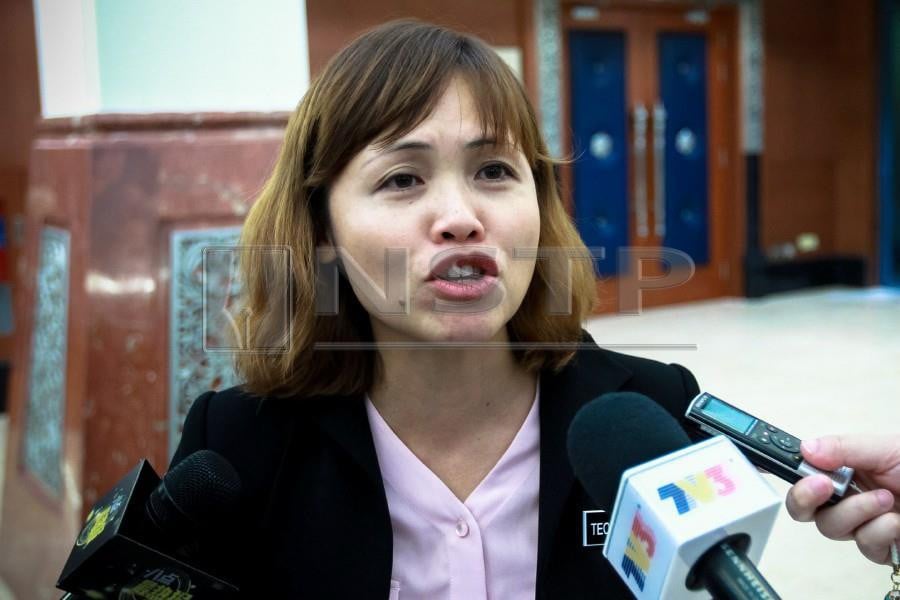
Deputy Education Minister Teo Nie Ching said that this was part of the government’s efforts to resolve the issue of accreditation of graduates from vocational colleges, which had deterred them from pursuing their education at institutes of higher learning. NSTP/ Asyraf Hamzah

KUALA LUMPUR: The Education Ministry is collaborating with the Malaysian Technical University Network (MTUN) to facilitate entry by Malaysian Diploma Vocational (MDV) students to Technical and Vocational Education and Training (TVET) programmes.

Deputy Education Minister Teo Nie Ching said that this was part of the government’s efforts to resolve the issue of accreditation of graduates from vocational colleges, which had deterred them from pursuing their education at institutes of higher learning.

“MDV graduates can further their education to a bachelor’s degree at public institutes of higher learning (IPTA) and private institutes of higher learning (IPTS) on the account that their Malaysian Vocational Certificate is equivalent to 3 Credit Sijil Pelajaran Malaysia (SPM) as set by the Malaysian Examinations Syndicate.

“At this time, the ministry and the Malaysian Technical University Network is collaborating to develop a programme to strengthen their qualifications for TVET entry, especially for students from MDV.

“MDV graduates can also get jobs in industries subject to the terms and requirements of employers,” she said in reply to a question from Nurul Izzah Anwar (PH PKR-Permatang Pauh) during Questions and Answers session at the Dewan Rakyat today.

Teo said all MDV programmes by vocational colleges need to undergo accreditation by the Malaysian Qualifications Agency (MQA) and applications for 615 programmes had been received since June 2016.

She said out of that number, around 83 percent or 510 programmes have received temporary accreditation.

Teo said 428 programmes had been accepted for full accreditation, 12 programmes had received full accreditation and 54 programmes were in the process of fulfilling the conditions to obtain full accreditation.

She added 362 programmes were being evaluated in order to meet the requirements for full accreditation, which is expected to be finished by next year.

She said student entry into vocational colleges this year was 14,243 compared to 16,728 last year. Although the number had increased in 2013 from 15,916 to 18,022 (2014), it dropped to 17,544 in 2015 and 2016 (12,875).

https://www.nst.com.my

Hoping for higher allocation for TVET, athletes in Budget 2019, says youth minister

By NUR HAZIQAH A MALEK / Pic By ISMAIL CHE RUS

Greater focus on Technical and Vocational Education and Training (TVET), development of athletes and ways to reduce unemployment would likely be featured in the upcoming 2019 budget.

The Youth and Sports Ministry is already planning to reduce unemployment among youths to a single digit.

Its Minister Syed Saddiq Syed Abdul Rahman said there are many things on the ministry’s wishlist, but two specific items remain high on the agenda.

“In summary, I feel like there are needs to focus on allocation towards education which involves TVET and not merely tertiary education.

“I have brought this up to the Finance Ministry many times that the allocation for TVET must be enforced while the education and training itself must be industry-driven,” he said at the InvestSmart Fest 2018 in Kuala Lumpur last Friday.

He said TVET graduates of the Youth and Sports Skills Training Institute has an employment rate higher than 90%.

“Clearly, TVET is a training that makes graduates even more employable than those with a bachelor’s degree. The only thing left is to reinforce the training itself so that more people can join TVET,” he said.

He said by reinforcing education and training, the country can help youths from the bottom 40% households.

“We must also have an allocation to address the rate of youth unemployment. There must be an effort by all ministries to curb the issue and to reduce the rate of unemployment among youths to a single digit,” he said.

Some figures suggest youth unemployment rate stood at 10.85% last year, despite headline unemployment rate being 3.3%.

The Malaysian Reserve previously reported the high youth unemployment rate is backed by discriminating employers who prefer to hire foreign workers, as well as the increase in the number of graduates entering the job market.

Syed Saddiq said he would also like some allocation to be channelled for sportsmen and para-athletes.

“A higher allocation for sports is also required which is very important for both our athletes and paraathletes,” he said.

Meanwhile, InvestSmart Fest 2018 is an investor education initiative by the Securities Commission Malaysia (SC) aimed to promote awareness and knowledge on the Malaysian capital market to youth.

SC chairman Tan Sri Ranjit Ajit Singh said the SC has developed a mobile application game to introduce the foundation of capital market concepts to tech-savvy users.

“There is a perception that capital markets are intimidating or dry. We want to shift the perception and make learning more fun and enjoyable,” he said.

According to the Asian Institute of Finance, investments are not a priority for millennials, with only 41% out of 1,000 respondents say they diversify their investments and only 23% would invest more than 20% of their monthly income, while another 40% invest less than 10%.

Source: The Malaysian Reserve

Visit Us On Facebook