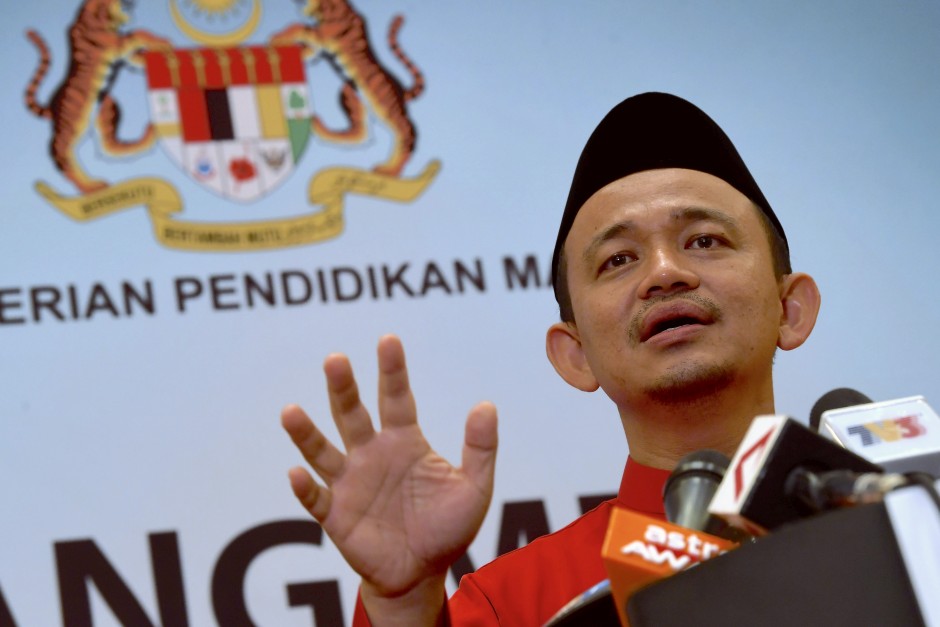
Bringing back credibility to tertiary education

‘For universities to be relevant, excellent and effective, a high level of quality must be achieved in various aspects, and this can be done through having academics who are more visible with works that are used by the community,’ – DR MASZLEE MALIK, Education Minister

Many will find higher education a challenging world as it is here that students will get to know their real selves, the destination of the journey they are taking in life and the means of getting there.

Hence why the Education Ministry finds it crucial to bring back credibility to public universities and higher education through improved quality and emphasis on values as the core of education.

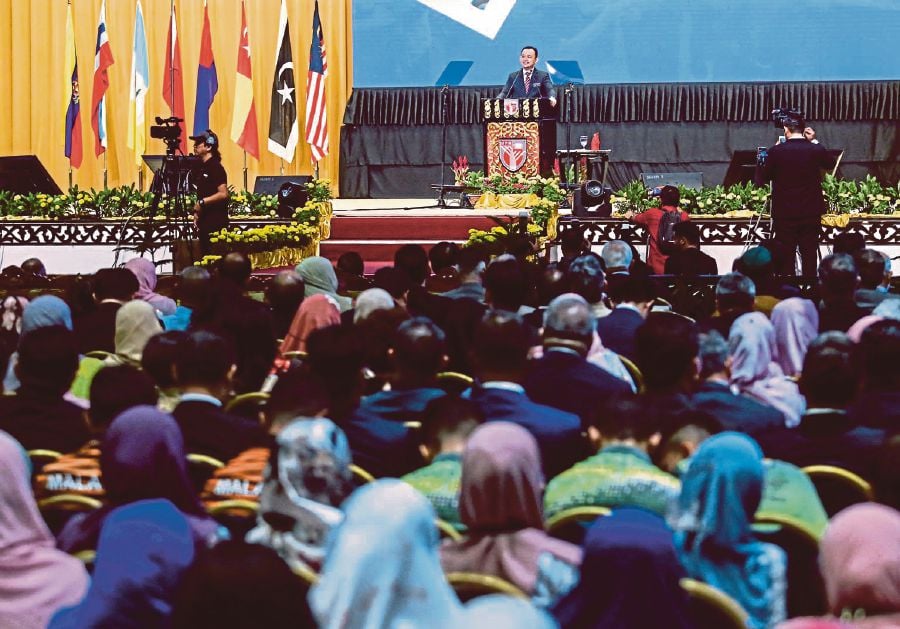
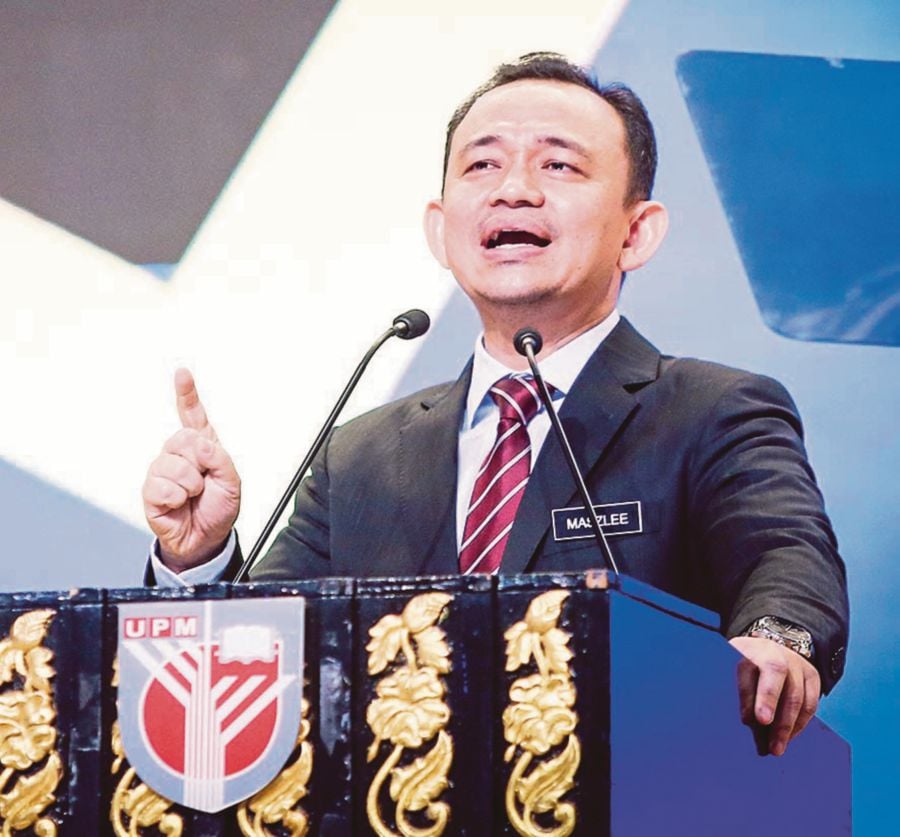
Education Minister Dr Maszlee Malik, in delivering his 2019 mandate titled “Education for All” last week, said the ministry has underlined four key directions for higher education – quality, autonomy, collaboration and internationalisation.

“University is an open intellectual field. It is there that theoretical debates, lively and open discourse, as well as the sharing of knowledge take place.

“For universities to be relevant, excellent and effective, a high level of quality must be achieved in various aspects, and this can be done through having academics who are more visible with works that are used by the community. We encourage universities to nurture the culture of having dialogues, debates, discourse and other intellectual programmes that will provide solutions to society’s problems and develop the nation,” he said.

Ethics is another important aspect that has to be focused on, he said.

“Bad work ethics, plagiarism, and academic bullying must cease. Integrity will not be compromised. Publication of article that has no quality should be exterminated. Publication should reflect the mastery of intellectuals in their respective fields and be regarded as universal reference within the field,” he said.

The ministry will also increase the quality of research grants to ensure that knowledge transfer will occur, encourage translation of great works and the research will establish results that will resolve current community and national problems in a substantial manner. Lecturers who have been awarded research grants are encouraged to guide and finance their post-graduate candidates by appointing them as research assistants.

“For lecturers promotion, we will start moving towards using a big data-based system with artificial intelligence that will accommodate all efforts and contributions from lecturers to determine auto-promotion eligibility. The requirement to fill endless forms will cease,” he said.

The library will be a broad and borderless repository of knowledge and the communication system between libraries at all universities and access to external publications be improved.

“We are aiming to have public universities and the higher education sector be referred to by the global community. The process of internationalisation includes the effort to increase the number of foreign students coming to Malaysia to study in line with the vision of making Malaysia an international education hub, and building more branches of local universities abroad through the satellite university method,” he said.

To increase autonomy at universities, the ministry will reassess the key performance indicators (KPIs) of each faculty and repeal the one-size-fits-all KPIs. Universities will be divided into clusters to create synergy and collaboration to no longer move alone. Autonomy is given to universities and their clusters to determine their respective KPIs.

Empowering students at higher education institutions had been and would continue to be given emphasis, said Maszlee.

Dr Maszlee Malik speaking at the Education Minister’s Mandate 2019 ceremony in Universiti Putra Malaysia. PIC BY ROSELA ISMAIL

Among the first attempts was the abolition of Section 15(1)(c) of the Universities and University Colleges Act 1971, which restricts the involvement of students in political activities on campus. This cancellation is in line with the government’s intention to lower voters’ age limit to 18 years.

“In addition, through continuous collaboration with the administrators of public universities in the country, we are working to create a Students’ Union, which has long been buried in the history of the country. Through the union, students will have more roles, opportunities and responsibilities in the decision-making process at each university,” he said.

The third direction – collaboration – will see the ecosystem of intellectuals be made more vibrant.

“This can be done through a mentor-mentee relationship between senior professors and new lecturers to realise more schools of thoughts in their respective fields. In this case, the universities should not be alienated from the reality of life. To prepare our students to become public intellectuals to handle tasks as society’s troubleshooters, universities must create collaborations with all the appropriate parties, such as schools, polytechnics and vocational colleges. A lot can be done by public universities to help local communities, including giving training to improve the quality of the teaching and learning process in schools,” said Maszlee.

In addition, universities also need to collaborate with other parties to create endowment from the waqf and zakat institution, as well as alumni.

“Use tax incentives to activate financial endowment through alumni. The alumni of the public universities are also asked to return to their alma mater to help out as is the case with international leading universities,” Maszlee urged.

A more drastic and comprehensive internationalisation effort will be mobilised, he said.

“Most importantly, academics of the public university should be referred to internationally in their respective fields and no longer just be jaguh kampung. High-quality work must be produced and translated, and the process of translation must be actively executed; rebranding and marketing must be organised more effectively at the global level. We also need to increase the mobility of professors and staff outside the country as well as have more academics from overseas visiting and serving in our country,” he said.

As for TVET (Technical and Vocational Education and Training), he said the ministry would continue to improve institutional capabilities and systems of TVET to remain competitive and meet market expectations.

“The ministry will implement a harmonised accreditation system with quality assurance for enabling student mobility in TVET institutions, including those in the Malaysian Technical University Network (MTUN).

“MTUN should also be moving towards the Fachhochschule system in Germany and measured with the production of technical graduates and the resolution of technical issues, and not merely producing publications.

“We will improve the quality and delivery of TVET programmes to improve the skills of graduates through an industry-led approach, eliminating duplication of programmes and resource, increasing cost effectiveness, and expanding TVET funding to increase enrolment,” said Maszlee.

“At the same time, the ministry is in the process of resolving the issue of recognising qualification from vocational colleges that will allow them to have equal opportunity to pursue higher education.

“This requires that vocational colleges be placed parallel with the other institutions of TVET to be in line with the industry’s direction,” he said.

Polytechnics and community colleges will also not be left out from reformation efforts to be carried out this year.

“Networking and joint ventures between the two institutions with the industry, particularly big and renowned companies, is a priority to ensure the marketability of graduates in technical fields.

“The alignment between MTUN and polytechnics is aimed to ensure opportunities for polytechnic graduates to continue their education. Polytechnics and community colleges has also opened up opportunities for the tahfiz students to equip themselves with the skills for a career in life,” he said.

Maszlee said the ministry was serious in making TVET on a par with other choices; not a second or an alternative option.

Source: https://www.nst.com.my

Kulasegaran: Join TVET to increase chance of getting hired at SMEs

Human Resources Minister M. Kulasegaran (centre) speaks to reporters during a visit to TalentCorp’s office in Kota Damansara January 23, 2019. — Picture by Ahmad Zamzahuri
PETALING JAYA, Jan 23 — Small businesses will be more willing to take in graduates if they have undergone technical and vocational education and training (TVET), Human Resources Minister M. Kulasegaran said today.

He said since TVET in Malaysia is already paid for by the government, it was the best option for youths to arm themselves with skills.

“Furthermore parents should also encourage their children to study in TVET. That way SMEs would be more willing to absorb them when they eventually join the workforce,” Kulasegaran said during a visit to TalentCorp Malaysia’s office.

He was responding to PKR vice-president Rafizi Ramli’s advice to the government to assist youths in finding jobs at small and medium enterprises (SMEs).

In a post on his blog yesterday, Rafizi said he also believed the government can help to increase the marketability of youths without having to spend “a single cent”.

Source: https://sg.news.yahoo.com

Comment: Most, except for a minority few programs (like aesthethics), esp at Kolej Vokasional, have great facilities…but not the trainers. Was made to understand by the Verifiers for those programs that the trainers are not well versed with the program (to the extent of not being able to identify & use the right equipment for certain treatment….all due to the supplier who supplied the wrong equipment. This bring me to speculate whether there’s element of corruption/kickbacks, causing the supplier to supply cheap, irrelevant equipments at a much inflated price, just like in the past where a simple screw driver may cost 100X more than the market price!)

Hope the PH gov able to put a stop to all these corrupt practices, it’s draining our tax payer’s money & producing sub par quality of graduates.

Mida partners Muehlbauer to enhance vocational training

By RAHIMI YUNUS / Pic By ISMAIL CHE RUS

Malaysian Investment Development Authority (Mida) has partnered Muehlbauer Technologies Sdn Bhd to boost cooperation between academic institutions and industry players to enhance vocational training.

Under the partnership, the Germany-based machine manufacturer contributed RM200,000 worth of automation integrated system to four higher-learning institutions, namely Universiti Malaysia Pahang, Universiti Teknikal Malaysia Melaka, Universiti Tun Hussein Onn Malaysia and the German-Malaysian Institute (GMI).

The system, known as the Beckhoff mock-up, was presented to each university, inclusive of 40 hours of training and support, which entails image or vision processing technology or other advancements based on the institutions’ needs.

“We are pleased that more and more companies are responding positively to our call for narrowing the gap between the latest practical know-how of the industry and university syllabus.

“We continue to encourage companies to invest in talent and technology to improve productivity and capability, and become future-proof,” Mida CEO Datuk Azman Mahmud (picture) said at the equipment handover ceremony in Kuala Lumpur yesterday.

Azman said the partnership between industry players, particularly multinationals and higher learning institutions, is important for Malaysia to grow its technology capability towards the Industry 4.0.

Students in mechatronics engineering are expected to gain early exposure on the Beckhoff system that is used in industries related to mechanical, electrical, programming, instrumentation and vision technology.

Source: https://themalaysianreserve.com

Malaysian private education: A neglected and over-regulated industry — National Association of Private Educational Institutions

JANUARY 24 — At the recent Majlis Amanat Tahun 2019, it was encouraging to see the minister of education showing a forward direction towards education in the new government. Providing greater autonomy for the public universities and less administrative load for teachers in the public school system, and thereby enabling teachers to focus more on teaching and learning, was part of Amanat 2019.However, it is very disappointing to note that the role of private higher education, private school education and TVET was not mentioned at all.

The private education sector has been supplementing and complementing the government in providing education for more than 80 years, since 1936. Based on current data, more than 51 per cent of post-secondary education is provided by private higher education institutions, saving the government billions of ringgit in expenditure in education. In addition, private education contributes to the economy of the country in the range of RM50 billion, of which close to RM17 billion is derived from enrollment revenue of international students. And not forgetting that all our graduates are gainfully employed and sought after by industry

However, the private education sector is becoming a sunset industry as many institutions are facing massive losses due to reduced student enrollment with some in the process of closure.

How has this come about? Past statistics showed that close to 25 per cent percent of school leavers each year do not enroll in any form of education or training. A majority of them belong to the B40 group (the group where annual household income is below RM40,000). Presently the percentage has increased from 25 per cent to more than 40 per cent. This is due to the requirement of a pass in Sejarah at SPM level. This has prevented and penalised students who have passed in other subjects including mathematics and science but failed in Sejarah. This has made a large number of SPM students ineligible to enroll for further post-secondary programmes like Pre University (Foundation, Matriculation, A-Level) as well as diploma programmes, and critically affected the enrollment of SPM school leavers in private educational institutions.

When the global focus is on science and technology and Industry 4.0, we are depriving our school leavers of the opportunity to continue on to post-secondary education and training and losing much needed talent in the workforce. NAPEI proposes that the requirement of a pass in Sejarah be reviewed. If not addressed, we believe this will also cause socioeconomic problems among the youth in the country.

In addition to the above, retarding policies and regulations set by overzealous bureaucrats related to administration and operations have further caused barriers to the progress of private education.

The enrollment of international students has dropped by about 32 per cent in 2018 due to policies and regulations that deter international students from choosing Malaysia as a study destination. Countries like Japan and Canada, which are already study destinations of choice by students, have made changes to their immigration policies and regulations in order to attract more international students. One of the more effective policies for Malaysia to attract more international students is to allow up to 20 hours a week of part time employment while studying. Another factor causing a decrease in recruitment of international students is the revocation of KDN’s licence to recruit international students. And in many cases, the KDN licences were revoked for reasons beyond the control of the institutions.

We will not be able to reach the target of 200,000 international students by 2020 and 250,000 students by 2025 if we are not serious in reviewing the existing policies and regulations.

With reference to Amanat 2019, the public education system will enjoy greater autonomy under the new proposal, but the private education sector is given less autonomy through retarding policies and over regulation of the Ministry, thus making it difficult for it to grow further. The private education industry wishes to work closely with the Ministry of Education to continue providing quality education. NAPEI suggests an impact analysis be done before any policy or regulation is rolled out, as per MPC guidelines. We are looking for more engagement with the Ministry of Education in further enhancing the human capital development of the country and to be an integral part of the new agenda outlined in Amanat 2019.

We hope related agencies and ministries like EPU, Miti and the Ministry of Finance too could be engaged to look at the bigger picture in terms of economic development of the nation and contribution to the GDP by the revenue derived from the international student market.

Source: https://www.malaymail.com

* This is the personal opinion of the writer or publication and does not necessarily represent the views of Malay Mail.
Comment: Despite all the gloom, there are still demand to purchase either a pure TVET institutions or higher education centre (college and university college).
So before your college/TVET Institution run into high debts, quickly sell off your license to some others who thinks that they can run & manage a college/TVET institution.
Kindly email to ismarteducare @ gmail.com or whatsapp to 012-3123430 on what you have to offer (or what you want to purchase – we already have a lilsting) with as much details as possible.

TVET, a stepchild no more

Students of Politeknik Ungku Omar get hands on training on automotive engineering at the workshop at their campus in Ipoh.

Students of Politeknik Ungku Omar get hands on training on automotive engineering at the workshop at their campus in Ipoh.

A framework has been proposed to address the long-standing problems of our TVET system

A NEW framework for technical and vocational training is in the pipelines.

If approved, the proposal will see a more streamlined, effective, and industry-relevant, Technical and Vocational Education Training (TVET) system.

Proposed by the National TVET Movement to the Economic Planning Unit last month, the framework aims to address the country’s ailing TVET system.

“Our focus is on upper secondary school students. We want to create a TVET champion.

TVET students being trained to be industry-ready. — File photo

TVET students being trained to be industry-ready. — File photo

“We want students to have better access to choices between academics and something more hands-on like TVET. This is what’s happening in other countries,” said Ahmad Tajudin, who recently retired as the Education Ministry deputy director-general.

Among those part of the Movement are the Federation of Human Resources Ministry’s Department of Skills Development (JPK) Accredited Centres (FeMac), National Council of Professors, and the National Parent-Teacher Associations’ Vocational and Technical Consultative Council.

For too long, TVET has been the “troubled stepchild” of the education system, he said.

This framework tackles long-standing problems like the:

> Overlapping of programmes and certifications;

> Misguided focus on post-secondary TVET students instead of upper secondary students;

> Existence of multiple accreditation bodies and agencies implementing TVET;

> High operations cost resulting from the many ministries involved;

> Weak policies; and

> Private TVET providers being treated as competitors.

“All TVET institutions should be streamlined, rationalised, and consolidated, under the Education Ministry.

“This ensures that teachers and trainers are better taken care of under one scheme of service. And, there won’t be a need to close down any institutions if all facilities and resources are under one roof,” he said, adding that it would also be more cost effective for the Government while ensuring smoother communication between the industry and institutions.

Other reforms proposed by the Movement include:

> Reducing existing certifications to an important few;

> Having a single accreditation body for TVET;

> Establishing two educational pathways for students to choose from;

> Allowing industries to take the lead;

> Enhancing TVET apprenticeship programmes based on models from other developed countries; and

> Formulating policies and legislations to enhance careers in TVET.

Greater emphasis, and an overview, of TVET implementation is needed, Ahmad Tajudin said.

There should be training provisions to facilitate contributions from private TVET providers, and there must be closer collaboration between the industry and these providers.

“Our TVET system needs stronger institutional coordination, and greater transparency among the multiple public agencies.

“TVET restructuring is a small part of a holistic solution, but it’s a start to the reform,” he said, adding that strong political will from the Government was crucial to ensure the country’s TVET success.

Education Minister Dr Maszlee Malik said the Government would continue enhancing the capabilities of TVET institutions and systems to remain competitive and meet industry demands.

Speaking during his annual new year address in Serdang on Monday, he said the ministry would implement a harmonised accreditation and quality assurance system to enable student mobility in TVET institutions, which includes the Malaysian Technical University Network (MTUN).

The launch of Limkokwing TVET International, a TVET Malaysia Training Centre at Limkokwing University.MOHD SAHAR MISNI/The Star

The launch of Limkokwing TVET International, a TVET Malaysia Training Centre at Limkokwing University.MOHD SAHAR MISNI/The Star

MTUN, he said, should move in the direction of Fachhochschule – Germany’s tertiary education institution specialising in topical areas.

MTUN, he added, shouldn’t be evaluated solely based on publications, but also on the ability of the graduates produced to solve technical issues.

He said the ministry plans to increase the quality and delivery of TVET by enabling the industry to lead the curriculum development, avoid overlapping of programmes and resources, improve cost effectiveness, and widen the funding to increase enrolment.

He said the ministry was also in the midst of addressing recognition issues involving controversial vocational colleges.

He assured polytechnics and community colleges that they wouldn’t be sidelined in the reform process.

“To ensure the employability of our graduates, closer collaboration between these institutions and the industry – especially with the big players – will be prioritised,” he said, adding that these were part of the ministry’s efforts in making sure that TVET, polytechnics, vocational colleges, and community colleges, are no longer seen as second choice options.

In June last year, Dr Maszlee appointed Lembah Pantai MP Nurul Izzah Anwar to chair a special TVET task force.

The duties of the task force, said Dr Maszlee, was to conduct research across all ministries that provide TVET education and training, and recommend how the country’s TVET system can be improved. This includes a review of TVET education and training laws, and the possibility of a TVET commission.

However, the TVET industry was left reeling following Nurul Izzah’s resignation as PKR vice president on Dec 17, and her decision to no longer serve the federal government in any capacity.

“We’ll continue advocating for a sustainable and effective TVET implementation,” said Ahmad Tajudin.
Source: www.thestar.com.my

Comment: It’s good that the Ministry has identified the weaknesses & looking to implement the reforms (personally, I see that our TVET sector would soar to much greater heights compared to now, if reforms are implemented effectively & correctly).

But I have a doubt whether they would reform this particular weakness – Private TVET providers being treated as competitors.

It seems that there are plans to gradually “KILL” the private TVET providers based on their proposed plans (hearsay, so take it with a pinch of salt).


These include but not limited to:

1) Closing all TVET providers that are 2 stars and below after the impending 2019 star rating process (as early as March 2019). It generally affects the smaller private TVET providers who has very limited resources (manpower & finances) vs the public TVET institutions.
2) Closing/revoke Vocational Training Operation (VTO) programme of any private TVET institutions that has does not meet a min of 4 stars and above for that particular programme. Eventually, it would be just offered by the multiple satellite campuses of CIAST, nationwide,
3) Restrict the organising of the JPK’s various induction courses (PP-PPD-PPB, PP-PPT, PPL) to only  CIAST satellite campuses, nationwide.
4) and BEYOND – perhaps you can comment if you think what they are doing/planning to do is gonna KILL the private TVET providers.

TESDA strengthen ties with industry players in TVET education, training

Employers and workers in technical vocational education and training (TVET) will play a larger role in the country as the Technical Education and Skills Development Authority (TESDA) moves to strengthen its partnership with them for a more effective and efficient implementation of its training programs and other services.

This was after TESDA Director General, Secretary Isidro S. Lapeña, signed the “Implementing Guidelines on the Establishment of Institutional Arrangements with Industry Boards or Industry Associations”.

TESDA Director General, Secretary Isidro S. Lapeña (TESDA / MANILA BULLETIN)

TESDA Director General, Secretary Isidro S. Lapeña
(TESDA / MANILA BULLETIN)

The guidelines aim to “recognize Industry Boards (IBs) or Industry Associations (IAs) as partners in the delivery of TVET programs or services”.

These guidelines also aim to “engage the direct participation of employers and workers in the design and implementation of work related to technical education and skills development”.

“The establishment of institutional arrangements with IBs or IAs shall encourage active participation of various concerned industries in providing relevant technical education and skills development opportunities, being direct participants in and immediate beneficiaries of a trained and skilled workforce,” explained Lapeña.

The industry sectors primarily include those that are considered by the agency to be Key Employment Generators (KEGs) such as Construction, Tourism, Agri-business, Wholesale and Retail, Health and Wellness and Automotive/Transport.

The IBs and IAs that will be recognized to represent their respective sectors will serve as the “conduit” of the industry in the design and implementation of projects, programs, and activities in TVET of TESDA.

Part of their responsibilities will include giving TESDA recommendations in the conceptualization and execution of skills development schemes, skills standardization, and certification, as well as to entice industries and employers to participate in these activities.

The IBs and IAs will likewise assist in the development of competency standards, curriculum, sectoral skills plans, and assessment tools.

These groups will also take part in the promotion and implementation of various TVET activities towards quality skills development including the conduct of skills competitions.

Initially, a Secretariat will be established to give administrative and technical support to the IBs and IAs. The Secretariat will be composed of staff from TESDA’s Partnerships and Linkages Office (PLO), Qualifications Standards Office (QSO), National Institute for Technical Education and Skills Development (NITESD), Planning Office (PO) and Certification Office (CO).

The TESDA PLO will allocate a budget of P100,000 for each IB or IA for preliminary related activities such as the conduct of meetings, conferences and the production of promotional materials.

The recognition of IBs/IAs is covered in Republic Act 7796 (TESDA Law) and its Implementing Rules and Regulations (IRR) which allow for the establishment of institutional arrangements with bodies or associations such as industry boards that may support TESDA in the fulfillment of its objectives.

Source: https://news.mb.com.ph

Comment: Whether it’s Malaysia, Philippines, African countries or any other developed countries, the TVET institutions has to work closely with the IB/IA (in Malaysia it’s known as ILB – Industry Lead Body) so that graduates produced are able to meet the respective industry’s needs.

Local students wanted for TVET program


Company Industry - SANY Group

Local students wanted – THE world’s largest concrete machinery company is keen on training young Malaysians under the Fourth Industrial Revolution 4.0.

Sany Group Co Ltd managing director Keade Wang said China’s biggest construction machinery manufacturer exports to 150 countries, has three industrial building system (IBS) factories here, and is looking to expand. Plans are underway to develop a heavy machinery industrial plant in Kedah, and it wants to work with the Education Ministry to transfer its technology and train our students under the TVET programme.

“Sany Polytechnic College, which is over a decade old, is owned by the Group. We’re in talks with the ministry and a local Technical and Vocational Education and Training (TVET) institution, to train Malaysian students and place them in Sany Group branches worldwide.

“We’re hoping to get the green light from the ministry soon for our Construction Industry Development Board (CIDB) aligned syllabus to be used. We need TVET workers and local students are wanted because they’re multilingual. Those successfully trained by the Group can even work in our plants overseas.

Maszlee: Chinese firms want to sponsor TVET students | The StarThree months ago, Education Minister Dr Maszlee Malik said Chinese firms want to sponsor TVET students.


He had that said there would be more TVET scholarship and training opportunities for Malaysian students in education institutions and companies in China, The Star reported.

Sany was among the Chinese companies which met him and ministry representatives to discuss preparing Malaysians who graduated from technical and vocational education and training to face the challenging international industry.

A joint-venture with local property developers will see Sany needing more of “the right workers”, said Sany Construction Industry Development director Chang Bar Kuei.

He said its design, production, installation, education, and equipment, are in line with the country’s CIDB requirements.

“It doesn’t make monetary sense to replace the entire process with machines and automation because it would make homes unaffordable.

“So TVET graduates don’t have to worry about being jobless. But, we’re selective about who we train because the right attitude is important.

“No point transferring knowledge and skill to someone who isn’t serious about the industry.

“That’s why our potential trainees must all undergo an interview process,” said Chang.

Dr Maszlee, he said, had visited Sany Polytechnic College last year, to understand the college’s focus on both theory and practical.

“This dual focus is important because students must be able to communicate and interact with others when they start working.

“The TVET workers we’ve seen so far lack confidence because the skills they bring to the industry is irrelevant. So we’re facing a shortage of quality operators.

“We want to make sure that the students we train have sound technical, and soft skills, so that they can work anywhere in the world.”

Chang said a relevant TVET syllabus is critical in ensuring that graduates are paid fairly.

Instead of cheap foreign labour, Sany, he said, preferred to pay young Malaysians who are serious about their careers.

A TVET graduate can earn between RM3,000 and RM4,000 if their syllabus is industry-relevant. For example, our troubleshooting is all computer-run so we can’t get someone who only knows hardware,” he said, adding that Sany is willing to work closely with the Government on its TVET policies.

Sany has also engaged with the National Union of the Teaching Profession (NUTP) to identify potential trainees.

NUTP secretary-general Harry Tan said TVET and varsity graduates must be given equal recognition.

“Our TVET graduates aren’t paid enough. But then again, for them to be hired and to get a good salary, they must be trained in skills that the industry want – not the current syllabus. If the Government is serious about TVET, it has to get its act together – fast.”

On Dec 28, The Star’s exclusive highlighted concerns over the outdated TVET syllabus, and plans by industry leaders to chart the way forward. The newly formed “Industry Lead Bodies” would ensure that Malaysia’s TVET was on par with developed nations like Australia and Canada.

Two months ago, the mid-term review of the 11th Malaysia Plan (11MP) – a five-year development plan for the country from 2016-2020 – was tabled at the Dewan Rakyat by Prime Minister Tun Dr Mahathir Mohamad.

The report found that the intake of TVET students has increased and though classified as technologists, graduates are not recognised as professionals with the bargaining power to demand higher wages.

Source: www.thestar.com.my

Comment: Yes, selecting the candidate with right attitude is VERY VERY important. A candidate with right attitude like passion in the subject matter and willingness to keep on learning (should be lifelong) other skills & knowledge is far more important than just being skillful in one particular subject matter but having a lousy attitude (in their work or their learning)

CON-sultant or Consultant? My experience in the TVET sector

CON-sultant

As you would have known, CON-sultant is not really a consultant but just a CON artist who cons their victims via consultancy.

Just a quick sharing.

Yesterday, I had a meet up with another ex-public listed company, interested to purchase a TVET/JPK Accredited centre and/or MQA approved college license.

Guess what? A previous CON-sultant tried to push them to purchase an MQA approved college license for RM5 million (not a hefty amount provided it has quite a few good programs & with KDN license with clean records). However, when pushed for more details from the potential buyer, the CONsultant started making stories that do not jive, hence the potential buyer has some reservations. When pushed further for process flow, the CON-sultant came out with proposing them SKM/DKM via PPT method at a really hefty figure (5 digits/candidate!), without really probing what the customer actually wanted.

Now, I have this challenge to propose to the company on how they can achieve what they want but hey, it’s a good problem to have. If I can help them to achieve what they wanted, I’m sure I’ll be rewarded appropriately (not necessarily handsomely though :-P)

Another case happened just last month. Another CON-sultant proposed to sell his SLDN training centre (3-4 programs if not mistaken) for RM500K. Not sure what’s so valuable about the license but anyway he managed to convinced the potential buyer (to me, I wouldn’t even pay RM50K for that!). Unfortunately for the CONsultant, he made a very BIG MISTAKE, not sure it’s by choice or it was just plain silly. He asked to be paid in cash, no cheques, no bank accounts transfer, no receipts to be produced. WTF! Where on earth would a buyer agree to this kind of agreement? Even buying fruits for RM2 at fruit stalls along PLUS Hentian are given receipts!

And I really got a shock when a kursus induksi which cost only RM350 (maximum course fees chargeable, in case you are still unaware) was quoted at 6 times more! And because of the CON-sultant’s greed (did not pay me & lied saying he wasn’t paid & fooled by the client – despite the client made the inflated payments to him), I had no choice but to go after the client directly for the payment. Well, you should know what’s the ending for the CON-sultant.

Jho Low - Con-sultant or con artist

Moral of the above 2 REAL LIFE stories:

1. Be knowledgable in your area if you really WANT to consult someone on that area, otherwise, be upfront & frank with your client that you’re working with an associate and NEVER pretend that you know everything despite KNOWING NOTHING about it as clients may sometimes be more knowledgable than you in that area if you’re not the EXPERT! You may not be lucky to be able to CON all the way, just like the Malay proverb:
Sepandai-pandai tupai melompat, akhirnya akan jatuh ke tanah juga

2. Be as transparent as possible with your clients, they will appreciate it.

3. GOD will reward you if you work hard & genuinely.

4. DON’t MESS UP with TVET Malaysia@ISE Education, we will go after what we’re supposed to get.

5. Consultants (individuals or companies) that agrees with everything that you requested as easy as ABC, especially without much thinking, should give you an ALARM! Don’t fall into the trap. Probe further on the Consultants past track records, a check-up for any info on the web (just Google the company or person, if not much web presences or many negative comments about the Consultant, that’s another ALARM!), testimonials and etc.

Here’s an interesting article on 7 tell tale signs of a con artist

With that, I hope you will not be the next victim to such CON-sultant!

And should you need any advice on TVET matters especially related to JPK/SKM/VTO/Induction course, feel free to call/WhatsApp (pls introduce yourself, who you are, what you want to know, in details) or email us at:
012-3123430 or ismarteducare @ gmail.com.

Penilaian Pembaharuan Lantikan PPL (2019)

Sukacita pihak CIAST mempelawa mana-mana lantikan Pegawai Pengesah Luaran (PPL) yang akan tamat tempoh pada tahun 2019 dan 2020 untuk memohon menyertai Bengkel Penilaian Pembaharuan PPL Tahun 2019 mengikut zon  seperti jadual di bawah. Maklumat lengkap mengenai bengkel penilaian ini boleh merujuk kepada PANDUAN PENILAIAN PEMBAHARUAN LANTIKAN PEGAWAI PENGESAH LUARAN (PPL)
Bil.Zon WilayahTarikh Bengkel Penilaian *Lokasi Bengkel*Tarikh Tutup Permohonan
1Tengah 1Feb 2019 (Minggu ke-2)CIAST Shah Alam18-Jan-19
2Utara 1Feb 2019 (Minggu ke-3)CSC ADTEC Taiping, CSC Kepala Batas, UTC Alor Setar,26-Jan-19
3Selatan 1Mac 2019 (Minggu ke-1)CSC ADTEC Melaka, JPK Wilayah Selatan8-Feb-19
4Timur 1Mac 2019 (Minggu ke-3)CSC ILP Marang, CSC ILP Kota Bharu8-Feb-19
5Sabah 1April 2019 (Minggu ke-3)JPK Wilayah Sabah15-Mac-19
6Sarawak 1Jun 2019 (Minggu ke-3)JPK Wilayah Sarawak03-Mei-19
7Tengah 2Julai 2019 (Minggu ke-2)CIAST Shah Alam31-Mei-19
8Utara 2Ogos 2019 (Minggu ke-1)CSC ADTEC Taiping, CSC Kepala Batas, UTC Alor Setar,05-Jul-19
9Selatan 2Ogos 2019 (Minggu ke-3)CSC ADTEC Melaka, JPK Wilayah Selatan05-Jul-19
10Timur 2Sept 2019 (Minggu ke-1)CSC ILP Marang, CSC ILP Kota Bharu02-Ogos-19
* Tertakluk kepada perubahan

Sila mohon <<DI SINI>>

Nota: Tuan/puan dinasihatkan untuk memilih di zon wilayah yang paling hampir dengan alamat rumah tuan/puan kerana tuntutan TNT adalah tanggungjawab tuan/puan atau agensi tuan/puan sendiri dan bukti penghantaran permohonan tidak sah sebagai pengesahan kehadiran. Keutamaan tawaran akan merujuk kepada kelayakan pemohon dan nombor ID permohonan yang terawal.

NOTA: Kursus Induksi PPL pada 19-20 Jan di Kepong, KL
              Sekiranya dah tamat tempoh (3 tahun dari 2015 & tak pernah dilantik sebagai                  PPL) ataupun ingin sebelum menghadapi bengkel penilaian, ikutilah kursus                      induksi PPL  sekali lagi dengan yuran istimewa (sehingga 50% diskaun).

Adding value to vocational education

EDUCATION reform in Malaysia has been long overdue and it is undeniable that to be a developed nation, major changes have to be made. Ensuring access to education for all gives us a powerful weapon to reduce and even eliminate poverty.

We must provide marginalised individuals especially those who do not pursue a university degree, access to an alternative means of education that would allow them to work in a theoretically considered and practically competent way.

To achieve this, the government aims to overhaul Technical and Vocational Education Training (TVET).

TVET is a dual vocational training system that promotes competency-based education and training linked to industry needs. TVET students undergo classroom learning and informal learning at workplaces. Graduates are accepted into companies as they are better equipped to cope with the challenges.

As we prepare to face the challenges of Industrial Revolution 4.0, it is especially important for those in the B40 group to uplift themselves through vocational learning. Many are struggling to find jobs within key industries because they lack the required skills and technical expertise.

The government spends RM4.5 billion on TVET courses annually, and programmes are run across seven different ministries.

However, there are some massive challenges that must first be addressed. There is little coordination between these ministries on how the programmes are run and in some cases their functions overlap. For example, the Education Ministry is responsible for community colleges and polytechnics, while the Youth and Sports and the Rural and Rural Development ministries also oversee public training institutions.

TVET has been seen as an unpopular alternative for many students and it has failed to attract the numbers. A report published by the Khazanah Research Institute last month on the “School-to-Work Transition of Young Malaysians” states that only 13% of all upper secondary students are pursuing TVET courses while at the higher education level, less than 9% are in polytechnics. This is in contrast to Germany, Switzerland and even Singapore where more than half of their students end up in TVET instead of universities.

The report also highlighted the negative perception towards TVET with both students and parents regarding it as an “inferior educational pathway, deadend and for the academically challenged”.

The often-cited model for reform is the German dual vocational training system where companies and government vocational schools work in cooperation to produce skilled workers. Vocational training is coordinated and regulated by policies and the qualifications produced are recognised by the state, the economy and society. The German model has resulted in low unemployment rate and it upgrades its continuous training of skilled workers to meet the demands of their economy as it changes over time.

The close social partnership between TVET institutes, the government, private individual industries, employer associations and the relevant chambers of commerce and unions plays a vital role to develop the standards for vocational training in Germany.

Adapting the German model to Malaysia however is easier said than done. One of the biggest differences is the longstanding tradition of vocational training in Germany that has received wide public support. Companies are willing to take part in training students and TVET is generally seen as a recognised qualification.

If we aim to emulate the success of the German model, we must work towards changing the perception of the public towards TVET, and make the system more appealing

TVET graduates in Malaysia are not being recognised as professionals and there is a significant wage problem that needs to be solved to ensure that graduates are not marginalised and continuously left behind. The average maximum salary reported by public sector employers for workers with TVET qualifications is around RM3,000 lower compared to university graduates and only about RM500 more than for school leavers.

There is genuine concern about the ability of the system to address the employability of young Malaysians and their marketability and adaptability to meet the demands of a rapidly changing labour market, especially with the onset of Industrial Revolution 4.0. The point about outdated TVET syllabus was recently highlighted by the National Union of the Teaching Profession and the National Parent-Teacher Associations’ Vocational and Technical Consultative Council.

To tackle this issue, reforms must concentrate on institutionalising vocational training to include setting strategic plans and mechanisms that would allow for continuous research and changes to make the system constantly relevant to meet the demands of industry. The government must work with key industry players to institutionalise their role within the framework of an evolving TVET system.

Among the suggested reforms by former TVET special taskforce head Nurul Izzah Anwar includes establishing an Industry Skills Education and Training Commission to facilitate data sharing between all TVET institutes, coordinate TVET programmes with industry needs, and oversee job security and more meaningful wages for TVET graduates.

She had suggested a ratings system for different TVET institutes, which would allow parents and students to assess which schools are best for them.

Hopefully these measures will push us closer towards achieving a sustainable vocational training system that will rival university-level education.

Source: www.thesundaily.com