Jobs of the future: Top five emerging careers

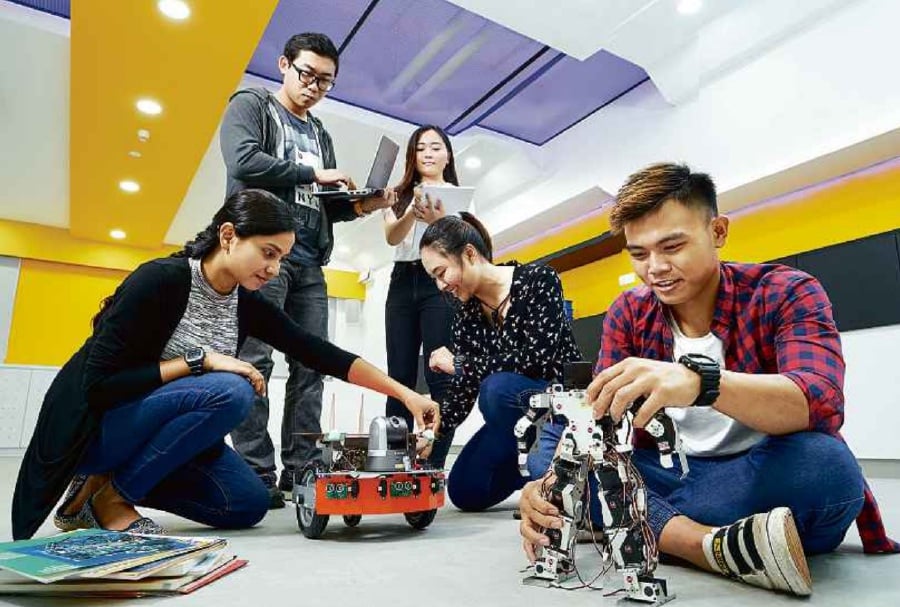
(File pix) Robotics engineering is a sought-after career pathway for school-leavers.

Apply for your favourite TVET courses/ SKM courses here

CHOOSING the right course to study after secondary school is one of the most important decisions in life.

With an array of courses available, the guidance of an experienced and knowledgeable education counsellor is invaluable after the Sijil Pelajaran Malaysia (SPM) and Sijil Tinggi Persekolahan Malaysia (STPM) examinations.

Regardless of whether school-leavers are from the arts or science stream, it is important to select a discipline that matches interests.

Malaysian Institute of Human Resource Management human resource adviser Geh Thuan Hooi said the programme of choice must be relevant now and in the future or graduates risk being left behind.

“With the advent of Industry 4.0 where artificial intelligence (AI) will replace many present jobs, anything related to data analytics, information technology and robotics are good fields to venture into.

“Jobs requiring a high sense of creativity and decisiveness will be much sought after. Those with a strong mindset, who are persistent and not afraid to fail, as well as team players will make it in the future,” he added.

Higher Ed looks at the top five emerging careers – data scientist, robotics engineer, physiotherapist, certified account and digital marketer – with a promising future.

DATA SCIENTISTS

Demand for data science skills is growing exponentially as it is crucial to extract knowledge and insight from data captured by companies.

Center of Applied Data Science (CADS) founder and chief executive officer Sharala Axryd said data scientists have always been in demand but, until recently, only large enterprises and digital natives were willing to make the significant investment.

“Corporations know that if they are slow to act, they will become dinosaurs in this digital age and lose competitive advantage.

“Management and executives are now actively utilising data to make business decisions,” she added.

“CADS offers courses such as the Data Star Programme and CADS Certification which teach the fundamentals of interpreting data, performing analyses and understanding and communicating actionable insights.

“The special SPM-Leavers Seminar, which was introduced last year, gives insight into the skills needed in the world of data science as well as job opportunities in the industry.

“Through these programmes, students are better equipped to stand out among their peers by pursuing career paths such as data scientists and analysts in various industries. These are increasingly highly sought-after roles which organisations are eager to fill.”

Data scientists are at the top of the data science career ladder as they possess both theoretical knowledge and technical skills.

“Data scientists should also have excellent communication skills to articulate their knowledge into useful insight that creates value.

Whether it is the field of AI, machine learning, deep learning or analytics, the possibilities are endless.

“A career in data science is considered an extremely broad field, as data scientists are relevant across industries, fitting in both vertically and horizontally.

“Exceptional understanding of all aspects of data, programming and business is highly respected.”

A Bachelor’s degree in Computer Science, Statistics or Social and Physical Sciences is the basis of skills required to process and analyse big data. Relevant fields include mathematics, computer science and engineering.

Arts stream students, who have non-technical skills, can pursue their interest in data science if they have strong communication skills or business knowledge.

For example, a Bachelor of Arts in Communication graduate can rewrite technical jargon into plain English for the easier understanding of the marketing department.

ROBOTICS ENGINEERS

Robotics has been around for decades but current technological breakthrough in areas such as AI, Internet of Things, Industrial Internet of Things (IIOT), cloud computing and big data analytics has generated demand in sectors such as food and beverage, logistics and consumer markets.

Multimedia University Faculty of Engineering Technology dean Associate Professor Dr Fazly Salleh Abas said robotics is a discipline that combines knowledge on electronics, electrical and mechanical engineering, and software development.

The “body” of a robot is built on mechanical concepts, the “nervous system” on electrical and electronic components while the software forms its “brain”.

“It is not only the job of the future but is also now in demand. And it is not limited to manufacturing since robotics and automation are widely used in industries such as medicine, agriculture, law enforcement and surveillance.

“Graduates can choose to join the workforce in the industry or become researchers.

“The application of automation and robotics is broad. One may work on single-action robots in plants that automate bottle labelling or work on complex projects such as designing intelligent drones or a full-scale IIOT-enabled assembly system equipped with AI capabilities to predict possible breakdown.

“If one loves solving problems, then robotics is a brilliant choice for future pursuits,” he added.

In just a few decades, industries especially manufacturing are fertile ground for robotics and automation systems to evolve since they open the path to productivity and profitability.

“This technology has a long way to go in disrupting the way we manufacture and distribute products.”

A Bachelor of Science degree in Engineering — Robotics, Computer, Electro-mechanical, Electrical and Mechanical — is the entry-level academic requirement for a career in robotics.

Typical coursework for a robotics engineering degree includes advanced mathematics, physical and life sciences, computer science, computer-aided design and drafting, physics and materials science.

SPM science stream students with a Foundation in Engineering qualification or STPM scholars with three principals including mathematics and physics are eligible to pursue the Bachelor of Engineering (Electronics) degree majoring in robotics and automation.

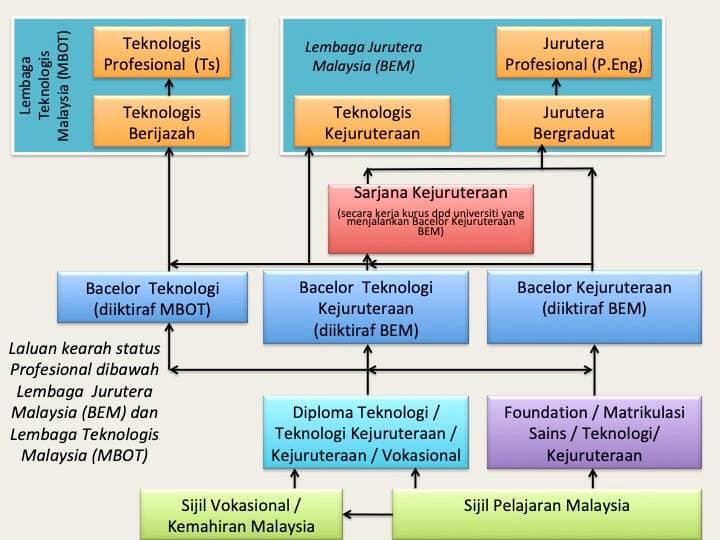
For arts stream students who wish to become engineers, the pathway may be a little bit longer than for science stream students, whose usual pathway is to pursue Foundation, Matriculation or STPM course followed by an engineering degree programme.

A tip: excel in SPM and enrol in a diploma in engineering course at a polytechnic or public and private university before pursuing a degree in engineering programme.

PHYSIOTHERAPISTS

Health Minister Datuk Seri Dr Dzulkefly Ahmad said expenditure in the nation’s healthcare industry is expected to reach RM80 billion by 2020.

Industry-spending, which recorded RM52 billion at end-2017, has increased, fuelled by demand for healthcare services and the emergence of new care models beyond traditional hospital settings.

Management and Science University (MSU) Faculty of Health and Life Sciences dean Associate Professor Dr Sairah Abdul Karim said Malaysia is ranked as one of the highest for chronic heart problems and obesity among Asian countries.

There is a need for more physiotherapists to come up with exercise therapies designed to solve patients’ specific therapeutic goals.

Physiotherapists enjoy high employability as their skills are integral to the rehabilitation of patients who have either suffered a stroke, had a knee replacement, heart bypass surgery. In addition, they treat and minimise physical disabilities associated with injury, disease and other impairments.

“On average, a physiotherapist earns an annual income of RM29,500. Depending on experience, one can earn between RM14,000 and RM68,000 a year.

“This is a career that helps people and improves lives – not only alleviate pain – and there’s flexibility to work as a part-timer,” she added.

Physiotherapy courses offer a variety of hands-on skills that can be applied in hospital settings and sports clubs, special needs children’s centres, old folks home as well as rehabilitation centres.

“Physiotherapy graduates can look into becoming an academician, trainer, sports therapist, acupuncturist, chiropractor or exercise physiologist.”

With the average ratio of physiotherapists to the country’s population at 1:27,000 compared with 1:14,000 for developed countries, and 1:500,000 for under-developed nations, physiotherapists are in demand.

“There will be some 19,000 physiotherapists in the country by 2020 when the estimated population is 32 million, giving a ratio of 1:1,813.”

In 2016, there were 216 private and 153 public hospitals in the country. The Health Ministry employed 1,373 physiotherapists.

Non-governmental organisations and the Women, Family and Community Development Ministry also hired them.

In addition, physiotherapists also able to set up private practices and work in private clinics.

At MSU, prospective students need a minimum C grade for science subjects to enrol in the physiotherapy course, which includes 70 per cent hands-on learning and practice to ensure comprehension of integrated therapeutic approaches to patient care.

The programme encompasses clinical placements in accredited places such as MSU Medical Centre, public hospitals (under the supervision of the Health Ministry), private hospitals, National Sports Institute of Malaysia and healthcare services providers.

The specially designed clinical placements exceed the 1,000 hours requirement by the Malaysian Qualifications Agency.

“The curriculum is carefully crafted to ensure students are competent and inventive practitioners later in their career.

“This programme is delivered through innovative, 21st century teaching techniques, which engage students in collaborative, highly focused assessments and projects to build a solid foundation for a career in physiotherapy.”

KPJ Healthcare University College School of Health Sciences dean Mohd Izham Mohd Zain said physiotherapists are sought after in the healthcare industry, in line with changing lifestyle and new healthcare models.

“There is an obvious shift of care from the traditional role of providing rehabilitation and curative care at hospitals to preventive measures, which curb occupational-related disorders.

“Such an extended role requires higher academic qualifications to cater to needs and fulfil expectations,” added Mohd Izham.

To meet demand, numerous higher education institutions offer training programmes at the bachelor’s level instead of diploma.

KPJ Healthcare University College’s School of Health Sciences offers physiotherapy programmes from diploma to master’s.

DIGITAL MARKETERS

With exponential growth of the Internet, firms have more opportunities to communicate with their target audience.

Consumers are also highly intelligent and take well to online marketing as it is the medium most relatable to them.

Digital marketing is becoming a sought after career in a borderless environment.

Taylor’s University School of Media and Communication senior lecturer Dr Nurzihan Hassim said learners who are Internet-savvy can build up a diverse portfolio by mastering their hard and soft skills in both online and existing channels, be it radio, television or newspaper.

Through corporate bodies as well as advertising, public relations and media agencies, the 4th IR brings with it a need for media strategists, creative content creators and event managers to handle integrated marketing communications.

“It is a highly exciting and competitive field, so experience is critical as digital presence is very much relevant and needed,” she added.

Nurzihan said many advertising and branding campaigns integrate the human experience with augmented and virtual reality, and AI.

“Humanising technologies with consumers’ wants puts them first and wins trust. For example, voice searches such as Amazon Alexa see a higher engagement with smartphone users and opportunities for product knowledge and new trends.

“Snapchat won over audiences by allowing them to explore the Nike catalogue through augmented reality at a brand event and purchase Air Jordan III through Shopify.

“In essence, the key is to excite consumers and give insight into a product, brand or firm to gain and sustain attention through creativity and innovation of technology.”

Given that marketing in the future will be device-based, enrolment in a digital marketing course allows youth to enhance tech skills and learn to merge sales concepts into this next generation of marketing.

“Youth today are digital natives born in the era of the Internet and understand it the most. They are the best generation to implement digital marketing innovations that can bring change in society, and increase acceptability, response and practice of new ideas, concepts, products and trends.

“What we teach here is the history of the field and then bring into focus by linking it with digital practices. When students are exposed to the overall context of advertising and branding, they learn key areas such as audience research and the importance of evaluation, planning and creative execution across all major media channels.

“This breadth of knowledge is extremely useful for those interested in careers in advertising, marketing, brand management, audience research and handling big data.”

Nurzihan added that as long as they have the passion for it, students from both the Science and Arts streams can enrol in a Digital Marketing course as it is a mix of creative arts and technology.

“Science students already have the required skill-sets for pursuing the course such as the ability to think objectively and analyse quantifiable metrics.”

CERTIFIED PUBLIC ACCOUNTANTS

The country is in need of qualified professional accountants to meet the demand for 60,000 by next year.

With the development of digital technology, the role of accountants will be more challenging as they will use sophisticated and smart technologies such as software systems including cloud computing to enhance traditional ways of working.

And it is imperative that they are benchmarked against the highest standards and tested by the rigour of professional accountancy examinations.

UNIRAZAK chief executive officer Amil Izham Hamzah likened a degree in accounting to a key that unlocks a door to a room with a large chest containing a treasure — the certified accounting qualification.

The mental and physical skill-sets and stamina that one gains in the process of unlocking the chest are the greatest rewards for a certified accountant.

“It is by going through this process that sees many opportunities, imaginable or otherwise, open up to certified accountants.”

Therefore, it is crucial to go beyond an accounting degree and pursue professional accounting certification.

Generally, there are two ways of pursuing this certification. One can go the traditional route of obtaining a degree then pursuing professional accounting

certification or embark on a programme that combines both the university degree and professional certification, such as the CPA Australia Accounting degree qualification.

In developed countries, it is rather common for those in the science stream to cross over and study accounting.

“When I was enrolled in a professional accounting programme, a former colleague, who studied geology, was one of the best certified accountants in the firm then.

“You need the smarts and a willingness to go through the journey with perseverance, patience, prayers and lots of caffeine!”

The allure of professional accounting certifications has to do with existing and projected demand for certified professional accountants. Consistent with the trajectory of fast growing economies, Malaysia is projected to continue to need professionals of certain disciplines including certified accountants.

“Unlike certain jobs that are mere fads, the qualification as a certified accountant stands one on solid ground. I was awarded professional certification some 20 years ago and I can safely say that the qualification as a certified accountant is ‘not a destination but a means’ of taking on many roles and responsibilities in many ventures and industries.”

A certified accountant exercises constant judgment in his work, for example identifies and makes a call on substance rather than form; assesses intentions and their consequences; and effectively deals with shades of grey rather than mere black or white.

“It is a discipline that is more of the arts than sciences. The essential traits remain relevant in the foreseeable future.”

Meanwhile in its effort to contribute towards the development of talent in the country, Permodalan Nasional Bhd has introduced the PNB Chartered Accountant (PCA) course.

The programme targets candidates from different entry levels — SPM school-leavers, graduates of Foundation programmes from professional accounting bodies and graduates with a Diploma or Degree in Accountancy.

On Oct 26, 2016, PNB and its programme partners—Yayasan Peneraju Pendidikan Bumiputera, UiTM Private Education Sdn Bhd and Ernst & Young Malaysia — signed the Joint Collaborative Educational Partnership Agreement to provide sponsorship covering subsistence allowance and fees (tuition, examination and membership).

To date, PCA participants have enrolled in professional qualification programmes run by the Association of Chartered Certified Accountants, Institute of Chartered Accountants in England and Wales, and Malaysian Institute of Certified Public Accountants and Chartered Accountants Australia and New Zealand.

Source: www.nst.com.my

Comment: If you’re not sure where to find TVET/skills institutions that offers the course that you’re interested in, you may apply here.
UTeM tawar bidang HVAC bermula tahun ini

UTeM tawar bidang HVAC bermula tahun ini

Program tersebut berkonsepkan tiga tahun pengajian di kampus dan satu tahun latihan industri. – Gambar hiasan

MELAKA: Universiti Teknikal Malaysia Melaka (UTeM) akan menawarkan pengajian peringkat Sarjana Muda dalam bidang Penyejukan dan Sistem Penyaman Udara (HVAC), bermula tahun ini.

Timbalan Naib Canselor Akademik dan Antarabangsa UTeM Prof Datuk Dr Mohd Razali Muhamad berkata program berkonsepkan tiga tahun pengajian di kampus dan satu tahun latihan industri itu bertujuan memberi lebih pendedahan dan pengalaman menempuh alam pekerjaan agar mereka lebih berdaya saing dalam memenuhi kehendak industri.

Beliau berkata inisiatif itu bertepatan dengan aspirasi Kementerian Pendidikan iaitu gabungan program pengajian di universiti dan latihan industri jangka panjang dengan pihak industri.

“UTeM turut menjalin kerjasama strategik dengan pihak industri dalam sektor HVAC, Prihoda Malaysia Sdn Bhd bagi memudahkan proses penempatan penuntut bidang berkenaan,” katanya dalam kenyataan di sini.

Mohd Razali berkata tiga syarikat dari sektor sama turut menyatakan hasrat bagi menjayakan program ini iaitu LTC Building Services Sdn Bhd di Seri Kembangan, Expertise: HVAC Services and Maintenance serta ACSON Malaysia Sales and Service Sdn Bhd.

Beliau berkata UTeM terus komited bagi menjana graduan berkompetensi tinggi dan memberi impak besar kepada sektor perindustrian di dalam dan luar negara dengan melaksanakan pelbagai strategi bersepadu.

Sementara itu, Pengarah Prihoda Malaysia Sdn Bhd Lee Wee Pin menzahirkan rasa gembira dan yakin akan membina hubungan baik dengan UTeM menerusi kerjasama tersebut.

“Program ini turut memberi manfaat kepada kedua-dua belah pihak yang mana industri memerlukan idea baharu daripada institusi pengajian tinggi bagi menambah baik lagi sistem sedia ada ke arah revolusi industri 4.0, manakala penuntut pula mempunyai tempat untuk menjalani latihan industri dalam tempoh yang lama,” katanya.

Sumber: BERNAMA

Make TVET accessible to the economically disadvantaged

I LAUD Human Resources Minister M. Kulasegaran’s call on small and medium enterprises to hire those with technical and vocational educational training (TVET). Globalisa­tion has made TVET more relevant as employers’ appetites for skilled workforce increase.

But as someone who’s been in the TVET business for the past 23 years, I think the government should not look at promoting TVET in isolation, eg building more training institutes or raising enrolment there. There’s a whole ecosystem that goes into lifting TVET education in Malaysia to the next level.

Firstly, most of those who enrol for technical and vocational courses are not academically-inclined, including a sizable chunk from the lower income group. While many enrol in publicly-funded institutions, where the fees are very cheap, if not free, a large number fall through the cracks. They cannot afford to enrol in privately-run TVET programmes, which is a waste.

Many private TVET providers offer quality programmes, some of which are mapped to international accreditation such as City and Guilds in London. And it does not cost a bomb to enrol a student there, given the immense economic returns upon the students’ successful completion of these programmes.

Transportation costs is also a problem. Eventually, many drop out and end up working in places like fast-food chains or as despatch riders.

Tackling the problem is not difficult. The government or MPs can assist their constituents with transportation costs, such as sponsoring the Rapid My100 or My50 passes. Providing, or working together with GLCs to provide, meal allowances can also go a long way in ensuring these students do not quit midway.

Any costs in making TVET more accessible to the economically disadvantaged is negligible when weighed against the economic returns.

DAMIEN LIM BENG HOOI
Taman Puteri Puchong, Selangor

Source: https://www.thestar.com.my

Comment: There are few reasons why many students do not enroll in public institutions, despite very minimal fees or free. Top 3 reasons (from surveys in few TVET groups in FB)

1. Most are unaware that these public institutions exist – Good news is that admin has compiled a list here)
2. Public TVET institutions that’s near the student’s home does not offer the courses  that they are interested with (Fill up form here to enquire about the course that may possibly available to you)
3. Private TVET institutions are located in strategic locations & producing graduates with possibly dual/multiple certifications as well as strong industry network (employment) 

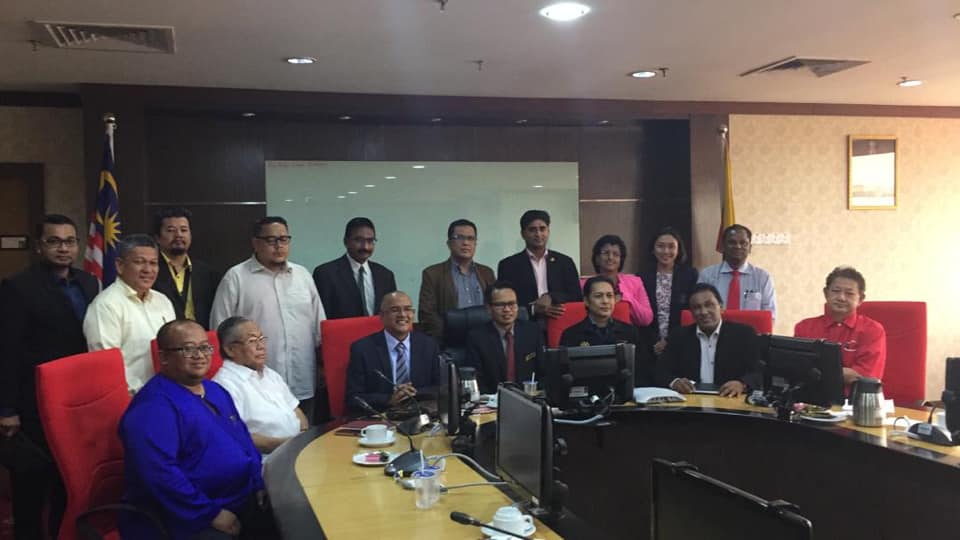
Pertemuan NGO-NGO TVET dengan Pengurus Besar PTPK


04.02.2019 | PERTEMUAN NGO-NGO TVET DENGAN YBHG. ENCIK MOHD FATHULLAH BIN MUSTAPHA, PENGURUS BESAR (PENGURUSAN), PERBADANAN TABUNG PEMBANGUNAN KEMAHIRAN (PTPK).

Pertemuan adalah mendapatkan penjelasan dan titik penyelesaian bagi isu arahan pekeliling bertarikh 31 Januari 2019 – Ruj: PTPK.P&P.100-3/1 Jld 17 (7) berkenaan Syarat-syarat Baru Permohonan Dana TVET Pinjaman Latihan Kemahiran Skim Pinjaman Lepasan Sekolah Tahun 2019 Bagi Sijil Kemahiran Malaysia Tahap 1, 2 dan 3. Dapatan dari perbinncangan yang dapat saya kongsikan ialah:

01. Tiada lagi kaedah agihan kuota bantuan kepada Penyedia Latihan (PL) sebaliknya peruntukan yang sedia ada perlulah dibida dengan syarat-syarat tertentu.

02. Tahun 2019 adalah menggunapakai pendekatan Industry Driven Funding yang sifatnya menekankan kepada kebolehpekerjaan.

03. Bantuan pinjaman kepada pelatih perlulah akhinya menyediakan pekerjaan yang merubah kehidupan. Ini yang perlu difahami oleh PL.

04. Penilaian melalui pemarkahan yang berbeza-beza apabila PL mampu menyediakan MOA atau MOU atau LOI atau Conditional Letter dari industri berkaitan penempatan pekerjaan kepada pelatih apabila tamat latihan. Walaupun ianya diperdebatkan, namun PTPK menyakini PL mampu membina hubungan dengan industri dan akhirnya manfaat kepada pelatih yang juga merupakan peminjam.

05. Cuma PKPB kekal menolak syarat dokumen berkenaan tidak membenarkan di tandatangani oleh PENGURUS SUMBER MANUSIA. Dokumen perlu ditandatangi oleh Pemilik atau Pengurusan Tertinggi. PKPB melihat syarat ini sesuatu yang “bikin lawak”. Dalam persekitaran perniagaan semasa, telah berlaku perubahan amalan pengurusan sumber manusia yang dahulunya hanya berperanan sebagai pusat khidmat dan sokongan untuk organisasi. Kini, ia lebih daripada sekadar memproses gaji dan pengambilan pekerja baharu. Dalam dunia moden, seorang pengurus sumber manusia memegang beberapa portfolio: rakan niaga, agen perubahan; pentadbir dan pembela para pekerja. Merujuk kepada beberapa kenalan HR Manager, terdapat 3 tugas teras seorang HR iaitu
a. A Line Function,
b. A Coordinative Function
c. Staff Functions [Assist and Advise]

06. PKPB menyokong perlunya Nilai tambah (Added Value) atau Dual Certification di dalam latihan perijilan kemahiran sedia ada. Di dalam hal ini, PKPB mengesyorkan agar Industry Lead Body (ILB) yang dilantik Jabatan Pembangunan kemahiran (JPK) di beri kuasa mengeluarkan sijil tambahan kompetensi berdasarkan industri masing-masing. Menghakupayakan ILB melalui persijilan kepada pelatih akan senang di kawal kualitinya berbading persijilan antarabangsa yang lain.

07. Masih lagi dengan Nilai Tambah (Added Value), PTPK perlu melihat mana-mana PL yang ada program pembangunan belia melalui kemahiran insaniah/softskills hendaklah juga diberi pemarkahan yang baik.

08. PL yang melaksanakan single-tier DKM / DLKM tiada penetapan bilangan peruntukan.

09. Pembidaan bagi peruntukan pinjaman untuk SKM 1-3 tidak melihat kepada kapasiti JPK semata-mata sebaliknya kepada kemampuan PL memenuhi syarat yang ditetapkan.

Apa pun, PKPB melihat sudah sampai masanya semua pihak mengubah cara berfikir dan bekerja dalam menyantuni atau membantu membina anak muda hari ini untuk masa depan negara yang hebat. Isu ini masiih panas dan proses rundingan msih berjalan.

Turut hadir dalam pertemuan ini selain PKPB ialah Persekutuan Pusat-Pusat Bertauliah JPK Swasta Malaysia (FEMAC). Gabungan ILKS Bumiputera (GILKSB). Gabungan ILKS India Malaysia (GAPKIM). Gabungan Pusat-Pusat Kemahiran Swasta Terengganu (GAKENT) dan Tan Sri Zainal Rampak, Tokoh TVET.

Kredit:
RIZAN HASSAN
06.02.2019

Kumpulan pertama lulusan diploma kemahiran lanjut pengajian di MTUN September ini

PUTRAJAYA, 30 Jan (Bernama) — Kumpulan pertama pelajar lulusan diploma kemahiran bakal melanjutkan pengajian ke peringkat ijazah sarjana muda di Rangkaian Universiti Teknikal Malaysia (MTUN) pada sesi pengajian September ini, kata Timbalan Menteri Sumber Manusia Datuk Mahfuz Omar.Beliau berkata Agensi Kelayakan Malaysia (MQA) dalam mesyuarat Majlis Pembangunan Kemahiran Kebangsaan (MPKK) secara prinsipnya bersetuju supaya keputusan Sijil Pelajaran Malaysia (SPM) tidak diambil kira untuk kemasukan ke peringkat ijazah sarjana muda sekiranya pemohon sudah mempunyai diploma atau diploma lanjutan dalam bidang kemahiran.

“Sebelum ini, dia (lulusan diploma kemahiran) tidak boleh masuk universiti sebab perlu tengok SPM, tetapi kalau dia dah ada diploma yang lebih tinggi daripada SPM, kita mahu supaya mereka diberi pengiktirafan,” katanya pada sidang media selepas mempengerusikan mesyuarat MPKK, di sini hari ini.

Sumber: http://www.bernama.com

Komen: Bukan setakat MTUN je yang boleh terima, ada juga IPTS pun mungkin boleh berbuat demikian.
Admin pun telah menerima panggilan baru-baru ni dari salah sebuah IPTS untuk membincangkan kerjasama.
Sekiranya IPTS anda berminat, boleh hubungi admin juga di tvetuni@gmail.com atau 012-3123430 untuk bincangkan butirannya.

Programme launched for TVET master trainers

Islamabad: With skill development being one of our top priority items, we are striving to mobilise our youth and provide them with a conducive learning environment to enable them to explore their abilities and skills and benefit from them for earning a better livelihood.

This was stated by minister for federal education and professional training Shafqat Mahmood while addressing the launching ceremony of ‘Training of Master Trainers Programme’ under the auspices of the National Vocational and Technical Training Commission here on Monday as part of the ongoing reforms in technical education and vocational training sector of Pakistan.

The organisers said under the programme, a national pool of master trainers from various trades would be trained and certified according to the globally recognised international training and assessment courses.

The training will be delivered by the Melbourne Polytechnic Institute, Australia and Institute of Tourism, Hospitality Management, Pakistan with the collaboration of the NAVTTC and TVET SSP.

The structure of these courses has been specifically designed by the Australian Government Department of Education and Training, as per the identified international TVET sectors training needs and requirements. It is also in line with international best practice for competency-based training.

As many as 120 Master Trainers will be given certificates as per the Australian Competency Based Training & Assessment Framework. It will help build the national capacity to further support Pakistan’s National Vocational Qualifications Framework (NVQF). The master trainers completing this internationally recognised training will be from various demand-oriented trades. These MTs will then further disseminate training to TVET trainers under a cascading model approach.

Source: https://www.thenews.com.pk

Comment: Malaysia is highly respected by the other ASEAN country members in this respect. We had few G to G Masters Training done.
So if you want to learn how to implement TVET program or train your Master Trainers in your country (ASEAN, Middle East…), check us out


TVET curriculum to simulate actual workplace, says Kula

PETALING JAYA: The Technical and Vocational Education Training (TVET) curriculum will soon simulate actual workplace situations.

These learning modules, which look to better prepare students for the working world, will be embedded into the curriculum.

Human Resources Minister M. Kulasegaran (pic) said the modules, known as “Problem, Project, Production”, are intended to engage students with real world tasks.

These are some of the measures that will be implemented soon, he said, to strengthen and improve the TVET delivery implementation.

His speech text was read by human resources department planning and research division director Junita Mohamed Ali during the Malaysian TVET Forum 2019.

On Jan 20, StarEdu reported that a new national framework sets out to level the playing field between academics and TVET, offering students more career options for their future.

“TVET is a branch of education that cannot be overlooked by any government.

“Chief among (these measures) is to elevate the quality of TVET programmes as well as TVET instructors; it is essential for instructors, public or private, to gain industrial experience so as to ensure they will be kept abreast with technology,” said Kulasegaran.

“The plan also includes continued funding under the Skills Development Fund (SDF) for TVET students who pursue high demand programmes by industries.

“Existing SDF loan mechanism for employee upskilling and reskilling will be revamped to increase the number of recipients through a cost-sharing arrangement with the industry.

“It’s important for the industry to be deeply involved in the financing aspect of TVET.”

To further strengthen TVET delivery, Kulasegaran said TVET training institutions will need to embrace and integrate the 11 important pillars of the fourth Industrial Revolution in their training, such as Cloud Computing, Cybersecurity and Augmented Reality.

Source: https://www.thestar.com.my

Comment: Am not sure how would be the funds from SDF/PTPK be allocated but going at the current rate, looks like many private TVET institutions that depended heavily on the funding to recruit students would be closing soon.

So if you intend to set up at TVET centre, do your research properly, think what kind of students that you want to have & don’t just think about making money from their tuition fees, ensure they have bright prospects to get into employment with decent pay and your business will surely be sustainable & maybe even flourish when majority are suffering at thinking how to get loans from SDF/PTPK.

BERJAYA TVET College inks MoA with DMC Training (Digital Marketing)

BERJAYA TVET College and DMC Training signed a memorandum of agreement recently on their strategic partnership to create additional Technical Vocational Education and Training (TVET) programmes for students.

The programmes will be offered for BERJAYA TVET’s March 2019 intake.

The 12-month programme is BERJAYA TVET Colleges’ first official certified training programme in Digital Marketing. DMC Training will lead the coursework in Digital Marketing with the support of BERJAYA TVET College including the four months internship placement.

“Upon completion of this programme, students will receive dual certification from both organisations, enhancing job employability in the current digital era or become digital entrepreneurs,” said Kanendran T Arulrajah, president of BERJAYA TVET College.

“To be successful in digitizing businesses, we must have the right talent to execute digital business strategies. With the Digital Marketing certification, BERJAYA TVET College sees DMC Training as the right strategic partner to work together with in achieving our goals of growing more professional digital marketers,” said Mae Ho Seok Khen, chief executive officer of BERJAYA TVET College.

This initiative is aligned with the vision of the new Malaysian government in strengthening the nation’s digital infrastructure and helping young entrepreneurs and small businesses develop and grow.

“We are honoured to have been selected by BERJAYA TVET College for this partnership. Besides contributing our training experience in the Digital Marketing Certification programme, we will also be providing career placement for students graduating from this programme.

“This is part of DMC Training’s initiative in helping school leavers start off on the right career path in Digital Marketing,” said Charles Gregory, chief executive officer and founder of DMC Training.

Source: https://www.thesundaily.my

Overhaul of TVET programmes in the works

PETALING JAYA: The Education Ministry wants to reform the Technical and Vocational Education and Training (TVET) programmes in the country, says its director-general Datuk Dr Amin Senin.

Amin said that this was why several TVET programmes were halted for a while to give time for the Malaysian Qualifications Agency and Department of Skills Develop­ment to evaluate its curriculum to ensure TVET meets the quality benchmark set by the government and industrial needs.

“The claims made by some that certain TVET programmes have been discontinued are false.

“The ministry only wants to ensure certification and industry standards are met and used as reference in terms of marketability, improving skills, and in making curriculum improvements,” he said in a statement yesterday.

Dr Amin said that the ministry started the Vocational Education Transformation programme in 2012 to create an opportunity for students, who are interested in technical and vocational subjects to gain education to meet the country’s industrial needs.

This, he said, meant that the ministry needed to ensure that the programmes provided by institutions involved were of high quality and based on the coordination of operational policies, development of physical infrastructure and the provision of facilities, and the continuous development of professionalism for teachers and officers.

“After seven years of the programmes being introduced, it is high time that the programmes offered gave importance to a higher standard of education, in line with (the government’s) wishes of producing trainees of the highest quality,” he said.

He added that steps taken to make the programmes better were taken in line with views from stakeholders, including the National Union of the Teaching Profession (NUTP).

“The majority of stakeholders are supportive of the ministry’s wishes to make relevant improvements for the benefit of students and the country,” he added.

He said that the steps to improve the programmes, offered by vocational colleges, were taken after having had discussions with stakeholders since May 2018.

Source: https://www.thestar.com.my