All posts by admin

Kursus Induksi PP-PPD & PPL Dis 18 & Jan 19 (Alor Setar & KL)

Salam kemahiran,

Tak kira anda ingin dilantik sebagai PP, PPD, PPB ataupun PPL, kursus induksi PP-PPD adalah WAJIB untuk semua.

Siapa yang diwajibkan untuk menghadiri dan mempunyai sijil Kursus Induksi PP-PPD-PPB ?

  1. Pegawai Penilai (PP) – Individu yang akan menjadi Pegawai Penilai (tenaga pengajar) di kolej / pusat latihan kemahiran swata dan kerajaan.
    Mesti ada sijil induksi PP-PPD, SKM3 & VTO
  2. Pegawai Pengesah Dalaman (PPD) – Individu yang akan menjadi Pegawai Pengesah Dalaman (penyelia tenaga pengajar) di kolej / pusat latihan kemahiran swasta dan kerajaaan.
    Mesti ada sijil induksi PP-PPD & SKM3
  3. Pengurus Pusat Bertauliah (PPB) – Individu yang akan menjadi Pengurus Pusat Bertauliah (pengurus) di kolej / pusat latihan kemahiran swasta dan kerajaan.
    Cuma perlu lulus induksi PP-PPD
  4. Pegawai Pengesah Luaran – Individu yang ingin menjadi Pegawai Pengesah Luaran (penyelia luar) untuk Persijilan Kemahiran Malaysia.
    Perlu lulus induksi PP-PPD & induksi PPL

TAK PERLU SPM!

Berikut adalah tarikh untuk pelbagai kursus induksi yang akan datang di Kedah/KL Dis/Jan2019

PP-PPD
Tarikh: 21-22 Dis 2018
Tempat: Alor Setar, Kedah

Tarikh: 12-13 Jan 2019
Tempat: I Smart Educare, Kepong

PPL (Mesti lulus induksi PP-PPD dulu)
Tarikh: 19-20 Jan 2019
Tempat: I Smart Educare, Kepong

Jadual 2019 & butiran lanjut di –https://tvetmaster.com/our-services
Muat turun Borang Permohonan KIP-01


How will Nurul Izzah’s TVET bill help youths?

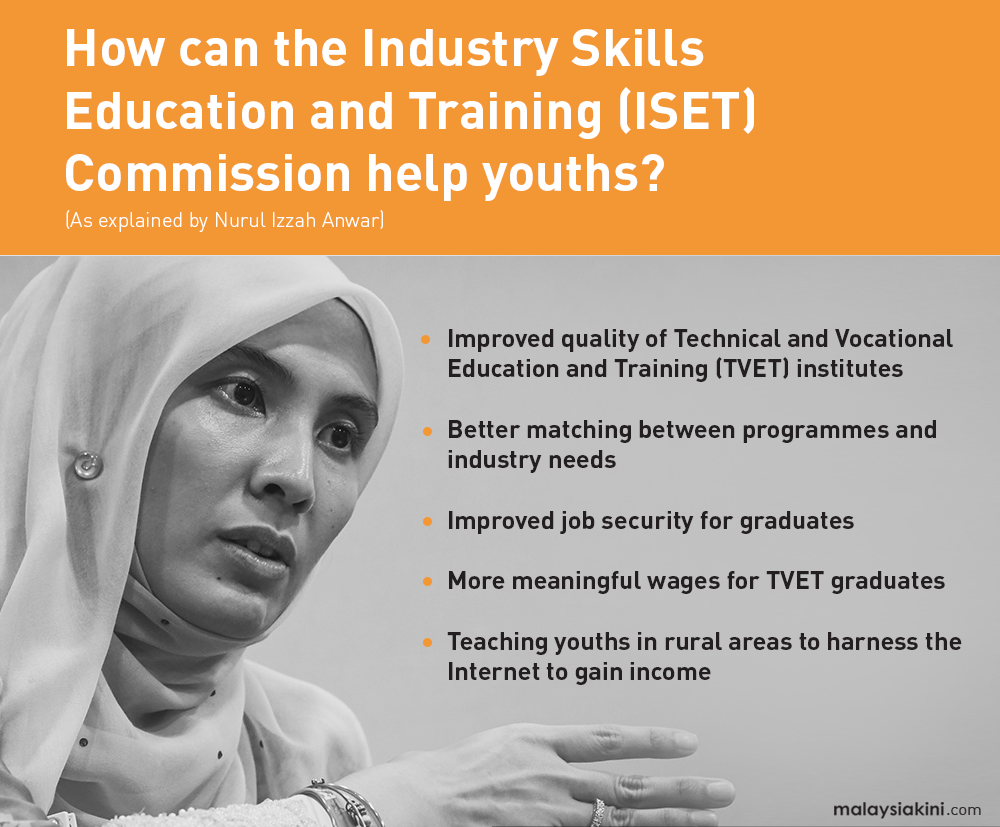
A commission overseeing all Technical and Vocational Education and Training (TVET) institutes could soon become a reality, thanks to an upcoming private member’s bill by Permatang Pauh MP Nurul Izzah Anwar.

But how will the body – dubbed the Industry Skills Education and Training (ISET) Commission – impact youths who are studying or will study at TVET institutes?

Asked about this in an interview at Parliament on Monday, Nurul Izzah told Malaysiakini that one improvement she hoped to see was for TVET graduates to get adequate wages.

This will be a trickle-down effect stemming from the overall improvement of the TVET programme.

The TVET empowerment committee chairperson said the ISET Commission will, among others, facilitate data sharing between all TVET institutes, many of whom are currently operating in silos.

This will in turn facilitate better matching between TVET programmes and industry needs, for example.

 “If there’s a wonderful report by Mida (Malaysian Investment Development Authority), I’d like to access it so all the TVET institutes can fully utilise it.

“For example, perhaps there’s a plateau in the hospitality field, we don’t have enough hotels for all the graduates (to work in).

“So you can shift into medicine, or telemedicine. Geriatric specialists are especially in need because we have an aging population so maybe the institutes can train them as nurses instead,” she said.

Ensuring better job security

The ISET Commission, she said, will also ensure better job security for TVET graduates and avoid repeats of past situations, such as students from government-run institutes being unable to find employment due to their certificates not being recognised by the Public Service Department (PSD).

 She said the ISET Commission will also work with the Malaysian Qualifications Agency to develop ways to convert TVET programmes into credit hours so graduates can further their studies.

Nurul Izzah also aims to make the ratings of the different TVET institutes public, so that parents and youths can assess which schools are best for them.

“You want to change lives, by having reputable programmes that can allow them to have a better degree of social mobility, and so they can get better pay. This is what we’re about,” she said.

One example that shows how successful TVET can be is Politeknik Mersing’s cybersecurity programme, which the PKR vice-president is especially proud of.

“In Mersing, they have cybersecurity experts that will automatically get a job in Singapore (upon graduation).

“Will I ever look down on cybersecurity graduates in Mersing? Never! Because they know their stuff.

“That’s how you change perception (of TVET). You get meaningful wages through programmes that the industry recognises. It’s a no-brainer,” she said.

Biting the bullet

She stressed that TVET can also help revolutionise other sectors, including agriculture and even traditional sectors in rural areas.

“How about the Orang Asli children in rural areas? They also want jobs, they want opportunities to live in their villages but yet have a meaningful wage.

“So it’s not just about the fourth industrial revolution, but how the Internet helps them achieve their outcome for their traditional sectors,” she said.All this requires strong political will to see changes through, she said.

For example, the government and under-performing TVET institutes must “bite the bullet” and make improvements.

Institutes that don’t improve or don’t fulfill conditions required by the commission will run the risk of being shut down.

Nurul Izzah’s ISET Commission bill is expected to be tabled soon.

Once tabled, it will be up to either the Education or Human Resources Ministries to adopt the bill so that it can be debated in the Dewan Rakyat.

https://m.malaysiakini.com

Malaysian varsity takes over Ugandan institute

Hand over. The Minister of State for Higher

Hand over. The Minister of State for Higher Education, Mr John Chrysostom Muyingo (second right), 2nd Deputy Prime Minister and Minister for East African Affairs Kirunda Kivejinja (right), and other officials tour Namataba Technical Institute in Mukono District after handing it over to Limkokwing University of Malaysia yesterday. PHOTO BY DAMALIE MUKHAYE

By Damali Mukhaye
Kampala. Limkokwing University of Malaysia has taken over the government-owned Namataba Technical Institute in Mukono District.

The Malaysian creative technology university will offer technology courses to students.
Handing over the institute to the Malaysian officials at Namataba campus yesterday, the Uganda’s Minister of State for Higher Education, Mr John Chrysostom Muyingo, said the current courses offered at the institute have been phased out. He represented the Minister of Education, Ms Janet Museveni.

The courses include automotive vehicles, construction, welding and fabrication.
Mr Muyingo said the students who have been offering the two-year certificate vocational courses at the institute completed their examinations last Friday and the Education ministry did not admit fresh students last year.

He said the new management of Limkokwing University will take over the institute effective next academic year 2019/2010.
“The Ministry of Education last year signed a memorandum of understanding with Limkokwing University to establish a campus in Uganda. Namataba Technical Institute was selected to host the campus which will provide our students with skills training. We are optimistic that this university will bring her international expertise as a contribution towards the development of high technology and innovative training programmes to drive us towards our Vision 2020,” said Ms Museveni in a speech read for her by Mr Muyingo.

“As government, we attach great importance to the teaching of practical skills and we therefore agreed to collaborate with this university in a public-private-partnership to increase the opportunities of Uganda in gaining access to Limkokwing TVET-oriented courses without having to leave Uganda,” she added.

The Senior President of Limkokwing University, Ms Dato’ Gail Phung, said the university will be the first of its kind in East Africa and will see students from Uganda and the region acquire international degrees and certificates that will enable them compete for jobs worldwide.
“We are set to offer industrial courses which are relevant to Uganda’s economy with high digital technology and with this partnership, we are going to empower the youth of Uganda,” Ms Phung said.

Mr Muyingo and the Malaysian delegation immediately left for State House to meet First Lady and Education Minister, Ms Museveni, for further discussions on tuition charges and other technical considerations before Limkokwing University takes over the institute.
The institute’s principal, Mr Ronald Muwambu, said their 17 teaching and five non-teaching staff will leave to pave way for the new administration.

He said he handed over their staff list to the Ministry of Education for redeployment.
The Mukono Resident District Commissioner, Mr Fred Bamwine, urged government to fulfil its pledge to the local people of giving out sponsorship to the less privileged and reducing tuition charges earlier agreed since they are the host of the new university.

Source: https://www.monitor.co.ug

Comment: Wonder would Limkokwing University of Malaysia be offering our own Malaysian Skill Certificate, Diploma & Advance Diploma Skill Certificate (SKM/DKM/DLKM)? Or it has no relation to our Department of Skill Development (DSD/JPK) at all?

TVET lecturers to go for industrial training for hands-on experience

TVET lecturer

KUALA LUMPUR: Technical and Vocational Education and Training (TVET) lecturers will need to undergo industrial training after working hours to improve their skills.

Human Resources Minister M. Kulasegaran said this is part of the ministry’s efforts to boost and ensure that lecturers have the necessary skills to teach in their respective fields.

He said at the moment, some lecturers are lacking in terms of hands-on experience and expertise.

“I am puzzled that many of our lecturers do not have the specific skills needed and even if they have, many are academically-inclined and are not hands-on.

“I and (Human Resources) deputy minister have decided for these lecturers need to enroll for industrial training after their office hours (so they) can obtain the expertise required for them to teach well,” he said.

Kulasegaran said this during committee-stage wrapping-up speech on the Supply Bill 2019 for his ministry at the Dewan Rakyat today.

He said another issue was the logistical problem, which included the isolated and far-off locations of TVET institutions.

“As an example, I visited a technical institute at Padang Serai recently.

“The location is far from industrial areas and its (future) direction (future) is unclear. This is making it difficult for our children to study there.” Kulasegaran said.

Source: www.nst.com.my

Comment: It may be a good idea but the devil is in the details.
Does this only apply to public TVET institutions or including the private sector?
If it is also COMPULSORY for private TVET lecturers/instructors/assessors, who would bear the cost of industrial training?
And what if the TVET lecturers/instructors/assessors are already very experienced in the industry, say >10 years (that qualify them to be registered as Personel Penilaian dan Verifikasi (PPV)) and then absorbed into the institutions? Would they need to go through this as well?
And the current process of becoming a certified assessor/skill trainer with a VTO qualification (Pegawai Penilai-PP) is making it hard for those with working experience/currently working as they are required to fulfil
a 6 months full-time internship – how many can afford to have a 6 months leave & not having income during that period? Worse, some employers don’t allow them, means they have to quit their current job & yet unsure of future job prospect?? Hope Jabatan Pembangunan Kemahiran (JPK) can really look into this matter.

PENIPUAN! Adakah PERUNDING TVET (kursus induksi/SKM/SKM-PPT/VTO) anda bercakap benar??

Penipuan - Berhati-hati

If you don’t understand BM well, can always email or call us for further explanation OR read the English version here.
如果您不太了解马来语,可以随时发送电子邮件或致电我们进一步了解详情

Sejak 2001, min berkecimpung dalam bidang latihan kemahiran ni (terutamanya yang berkaitan dengan JPK), macam-macam kes penipuan telah min jumpa/dengar.

Berikut adalah senarainya, tak terhad kepada ini sahaja (mungkin min lupa atau tak pernah dengar/jumpa tapi memang berlaku):

1. Sijil induksi PALSU – Sebelum ni, tahun 2000an, memang ada sesetengah penganjur yang hit & run, cetak sijil sendiri & JUAL kepada peserta (tak perlu ikuti kursus). Ia samalah seperti penjualan sijil/diploma/ijazah di universiti ataupun sijil cuti sakit. Namun, pihak Jabatan Pembangunan Kemahiran (JPK) telah mengambil langkah untuk membendung perkara ni dari berlanjutan dimana:
a) Penganjur tidak boleh cetak sijil sendiri lagi
b) Sijil telah ada ciri-ciri keselamatan (bukan setakat no siri sijil sahaja) – itu yang menyebabkan kekadang sijil dapat lambat sebab JPK kehabisan sijil & perlu tunggu stok dari Percetakan Nasional Malaysia

TIPS: Cari penganjur yang sudah lama (> 10 tahun kalau boleh) & kerap menganjur (lebih 6 kali setahun) kerana mereka tidak berani bertindak sebarangan & juga senantiasa mengikut perkembangan terkini. Ia juga mengurangkan kemungkinan penganjur menunda kursus induksi berkali-kali, ia berlaku terutamanya penganjur adalah baru dan tiada peserta berkumpulan besar.


2. Bukti PALSU – Ini kerap berlaku terutamanya dalam permohonan SKM secara PPT.

Ini mungkin salah sesetengah pemohon, ada yang sememangnya tahu dia tak layak tapi BAYAR perunding untuk kaodim, biasanya beribu-ribu.
Macam mana min tahu? Sebab ada kisah benar yang diceritakan oleh PPL-PPT (Pegawai Pengesah Luaran yang mengesahkan penilaian PP-PPT).
Cth: Ada seorang lelaki yang langsung tak pernah terlibat dengan kecantikan (cuma ada perniagaan dalam bidang ni) mewujudkan bukti palsu (gambar/invois/sijil) tapi telah digagalkan oleh PPL-PPT yang memegang amanah beliau. Apa yang menggeramkan min adalah dengar khabar setelah calon (melalui perunding) minta PPL-PPT ditukarkan, calon tu LULUS.
Geram betul, calon/perunding/PPL-PPT seperti nilah yang menjahanamkan kualiti SKM #^@*%

Marah dengan penipuan
TIPS: Baca Panduan Permohonan SKM secara PPT @ ikuti kursus induksi PP-PPT – jadual disini supaya anda ada sedikit idea apa yang diperlukan dan sekiranya dah faham, mohon terus dengan JPK, cuma RM300/setahap.

Kebelakangan ni, ada perunding yang menjanjikan calon yang tiada pengalaman mengajar bidang kemahiran bahawa mereka layak mohon VTO secara PPT.  Agak-agaknya buat bukti PALSU lagi kot. Ni juga kisah benar,  dimana 2 juruteknik auto yang tidak pernah mengajar dijanjikan oleh perunding bahawa mereka boleh dapat VTO secara PPT!

Itu yang menyumbangkan kepada banyak isu pemegang sijil VTO yang tidak boleh mengajar dengan baik ataupun tak tahu sangat tentang WIM (bahan pengajaran bertulis). Min tak nafikan juga ada Pusat Bertauliah VTO tertentu yang bagi ‘lesen terbang’, sehinggakan ada beberapa PB VTO yang telah ditarik pentauliahannya dan menyebabkan permohonan PB VTO baru/penambahan program VTO ni dibekukan.
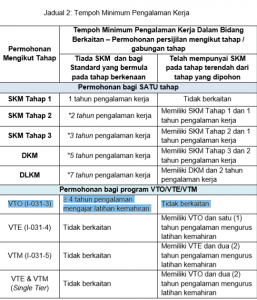
Untuk pengetahuan anda, pengalaman mengajar minima adalah 4 tahun kalau nak mohon VTO secara PPT. Dah banyak kes penipuan calon tak cukup pengalaman mengajar tapi dijanjikan tiada masalah untuk mohon dan dapat sijil VTO secara PPT.

3. Penjualan WIM yang tidak menepati format ataupun jumlah jam yang sepatutnya.
Ha, ni berlaku bukan sahaja dalam dunia latihan kemahiran tapi syarikat gergasi MNC pun ada juga yang melakukan kesalahan sebegini.
Penipuan pengiklanan
Biasa lihat ni kan?

Sudah banyak PB/pembeli yang kantoi dengan janji-janji manis individu/perunding bahawa WIM yang mereka beli memenuhi spesifikasi/format JPK tetapi sebenarnya tidak.
Antara isu yang kerap timbul adalah:
1. Format (tidak mengikut format terkini)
2. Jumlah jam yang tidak menepati kehendak NOSS (sudah banyak kes untuk ni, terutamanya untuk program yang ada kes khas seperti FB-024-2 (1200j dan bukannya 800j)
3. Jadual Pembahagian WIM yang tidak menggunakan ayat yang betul ataupun setara dengan WIM yang dibangunkan

TIPS: Suruh penjual emelkan sampel WIM lengkap (ada Kertas Penerangan/Kerja/Tugasan, Pelan Mengajar Teori/Amali, Kertas Penilaian Pengetahuan (KA)/Prestasi (PA), lepas tu cross check dengan format WIM terikini (2017)  dan juga NOSS.

Cukuplah setakat ni, kalau anda ada sebarang lagi kes penipuan/janji tidak serupa bikin yang nak dikongsi (tak kira pasal SKM, induksi, pentauliahan PB, WIM ke apa) supaya orang ramai lebih berhati-hati dan tidak tertipu,
sila emel ke ismarteducare@gmail.com, terima kasih.

Tips mencari perunding yang jujur (elak penipuan):

1. Dah lama berkecimpung dalam bidang latihan kemahiran (ni pun tak menjamin apa-apa)
2. Cuba dapatkan testimoni/pengesyoran dari 2-3 pihak, kalau ada.
3. Dapatkan pandangan/nasihat dari 2-3 individu/syarikat.
4. Sekiranya masih rasa was-was, sila rujuk dengan min atau lebih baik, JPK di 03-88865589.

* singkatan min bermaksud admin ya 😀

KTYS to start PW2 programme next year

Kota Kinabalu: Kolej Teknikal Yayasan Sabah (KTYS) will introduce the Single Phase Wiring With Certification Endorsement (PW2) programme starting next year.

KTYS Deputy Chief Executive Officer Waky Taim said the programme is open for working adults on a part time basis at the technical campus.

“Applicants must be Malaysian, aged 18 years and above and have completed Form Five with two years of working experience in related field (electrical).

“Applicants must also submit their resume and for those with SKM (Sijil Kemahiran Malaysia) Level 2 or 3, they need to have only one year of working experience.

“The programme would be conducted in six months,” he told a press conference at the KTYS campus in Sembulan, here, Saturday.

According to Waky, the PW2 qualification from Suruhanjaya Tenaga is a competency certificate recognised by the Government.

He added that the programme is also a prelude to a contractor’s licence in wiring work in government or private projects. The programme is jointly conducted with the Sabah Electrical Association (Pes) which will help the college to introduce it to the public.

Pes President Leslie Jong Vui Kee said they would assist the college to introduce the PW2 programme to its.

For more information about the programme, contact KTYS marketing office at 088-239810/239637/238024 or check its website at www.ktys.edu.my or Facebook: Kolej Teknikal Yayasan Sabah.

Also present atthe press conference were KTYS Deputy Dean Azura Illyani, KTYS Head of Electrical Programme Albert Bajuri and KTYS Registrar Nor Arfiah Ampong as well as Pes committee members. – Cynthia D Baga

Source: www.dailyexpress.com.my

Improve communication skills, graduates told


Prof Muhammad Sukri (right) receiving a token of appreciation from a representative of Universitas Muhammadiyah Palu, Indonesia, at the conference.

Prof Muhammad Sukri (right) receiving a token of appreciation from a representative of Universitas Muhammadiyah Palu, Indonesia, at the conference.

JOHOR BARU: Technical Vocational Education and Training (TVET) graduates are urged to enhance their communication skills in order for them to excel in the industry.

Universiti Teknologi Malaysia (UTM) Faculty of Social Science and Humanities dean, Prof Dr Muhammad Sukri Saud, said one of the main factors for Industrial Revolution 4.0 (IR4.0) to run smoothly was overcoming the language barrier.

“Malaysia has no issues in providing qualified skilled workers because we have been slowly moving toward IR4.0 for the past few years but our main concern now is more on communication matters.

“We do not want our graduates to only know about machinery and systems here but also venture abroad to gain valuable experience,” he said.

He said local TVET graduates were now the number one resource that investors look for before expanding their businesses locally.

“Our students employability rate is high, with many offered jobs right after graduating.

“One of the things that UTM does is send students for language classes to enable them to better convey or gain knowledge in the industry,” he said after officiating the 3rd TVET International Conference here.

Prof Muhammad Sukri said the conference was an important platform to share data on studies and research on TVET with industries and learning institutions.

“Previously, all findings and research can only be accessed and understood by the researchers and academicians but now we want to change this.

“We want not only the public but all relevant parties involved in TVET to know about the latest findings in the industry so that they can benefit from it as well as implement it in the industry,” he said.

The conference was jointly organised by Universiti Pendidikan Sultan Idris, TVET Malaysia Association, BINUS University, Indonesia, Universitas Muhammadiyah Palu, Indonesia, Universitas Muhammadiyah Purwokerto, Indonesia and Rajamangala Technology University Thanyaburi, Thailand.

Source: www.thestar.com.my/metro/metro-news

Plans for licence to teach for technologists and technicians

ALOR GAJAH: Those who wish to teach in the Technical and Vocational Education and Training (TVET) sector may be required to obtain a licence first from the Malaysia Board of Technologies (MBOT).

MBOT is the professional body that gives professional recognition to technologists and technicians in the country.

Universiti Tun Hussein Onn Malaysia (UTHM) Centre of Excellence for TVET (CoE-TVET) principal researcher Associate Prof Dr Razali Hassan said such a requirement will become a reality if MBOT agreed to recognise the Malaysia TVET Educator Standard being developed by CoE-TVET.

He said the TVET Educator Standard will be the assessment tool in evaluating and recognising competency of future TVET educators before they are allowed to teach.

“We hope to discuss with MBOT to recognise the standard.

“After that, those who want to teach TVET must meet the requirements of the standard in order to obtain the licence from the board to teach TVET subjects,” he said during a forum at the National Seminar of TVET Transformation 2018 at Dewan Canselor, Universiti Teknikal Malaysia Melaka (UTeM) here.

The one-day seminar was organised by UTeM’s Institute of Technology Management and Entrepreneurship and was opened by the university’s assistant vice-chancellor (Development and Facility Management) Prof Dr Mohd Ridzuan Nordin.

Razali said the Malaysia TVET Educator Standard has three main components, namely Personal Traits and Social Competency; Teaching and Learning Methodology Competency; and Technical Competency.

He said the development of the standard was in its final stage and will be implemented for all TVET educators once CoE-TVET received the required allocation.

Meanwhile, Prof Mohd Ridzuan, in his opening speech, said the Malaysian Technical University Network (MTUN) which consists of UTeM, Universiti Malaysia Perlis (UniMAP), UTHM and Universiti Malaysia Pahang (UMP) has drafted initiatives to elevate and empower the transformation agenda of the country’s TVET education.

He said one of the initiatives was the establishment of the Malaysia Research Institute for Vocational Education and Training (MyRIVET) which serves as a one-stop centre in conducting professional certificate programme training for all TVET institutions in the country.

“If South Korea is proud of the Korea Research Institute for Vocational Education and Training (KRIVET), one day Malaysia can be proud of MyRIVET’s existence,” he said.

Source: https://www.thestar.com.my

Sapura Energy Berhad Named Among Top Malaysian Companies for TVET Grads

A Special Report by Malaysian Global Business Forum

KUALA LUMPUR, MalaysiaNov. 22, 2018 /PRNewswire/ — Graduates of Malaysia’s Technical and Vocational Education and Training (TVET) programme continues to benefit from continuous support from one of Malaysia’s leading Exploration and Production (E&P) company, the Sapura Energy Berhad (SEB).

SEB, under the leadership of its chief executive officer (CEO) Tan Sri Shahril Shamsuddin, is a dedicated supporter of TVET programme as evident in the numerous TVET graduates the company employed in the oil and gas services that made up its team of highly skilled multinational workforce of over 13,000 people in more than 20 countries.

Sapura Energy joined the league of many Malaysian-based multinational that employs local TVET graduates in line with the country aim to move up the ladder in becoming a high-income nation.

SEB has actively been involved in taking in TVET graduates to join its league of skilled highly paid work as seen it its recent employment drive for TVET in September this year at Kolej Kemahiran Tinggi MARA in Kemaman, Terengganu.

Among the job SEB offered were in Structure Fabrication, Piping Fabrication, Mechanical, Welding, Rigging, Scaffolding, Blasting Painting, Construction and Quality, all which offers thousand of ringgit in monthly salary for TVET graduates.

SEB dedication in employing highly-skilled and technically capable TVET graduates is in line with its image as an entrepreneurially-led, technically competent and trusted global oil and gas company.

Fifty-nine percent of SEB employees are aged between 31 and 45 years old, while 21 per cent are between 20 and 30 years old, while the remaining 20 percent are those aged over 45 years old.

It employs 35 nationalities, with 70 percent of the workforce are male an 30 percent women, 18 percent of its management are held by women, while 29 percent of the skilled workforce (combinations of technical and professional expertise such as engineers, accounts, managers and HR executive) are women.

According to the Education Ministry’s Malaysia Education Blueprint (Higher Education), there will be an increase in demand for an additional 1.3 million Technical and Vocational Education and Training (TVET) workers by 2020 in the 12 National Key Economic Areas identified under the government’s Economic Transformation Programme.

Under the 2019 Budget, the government through Finance Minister Lim Guan Eng has set up a RM30 million TVET fund to create a more competitive environment as well as training programmes to fulfil industry need.

TVET programmes in the country are offered at certificate, diploma and degree levels by seven ministries that include the Education Ministry, which offers the most TVET programmes to the highest number of students.

It is estimated that 98,000 students sign up yearly to enrol in TVET programmes at 34 polytechnic institutions in the nation.

An estimated 1.5 million jobs are expected by 2020, of which 60 per cent will require TVET skills, an employment sector where SEB sits.

The government has also decided that there is a need to lessen the nation’s dependency on foreign workers and this opens up even more opportunities to TVET graduates.

TVET offers a rich array of programmes in many fields including automotive, culinary arts, electronics, engineering, entrepreneurship and journalism. It involves learning in class and hands-on training, which provide knowledge and skills for employment.

TVET students are equipped with specific skills in a specific field. Early exposure to practical and on-the-job-training ready them for the workplace.

With a renewed focus and direction given by Prime Minister Tun Dr Mahathir Mohamad to fulfil the national agenda of Vision 2020, TVET education strives to provide a skilled Malaysian workforce which can benefit the industry.

#News #MGBF #Positive # ShahrilShamsuddin

Media Contact:

Ms. Yin Fang
+6037185691

SOURCE: Malaysia Global Business Forum

Ignorance a bar to promoting TVET

LETTER | The National Council of Professors (MPN) ought to be lauded for its noble efforts in lending a hand to elevate human capital in the country.

A proposed framework for the national Technical Vocational Education and Training (TVET) was presented by the National TVET Movement (Gerakan TVET Nasional) on Nov 13 to a large number of representatives from many industries.

The session was held at its Putrajaya Balai Ilmuan and entitled “Jemputan Bagi Menghadiri Sesi Pembentangan Cadangan Kerangka Pendidikan Teknikal Dan Vokasional (TVET) Nasional”.

But the word “Latihan” or training was missing. Was it the case of professors emphasising the importance of education and ignoring training or was it just an oversight?

The movement correctly identified the main setback of TVET in Malaysia as due to fragmentation as it is under the purview of seven ministries and many more government agencies, working mostly in silos and lacking coordination.

The creation of many ministries and posts for civil servants naturally led to the initiation of many projects that require funding for those involved resulting in Malaysia having one of the largest numbers of ministries, agencies and civil servants compared to population size.

Shrinking from seven ministries to one would minimise overlapping, reducing the government’s total budget on TVET or increasing training without additional funding, giving more bang for the buck. Hence, the movement was excited with what a top-down approach could bring.

Representatives of various industries voiced their concerns after the presentation, one of which was the public’s poor perception of TVET as many were concerned with the public perception of weak students being placed in vocational schools.

There was a consensus that TVET should be rebranded, but it would be a mistake to think a brand could be developed through sloganeering. It is critical to recognise that the issue goes very deep, starting with fundamentals and not just on TVET per se.

For example, if parents or students were to be asked why they chose to study in a college or university, they would give a superficial answer by saying that a diploma or degree is needed for their future, apart from the fact they need to work to support their family or themselves.

Many Malaysians seem oblivious to the huge number of unemployed or underemployed graduates in the market, with many unable or struggling to service their Perbadanan Tabung Pendidikan Tinggi Nasional (PTPTN) study loans.

If they are truly interested in carving a career, they should learn how to perform well in a particular job, but general courses approved by the Malaysian Qualification Agency (MQA) are largely academic, with little relevance to the job market.

Those who pursue licensed professions such as doctors, accountants, architects, engineers and lawyers have a much better chance of success in their careers than those enrolled in easier general studies, with one of the favourites being tourism and hospitality programmes.

These students were told the tourism industry is very wide and offers them huge opportunities, but most undergraduates have no career plans and upon graduation would apply for any vacancy available in the tourism sector or other industries.

During the interview or upon starting work, they would begin to realise they were not trained to perform well in any job. They may have studied a course but had learned very little of what is required in the workplace, made worse by spoon-feeding and plagiarism.

Most of them are let down by their poor attitude and weak communication skills, which are much more important than academic qualifications or repetitive job experience. Apart from being able to communicate well in the language of customers and suppliers, interacting well with colleagues and bosses is also necessary to win over confidence.

TVET students, in general, may be weaker in interpersonal communication skills but graduates with diplomas or degrees are not much better. With that being the case, at least a TVET graduate has the skill to get some physical work done but an academic graduate may produce nothing.

As such, a bottom-up approach is just as important as a top-down one. Students and parents must be asked and guided on the reason for schooling or tertiary education, and not blindly follow the norm which has not been a success story for many.

Apart from studying the curriculum decided by MQA, students should be encouraged to learn about life skills and develop an interest in a particular field. Anyone who is passionate and given a chance to learn would excel in his chosen field, with or without paper qualification.

Political will is also needed for TVET to make a quantum leap in Malaysia. The federal government should decide and announce a time frame for skilled jobs such as electricians, mechanics, plumbers etc. to be certified and licensed.

This will give added impetus in raising the competency and income of skilled workers and attract more Malaysians to these jobs long dominated by low-skilled foreign workers. Highly skilled Malaysians also have the option to work in foreign countries and enjoy a 10 time higher income.

Apart from making TVET sexy and appealing to school leavers, it is equally important to upskill and reskill the existing workforce. But first, the definition of “skilled workers” in Malaysia need to be revised.

It is laughable if workers with a general degree are classified as skilled workers just to reach the target of 35 percent skilled workers in our country by 2020. Unless one’s standard is very low, it is obvious that a high percentage of Malaysians, including graduates with general degrees, are unskilled and unproductive, especially office staff.

Therefore, TVET should be an open modular concept for both apprentices and current practitioners. A career path should also be chartered and displayed to show that anyone starting as an apprentice can reach the top of his career in the corporate world or be a successful businessperson with the right training and determination.

The chart could also illustrate that many blue-collar jobs are paid much more than normal white-collar jobs. In fact, you don’t have to look far. We have a shortage of good trailer drivers although they easily earn RM5,000 to RM8,000 monthly.

It cost about RM1,665 to obtain a heavy vehicle and goods driving licence, this even lower by taking up the MyLesen Goods Driving Licence (GDL) programme conducted by the RTD and the Driving Institute and Association of Malaysia Hauliers (AMH).Yet we have several hundred thousand unemployed and underemployed graduates that earn much less, with many spending large sums of money from their parents or study loans and not making any effort to earn higher incomes.

The main challenge for promoting TVET to be on par with academic programmes is the ignorance and mindset of both parents and students. Ultimately, success in any career depends largely on learning on the job every day, and less on studying for a TVET or degree programme.


The views expressed here are those of the author/contributor and do not necessarily represent the views of Malaysiakini.