JASIN: Education Minister Dr Maszlee Malik will head the national-level Technical and Vocational Education and Training (TVET) Empowerment Committee to develop a new policy that is more relevant to industrial needs.
Human Resources Minister M. Kulasegaran said the decision was reached at a special meeting among ministers and ministries related to TVET last Wednesday.
“The new TVET Empowerment Committee has been merged with the previous one led by Permatang Pauh MP Nurul Izzah Anwar and it will be headed by Dr Maszlee Malik.
“Our aim is to review related issues thoroughly and devise a new strategy in order to strengthen TVET,” he told reporters after visiting the Selandar Industrial Training Institute (ILP) here yesterday.
Kulasegaran also said that specific focus would be given to the implementation of TVET in training institutions across the country including ILPs and vocational colleges.
He said the special focus involved various aspects including better allocation and infrastructure to produce skilled manpower.
This was in line with the current needs of the country’s job market that emphasised on the recruitment of skilled manpower as opposed to academic qualifications to face the Fourth Industrial Revolution (IR4.0), he added.
Kulasegaran said the special focus was also to create more local skilled manpower at 35% next year compared to just 28% now.
Source: www.thestar.com.my
Comment: Hope that decisions to be made by the new TVET Empowerment Committee headed by the Dr Maszlee would not favour TVET institutions under the Education Ministry over TVET institutions under Human Resources Ministry, like how the Vocational Colleges (KV) has ‘cannibalised’ the ILP & IKBN/IKTBN in terms of students enrollment & ‘special’ approvals given to them in the past, despite them not fully ready to implement TVET programs.
Kulasegaran (centre) witnessing the exchange of documents between Lim (in dark jacket) and Muhd Khair at the Ann Joo company plant in Prai, Penang.
THE technical and vocational education training (TVET) should be the first choice among the students to further their studies as the days of the academic studies are over, said Human Resources Minister M. Kulasegaran.
“Let us take the worst scenario. Ten years ago, parents sent their children to study medicine and now, quite a number are found to be jobless for nearly two years.
“Whereas, students who graduated with TVET are met with jobs waiting for them at the door step.
“These students will be easily absorbed anyway, as the job opportunities and wages are better after completing their studies,” he said.
Kulasegaran said parents were starting to realise that studies in skills fields had more potential unlike academic studies, as the demand for skilled jobs were high and jobs were available instantly upon competition of the courses.
“You would be surprised that many of the TVET students are working in the Middle-East and Singapore, earning lucrative salaries of between RM30,000 and RM50,000 per month based on their skills.
“We are also in the process of discussion with Japan to have tie-ups between their TVET universities and Malaysian colleges.”
Kulasegaran was speaking to reporters after witnessing the signing of a Memorandum of Understanding (MoU) between the Manpower Department (JTM) and Yayasan Jasa Ann Joo.
JTM was represented by its director-general Datuk Muhd Khair Razman Mohamed Annuar while Yayasan Jasa Ann Joo was represented by Ann Joo Group executive director Datuk Lawrence Lim Aun Chuan.
The signing ceremony was held at the Ann Joo Steel Berhad, Prai last Thursday.
Kulasegaran said among the key areas of cooperation in the MoU were apprenticeship opportunities and scholarships for TVET students at 32 TVET institutions under JTM, including temporary placements or industry attachment.
He said forging partnerships between public TVET institutions and the industries were pivotal for the development of TVET in the country to enable graduates to meet the needs and demand of the industry and to have first-hand working experiences.
Lim said through Yayasan Jasa Ann Joo, scholarships would be offered to qualified students of the Manpower Department Training Institution (ILJTM), and job opportunities would be offered to them upon completing their studies.
“We have not finalised how many students will be offered the scholarships, as we are in the midst of identifying them,” he added.
Meanwhile, Kulasegaran urged more local companies to emulate the efforts by Ann Joo Steel Berhad and Yayasan Jasa Ann Joo in establishing partnerships with TVET training providers, especially among the local small-and-medium enterprises.
He also praised Ann Joo for employing 85% local workers and had given priority to hire local talents.
Source: www.thestar.com.my
Comment: Besides the steel industry, there are currently 2 big chains that are looking for TVET graduates in the respective fields:
1. Retail 2. Service industry – restaurants (Stewarding Operations, F&B etc)
If you think you qualify, kindly email your resume to tvetjob@gmail.com
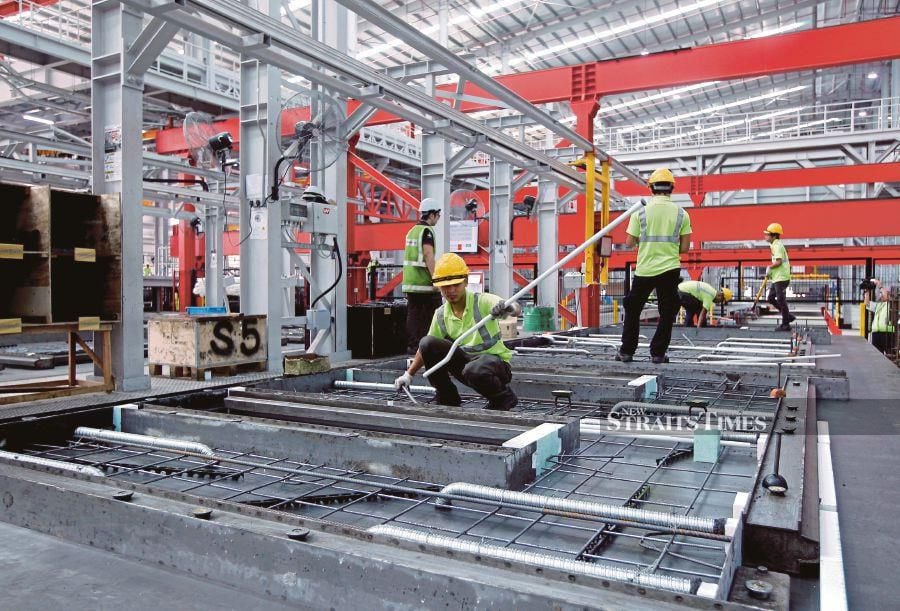
Vocational trainees at Gamuda IBS Banting learn and practise skills relevant to an increasingly modernising construction sector that is adopting Industry 4.0 way of doing business. NSTP photo by SADDAM YUSOFFBy Ooi Tee Ching – May 4, 2019 @ 12:28pm
KUALA LUMPUR: Federation of Malaysian Manufacturers (FMM) president Datuk Soh Thian Lai urges the government to expedite the set up of the special commission to address fragmentation of TVET implementation, which currently cuts across seven ministries.
In a recent statement, Soh said many in the industry including FMM has been asking the government, for many years, to set up a single enforcement body to coordinate the implement Technical and Vocational Education and Training (TVET) in the country.
The TVET Empowerment Committee’s recommendation to set up a TVET Commission is a long awaited decision and has received positive feedback from stakeholders in the series of Town Hall sessions held nationwide.
With this TVET Commission, Soh said the National Blueprint for TVET can be implemented effectively to support industrial transformation of Malaysia’s economy towards a developed nation.
If the proposed TVET Commission has joint oversight by the Ministry of Education and Ministry of Human Resources, Soh said it would facilitate seamless transition of support programmes and policies from schools to working adults.
There is an urgent need to standardise training and qualifications, quality assurance, qualification portability, recognition of prior learning, and greater cost effectiveness in the use of resources.
“The funding of TVET institutions must be based on performance and aligned to market demand to mandate collaboration with the industry,” added the FMM president, who is also TVET Empowerment Committee chairman.
More than 60 per cent of jobs that will be created during the 11th Malaysia Plan (2016 to 2020) and the incoming 12th Malaysia Plan (2021 to 2025) is projected to require more TVET-related skills.
Therefore, it is necessary to upskill and reskill the current workforce, and reinforce lifelong learning to continually acquire new and emerging skills required by new technologies such as the Fourth Industrial Revolution.
Soh stressed TVET success requires strengthening of public-private partnership between the skills training institutes and industry, at every step of the value chain, to ensure employability of the TVET graduates.
Back in December 2018, Permatang Pauh MP Nurul Izzah Anwar announced she will table a private member’s bill to establish a commission that will streamline and oversee all TVET institutes nationwide.
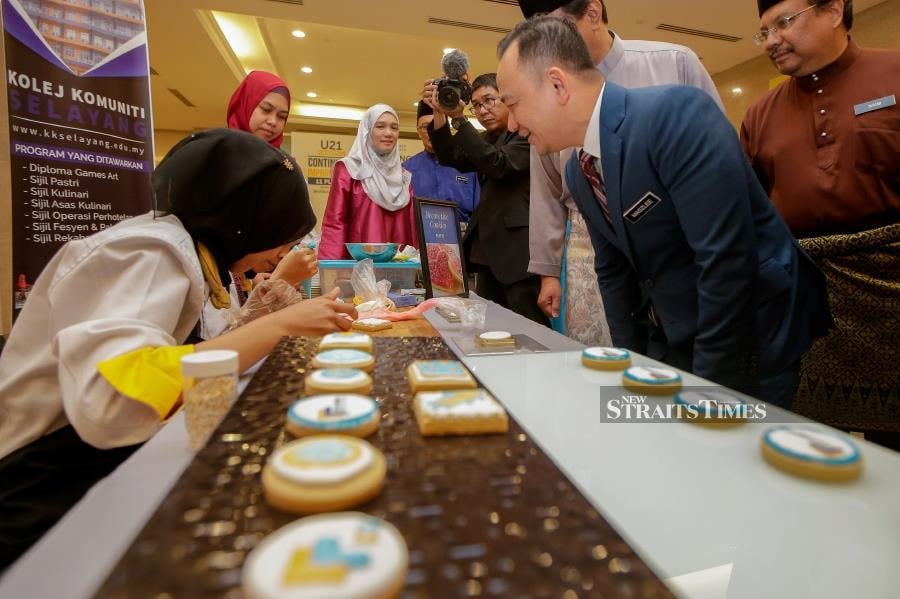
Education Minister Dr Maszlee Malik at Putrajaya today. Pix by NSTP/Luqman Hakim ZubirBy Hashini Kavishtri Kannan – April 26, 2019 @ 2:54pm
PUTRAJAYA: The Education Ministry is looking into re-branding technical and vocational education and training (TVET) programme.
This also includes the possibility of changing its name to be more appealing, said Dr Maszlee Malik.
The Education ministry said it would undertake efforts to make TVET as a mainstream choice for students, instead of it being viewed as a second option.
“Currently, the stigma among the people is that TVET is a second choice and that they will not succeed if they take up TVET programmes.
“Therefore, the ministry will spearhead initiatives to change the stigma and perception including the possibility of changing of the name of TVET,” he said today.
Maszlee said TVET and vocational training is not something that people looked at highly.
“We have to acknowledge and appreciate that human skills are different from one another, and that there are people who could excel in the field of TVET.
“We, at the ministry are committed to bring up TVET as a top of choice of study,” he told reporters at an event organised by Education Ministry to announce three new initiatives that will be undertaken by community colleges to improve and enhance quality of education in line with the Fourth Industrial Revolution 4.0 (IR 4.0).
The three new initiatives are the ACES, Maker Market and Pondok Perdana.
Maszlee said ACES, an acronym for Apprenticeship, Professional Certification, Entrepreneurship and ‘Sijil Kolej Community’ are four pathways for secondary school leavers to take up TVET programmes at community colleges.
The Maker Market is an initiative taken by these colleges to collaborate with industry players, including Malaysia Digital Economy Corporation Sdn Bhd (MDEC), to create industry ready workers.
“Pondok Perdana, the third initiative, is to empower and value-add the skills of ‘pondok’ students through more structured and organised programmes.
“Through this, community colleges would cater certificate and diploma programmes to these students,” he added.
Also present were Education director-general Datuk Dr Amin Senin and Polytechnic and Community College Education Department director-general Prof Datuk Dr Mohd Ismail Abd Aziz.
Comment: TVET is already an internationally recognised name, what rebranding are you talking about Dr Maszlee?? You think rebranding is just a change of name? Has the Ministry discussed with the various stakeholders? Heard from a source saying the name might be changed to Certificate In Practical Engineering Technology or CIPET!
– In House Expertise Training by Medical Aesthetic Doctors – Overseas Internship Opportunity – Guaranteed jobs & business opportunity by the Group – Hostel provided, gym & swimming pool facilities
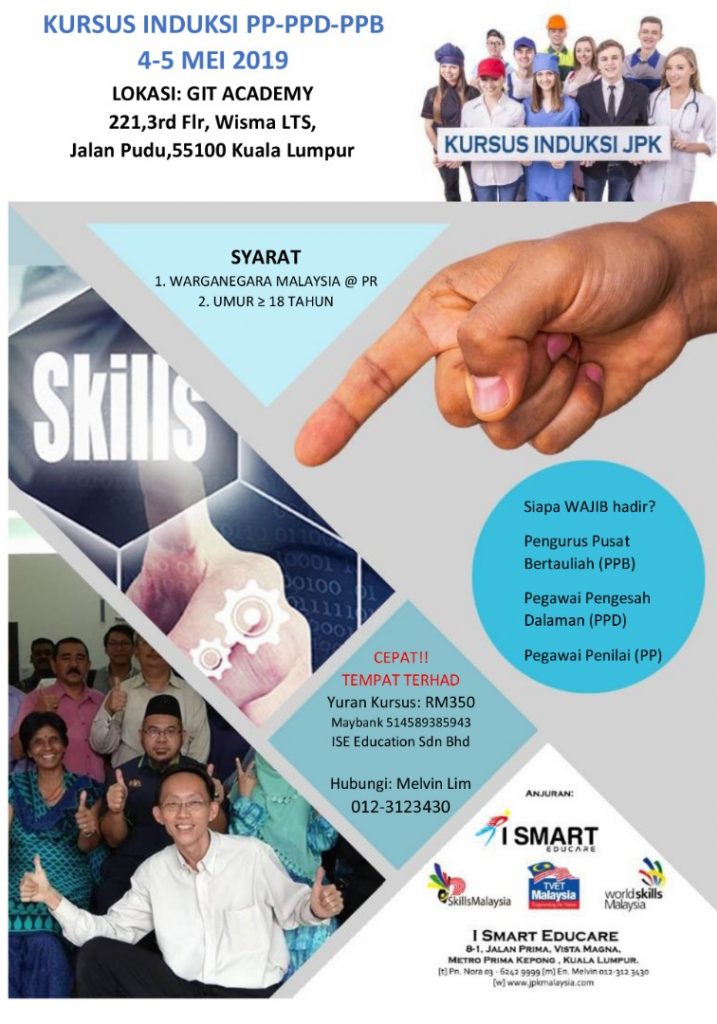
Ya, keputusan yang dinanti-nantikan oleh banyak pengusaha Pusat Bertauliah (terutamanya swasta) dan lebih ramai lagi, para pelajar yang amat memerlukan pinjaman PTPK untuk menyambung pendidikan mereka supaya berdaya saing di alam pekerjaan kelak.
Jika anda pelajar yang ingin tahu samada Pusat Latihan/Bertauliah JPK yang anda ingin daftar betul-betul dapat kuota, sila rujuk sini (SKM 1-3) & sini (DKM 4 & DLKM 5). Harap maklum bahawa Pusat Bertauliah yang tidak dapat kuota boleh buat rayuan & dapat kuota kemudian. Jika anda tidak pasti pusat mana yang tawarkan kursus apa, boleh dapat & isi borang permohonan ringkas di sini.
Bagi Pusat Bertauliah JPK yang berjaya dapat kuota PTPK 2019, TAHNIAH! Sekarang sudah boleh rancang & hantar pengajar/personel anda untuk kursus-kursus induksi (khususnya PP-PPD-PPB) & VTO sekiranya personel anda telah berhenti kerja sebelum ni kerana risau Pusat Bertauliah anda tidak dapat kuota dari PTPK.
Bagi mereka yang ingin tahu peluang yang ada dalam sektor TVET ataupun ingin jadi Pegawai Pengesah Luaran (PPL), kursus ni juga WAJIB untuk hadir
Dan jika anda adalah Pusat Bertauliah JPK yang pentauliahannya masih aktif tapi nak jual disebabkan tiada kuota PTPK, nak bersara dsgbnya, sila hubungi min kerana ada yang minat nak beli PB sedia ada, terutamanya di kawasan Lembah Klang.
NOTA: Kursus-kursus lain (VTO & Induksi):
1. PPL: 27-28 April 2. PP-PPT: 29-30 Jun Tempat: I Smart Educare, Kepong Metro Prima, KL Masa: 8.30-5pm 3. VTO (Pengambilan hujung Mei/Jun) – 360jam hujung minggu, 720jam di PB masing-masing
KOTA KINABALU: Montfort Youth Training Centre (MYTC) will be introducing a new skill training course for youths with the implementation of its pilot Oil Palm Plantation Conductorship course.The new course, which will be rolled out in July 2019 at its campus in Kinarut, is carried out in partnership with the Malaysian Estate Owners Association (MEOA), MYTC said in a statement.MEOA and its members, including their affiliate from Sarawak Oil Palm Plantation Owners Association (SAPPOA), will provide the initial leadership, knowledge sharing, along with a start-up funding of RM200,000. This is part of the association’s social responsibility contribution towards human resource development, the centre added.
Other companies such as IJM Plantations Berhad and Eurostar Tractors will also be rendering local technical and training support.MYTC noted in 2018, Sabah and Sarawak had a total of 3.1 million hectares of oil palm planted area and covers over 53 per cent of total oil palm planted area in Malaysia. It also noted that there is a dire requirement for quality and skilled local human resource for this sector which has contributed significantly to the annual GDP. “In this sector, there are many employment opportunities throughout its supply chain ranging from working in the upstream sector involving estates and mills to the downstream activities, and also the spin-off service providers. In this context, the Youth-in-Need should not be left out,” MYTC said.The course aims to generate skilled workforce who can contribute to the pursuit and improvement of best practices in the oil palm industry. MYTC also aims to forge partnerships with other relevant industry stakeholders through sharing of expertise and knowledge. It also welcomes sponsorship and monetary contribution.It believes that the plantation course is also very relevant as many of the less privileged youth especially from the rural interior areas in Sabah and Sarawak are very likely to be exposed to the grass-root agricultural activities. With their acquired new skill and know-hows, the youth can be gainfully employed in the many plantation companies throughout Malaysia and/or returning to their homes to be future entrepreneurs and good stewards of their lands.
The MYTC plantation conductorship course emphasises on both the knowledge and practical skills needed in the field of supervision in plantation. Trainees will learn supervisory role, safety practices, distribution of materials to the fields, suitability of correct equipment and machinery to be used; appropriate supervision of workers to ensure production standards are achieved, provide work schedule and generate daily reports and progress of works. In addition, basic motor vehicle mechanics and shielded metal arc welding will also be incorporated for them for an appreciation of the machineries and workshop practices in plantation.To fortify the coursework, the trainees will also undergo field work trainings as well as industry practical attachment training in the plantation. They will also be nurtured in basic communication in English language, arithmetic and computer knowledge over the two years programme.Graduating trainees from the course can apply for Plantation Field Conductor posts. Potential and opportunities to be promoted and progress beyond staff to executive level are possible.Thye centre announced that eligible youth are encouraged to apply. They must be between18 to 20 years with priority accorded to those who are orphaned, from poor and large families particularly from the rural and interiors areas of Sabah and Sarawak. SPM leavers, as well as youth who did not complete their formal primary and secondary school education but are interested in the course are also encouraged to apply. Interested youth are to contact MYTC (www.montfortsabah.org) for more information and to submit their application forms accordingly.The two-year course which covers full training and boarding will be provided free for the eligible and selected trainees. However, MYTC said parents/ guardian/sponsors are encouraged to contribute a minimum monthly sum towards the trainees’ food subsidy based on their affordability.Currently, MYTC conducts four skills training courses over two-year residential care programmes, namely in Motor Mechanic, Shielded Metal Arc Welding, Refrigeration & Air-conditioning Mechanic and Furniture Making. The birth of the Oil Palm Plantation Conductorship will be its fifth (5th) skill training programme.
Human Resources minister M. Kulasegaran and Japanese Ambassador to Malaysia Dr Makio Miyagawa at a ceremony to celebrate Japanese Foreign Ministry commendation to Japan-Malaysia Technical Institute (JMTI) for promotion of economic relations between Japan and Malaysia at JMTI in Lorong Bukit Minyak. NSTP/RAMDZAN MASIAM.By Balvin Kaur – April 7, 2019 @ 4:37pm
BUKIT MERTAJAM: The Human Resources Ministry is encouraging technical and vocational education and training (TVET) institutions to provide night classes for the working class community.
Its Minister M. Kulasegaran said the current operation hours were 8am to 5pm but the ministry encouraged the institutions to extend the operational hours for another six hours by remaining open until 11pm.
“Eight to five are the normal working hours but we are now encouraging all TVET institutions to also operate from 5pm to 11pm to give opportunity for those working in nearby companies to continue their training to improve their skills.
“This is being done in other countries including Japan and even here at the Penang Skill Development Centre,” he told reporters after attending a ceremony to celebrate Japanese Foreign Ministry commendation to Japan-Malaysia Technical Institute (JMTI) for promotion of economic relations between Japan and Malaysia at JMTI in Lorong Bukit Minyak here today.
Also present were Finance Minister Lim Guan Eng and Japanese Ambassador to Malaysia Dr Makio Miyagawa.
Kulasegaran said the ministry had also suggested to Japan International Cooperation Agency (JICA) to continue working with JMTI as a regional training centre that runs JICA training programmes for participants in this region.
“I believe that this is significant as it lends credence to the name “Japan-Malaysia Technical Institute”,” he said.
He said he hoped JICA would continue to dispatch technical experts and senior volunteers to share knowledge with instructors from local institutions.
Meanwhile, Lim said in the Eleventh Malaysia Plan (11MP), it was targeted that the percentage of skilled workers would increase from 28 per cent to 35 per cent by 2020 but in order to achieve this, TVET sector needed to become a game changer so that it could easily meet the demand and requirement of the industry.
“The target is to increase TVET students annual intake gradually from 164,000 in 2013 to 225,000 in 2020,” he said.
Lim said government continued to place strong emphasis for improvement of TVET and had provided significant allocation for this year, totalling nearly RM170 million.
However, Lim said the government could no longer afford to provide large allocations to public institutions with regards to capital expenses such as buying new machines and equipment.
He said an effective public-private partnership was needed in which industry could share their resources such as machineries and technical expertise in order to help train more local students.
“Now more than ever, it is crucial that the private sector comes forward and helps the government by sponsoring, or donating equipment or machinery to TVET institutions.
“Alternatively companies may also provide opportunities for TVET students to be trained using machines and equipment available at their facilities,” he said.
Lim said in other countries such India and Germany, there was specific legislation that compelled companies to participate in TVET.
However, the Bagan member of parliament did not elaborate on whether the government had plans to implement such legislation.
Lim said the government hoped that the industry and TVET institutions would voluntarily collaborate across their entire value chain of TVET, if possible from student recruitment to curriculum design, delivery and even job placement.
“Companies should also consider offering scholarships especially for students to encourage more students to join TVET programmes. For this year, such contributions are eligible for tax deduction,” he said.
Source: www.nst.com.my
Comment: Another option is to learn TVET courses via online (blended with workshops) that makes it easier for working adults to learn anytime, anywhere.
IPOH: Since July last year, Unified Examination Certificate (UEC) holders have been able to apply to enrol in the government’s Technical and Vocational Education and Training (TVET), says Human Resources Minister M. Kulasegaran.
He said this was part of the ministry’s efforts to attract more students to join institutions offering these programmes.
Previously, only those with SPM qualification were accepted into such institutions.
Kulasegaran said the institutions welcomed not only UEC holders but just about anyone, regardless of race or religion, from Tamil or religious schools.
“Thus, we need to loosen the intake rules to get more people to take up TVET,” he told reporters after a dialogue session with the National Union of the Teaching Profession (NUTP) at the Ipoh Industrial Training Institute on TVET options for students.
Kulasegaran said his ministry was also discussing with the Education Ministry to look into the possibility of lowering the intake age to 16.
“We want students who are not so academically inclined to pursue the courses of their choice,” he said.
“Many are good with their hands, and such institutions are a prefect choice for them.”
Besides that, Kulasegaran said he had also met with orang asli village heads to get more of their children to take up TVET, some of whom were 18 years of age but possessed only Form One qualification.
He said some of them were in the process of being admitted into the technical schools nationwide.
“There are still 35% of places available. We must find ways to tap the talent we have in the country,” he said.
“TVET must no longer be a second choice but the first choice for most children as technical courses are the way forward.”
Kulasegaran also noted that 94% of trainees from such institutions were employed upon graduation.
These institutions, he said, had existed in the country for many years, with the first set up in Kuala Lumpur in 1964, yet many people were unaware of it.
“Through dialogues with NUTP and other stakeholders, we want to reach out to more students,” he said.
TAWAU: Director of the Tawau Vocational College, Ahmad Fakhrurasi Hamzah, is confident its international cooperation with seven Taiwan institutes of higher learning will strengthen Sabah’s Technical and Vocational Education and Training (TVET). He said they signed a memorandum of understanding with these universities and colleges during a recent benchmarking visit to the country and is now in the midst of streamlining the agreement, including taking into consideration the standard operating procedures of the law. He said it was understood that equipment such as machines for learning at Taiwan’s higher learning institutions are replaced every three years and, hopefully, this will be donated to the Tawau Vocational College. “They have already shared their intention of donating their equipment and we hope this can be done,” he said.
Commenting further, Ahmad Fakhrurazi said the inking of the MoU is to provide lecturers from the Tawau Vocational College with the opportunities of advancement at higher learning institutes in developed countries to enhance their competitiveness. In addition, he hoped that the development would be a starting point towards producing competent and skilled students.
Meanwhile, Vice Chairman of Taiwan’s Sabah Branch Alumni Association, Pang Thou Chong said Tawau Vocational College has a huge potential and that TVET is very important for the job market and also provide good prospect for the State. He hoped the initiatives and cooperation would enhance the students’ skills particularly in agriculture, mechanics, construction, culinary and electronics in view of the job market for graduates with TVET skills.
Comment: Such tie up definitely benefit our students as well as cost savings from the purchase of these machines, some of which maybe very costly. But am just wondering, why would the Taiwanese higher learning institutions donate to Malaysian counterpart rather than to their local TVET institutions? Are they so rich or even their local TVET institutions consider those machines would be too outdated by then?